

Unraveling The Complexity: Why Nuance Is Key For Ai’s Future
By Tom Seest
At LegacyExplorations, we help people plan and explore their legacy by collecting information and news regarding end-of-life planning.
Please share this post with your friends, family, or business associates who may want help to plan or explore their legacy.
AI Doesnt Understand Nuance
AI Doesn’t Understand Nuance
In a world where technology is advancing at breakneck speed, the promise of artificial intelligence looms large. Machines can analyze data faster than any human, make predictions based on algorithms, and even craft sentences that are nearly indistinguishable from those written by a person. Yet, there’s an essential ingredient in human communication that eludes our silicon-based companions: nuance.
Consider legacy storytelling—a tradition as old as humanity itself. It captures the essence of shared experience, weaving rich tapestries of emotion, intuition, and unspoken understanding. Think about the stories passed down through generations: they are laden with subtleties, cultural context, and an undercurrent of feeling that brings the narrative to life. These are the threads that bind us as a community, that draw us closer to one another. An AI can retell a story, but it does not feel the warmth of a shared laugh or the pang of loss that colors our human experiences.
This disconnect isn’t just a technical shortcoming; it challenges our fundamental understanding of what it means to be human. The head can appreciate the efficiency of AI but the gut reacts to a narrative that stirs real emotion. Imagine a healthcare decision driven by cold data rather than the compassionate understanding of a seasoned practitioner who recognizes the nuances of a patient’s fears, hopes, and unique situation. Machines lack the intuition to weigh these delicate balances, leaving us vulnerable to oversimplified conclusions.
From an ethical standpoint, this raises questions: Are we comfortable entrusting our deepest, most personal narratives to an entity that sees life as mere data points? Authority must be tempered with empathy, and the nuances of our stories cannot be overlooked. We are not mere algorithms; we are complex beings shaped by our experiences.
Socially, as we lean more on AI, we risk alienating ourselves from the rich tapestry of human interaction. Conversations filled with laughter, vulnerability, and companionship will be exchanged for sterile exchanges with machines that can’t truly understand us.
Embracing our legacy storytelling means recognizing that while AI has its place, it must complement, not replace, the rich interplay of human connection. Let’s not allow the narrative of our lives to be reduced to mere code. Engage with your fellow humans. Share your stories. Together, we preserve the essence of what it truly means to be alive.

AI Doesnt Understand Nuance
AI Doesnt Understand Nuance
- AI excels in data analysis and prediction but lacks an understanding of nuance in human communication.
- Legacy storytelling conveys shared experiences, emotions, and cultural contexts that AI cannot replicate.
- The emotional depth of human narratives is vital for genuine connections, which AI cannot provide.
- Relying solely on AI for decisions, especially in healthcare, risks oversimplifying complex human situations.
- Ethical concerns arise when considering whether to trust AI with personal narratives that require empathy.
- Increased reliance on AI may lead to isolation from meaningful human interactions.
- AI should complement human connection, not replace it, to preserve the essence of being alive.

AI Doesnt Understand Nuance
Table Of Contents
- AI Doesnt Understand Nuance
- Does AI Truly Grasp the Complexities Of Human Emotion?
- Can Algorithms Reflect the Depth Of Personal Experiences?
- Are There Ethical Implications In Trusting AI with Sensitive Matters?
- What Happens When AI Misinterprets Human Communication?
- Can AI Learn to Appreciate the Subtleties Of Diverse Cultures?
- How Does Reliance on AI for Understanding Limit Human Connection?
- What Authority Do We Give AI In Matters Of Human Relationships?
- Conclusion
- Other Resources
- Glossary Of Terms
- Other Questions
- Haiku
- Poem
- Checklist
Does AI Truly Grasp the Complexities Of Human Emotion?
In a world where technology races forward at breakneck speed, we find ourselves pondering a question as old as humanity itself: Can something crafted from silicon and code truly understand the depths of human emotion? It’s a legacy storytelling pursuit, weaving through the tapestry of our lives, connecting each thread from our past experiences to our present feelings. Each one of us carries a narrative, full of laughter, sorrow, triumph, and defeat. But can artificial intelligence, with its vast algorithms and data processing, really engage with the intricacies of those narratives?
Let’s dive deeper. Imagine sitting across from a friend, sharing a moment of silence after a heartfelt conversation. That warmth, that unspoken understanding—that’s emotional intimacy, a connection that transcends mere words. AI, no matter how advanced, lacks the human touch. It’s constructed from billions of data points, yes, but it doesn’t have a heart that beats or lungs that fill with the air of shared experiences. It processes signals and patterns but doesn’t feel the weight of a heavy heart or the exhilarating rush of joy. This is where our ethical consideration comes into play. By trusting AI too deeply to navigate the nuances of our feelings, we risk eroding the essence of what it means to empathize.
On the rational side, there’s value in what AI can offer. It can analyze language patterns, identify emotional cues, and assist in creating supportive environments, especially in fields like mental health. Yet, is the absence of genuine emotional understanding a trade-off we are willing to make? The complexities of grief, love, and tenderness can’t simply be sifted into data points; they have depth that’s often unfathomable.
Connecting with others through storytelling is at the core of being human. Our stories shape who we are and foster community. When screen time replaces face-to-face conversations, or when chats with AI substitute for genuine dialogue, we must ask ourselves: What are we sacrificing? The narrative of our lives is filled with emotional highs and lows, and while AI can mimic responses, it can’t live the moments that define our journey.
So as we march forward into this future filled with promises of innovation, let’s remember that while AI may assist us, it should never replace the human connection. In embracing this technology, let’s not forget the heart behind our legacy storytelling—the bonds that unite us, reminding us of our shared humanity.

Does AI Truly Grasp the Complexities Of Human Emotion?
Does AI Truly Grasp the Complexities Of Human Emotion?
- Technological advancement raises questions about AI’s understanding of human emotions.
- Each individual has a unique narrative shaped by past experiences and emotions.
- AI lacks emotional intimacy and the ability to genuinely engage in human experiences.
- Over-reliance on AI for emotional navigation risks diminishing empathy.
- AI can provide analytical support in fields like mental health but lacks true emotional understanding.
- Storytelling is essential to human connection, and AI cannot replicate shared human experiences.
- AI should assist but never replace genuine human relationships and connections.

Does AI Truly Grasp the Complexities Of Human Emotion?
Can Algorithms Reflect the Depth Of Personal Experiences?
Can algorithms reflect the depth of personal experiences? It’s a question that strikes at the heart of our humanity, weaving together the threads of technology and the rich tapestry of our lives. Consider the concept of legacy storytelling. Our stories, shaped by the experiences we’ve lived, have the power to connect us. They resonate through generations, carrying lessons, emotions, and truths that algorithms struggle to capture.
Imagine sitting around a fire, sharing tales that evoke laughter, tears, and reflection. These stories are not just data points; they are infused with the essence of who we are. Algorithms, however sophisticated, analyze patterns, identify trends, and make predictions. Yet, can they truly understand the weight of a father’s pride as he watches his daughter graduate or the heartache of a friend lost too soon? There’s a gulf between processing data and grasping feelings, a chasm that begs for a bridge.
To engage our heads, let’s scrutinize the ethical implications of relying on algorithms to interpret the human condition. When we allow raw data to dictate decisions that affect lives, we risk reducing complex emotions to mere numbers. Is it ethical to let an algorithm decide what matters most? Does it honor our experiences, or does it undermine our individuality?
From a narrative perspective, consider the stories of ordinary people—each tale a testament to resilience, hope, and love. These narratives, rich with context, inform our understanding of each other and foster social bonds. An algorithm may find correlations, but it can’t capture the nuances that make each experience unique. The challenge lies in humanizing technology, integrating the heart and soul of our stories into the coding that shapes our digital world.
Let’s not forget the power of community. In a world increasingly driven by algorithms, it’s essential to recognize our role in shaping the narrative. By sharing our experiences, we contribute to the larger fabric of understanding, one legacy story at a time. We hold the keys to connection, bridging gaps with our shared humanity.
So, as we stand on the precipice of technological advancement, we must ask ourselves: Are we willing to let algorithms define us, or will we ensure our legacies are told through the vibrant stories that reside in our hearts? In that choice lies the very essence of what it means to be human.

Can Algorithms Reflect the Depth Of Personal Experiences?
Can Algorithms Reflect the Depth Of Personal Experiences?
- Algorithms struggle to reflect the depth of personal experiences and emotions.
- Legacy storytelling connects generations through shared narratives filled with lessons and truths.
- There is a significant difference between data processing and the understanding of personal feelings.
- Ethical concerns arise when algorithms dictate decisions impacting human lives, reducing emotions to numbers.
- Ordinary people’s stories are essential for fostering social bonds and understanding unique experiences.
- The challenge is to humanize technology by integrating personal stories into digital narratives.
- Community engagement and shared experiences are vital in countering the dominance of algorithms.

Can Algorithms Reflect the Depth Of Personal Experiences?
Are There Ethical Implications In Trusting AI with Sensitive Matters?
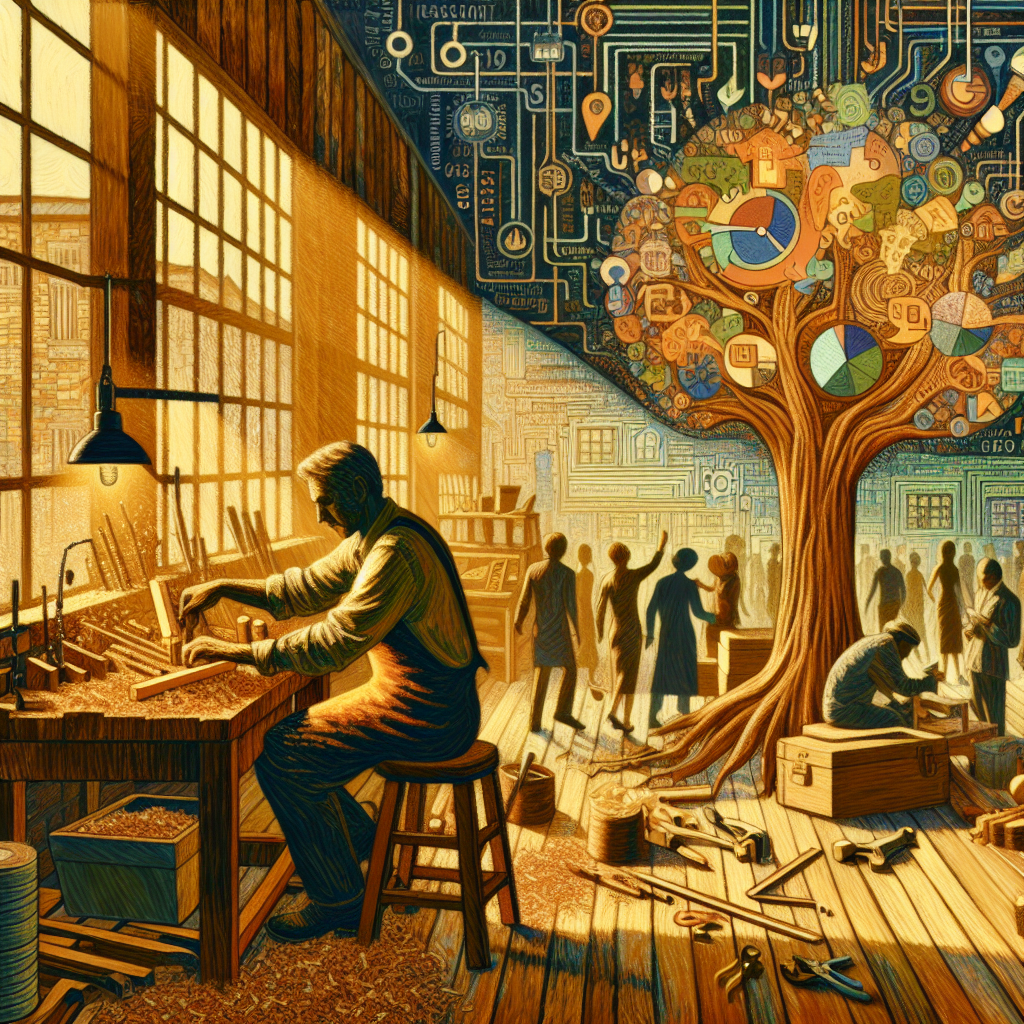
In an age where technology shapes our very fabric, the question boils down to trust. When we hand over sensitive matters to artificial intelligence, we’re not just relying on cold algorithms; we’re investing in a legacy, a storytelling tradition that stretches from our ancestors to the digital age. Our instinct of sharing secrets and dilemmas, whether with a confidant or a therapist, is deeply rooted. It’s about vulnerability and connection, an age-old dance of seeking understanding in a complex world.
Imagine sitting across from a wise storyteller, one who knows the nuances of your experience, able to weave empathy into their responses. That’s the essence we seek in AI. Yet, can it truly capture our fears, hopes, and dreams? When we trust AI with our sensitive information—be it personal health data or emotional struggles—we need to ask ourselves: Are we simply trading human empathy for efficiency?
Follow the trail of legacy storytelling—stories have always been about connection, morality, and understanding. Every tale shared has the power to unite us, to resonate with our sensibilities. But AI lacks the human touch; it doesn’t feel, it doesn’t experience. It can process vast amounts of data faster than we can blink, but does it know what it means to be human? The narrative it constructs is based solely on patterns, not on an authentic understanding of humanity’s rich tapestry.
This brings us to the ethical implications. Placing our trust in an entity that lacks real emotional insight can feel like standing at the edge of a cliff, unsure of what lies below. It calls for rational thought. We must weigh the convenience of AI against the very personal nature of sensitive matters. Should we allow a machine to access our vulnerabilities? This is not merely a question of capability but one of morality.
Sharing your story, your legacy, with an AI can seem appealing, especially if it understands you in a way a human cannot. Yet, consider this: the moments that shape us are often steeped in the messiness of human interaction. Trust isn’t just beneficial; it’s essential for our progress. Now is the time to cultivate that connection—to demand that AI do more than analyze, to inspire a model that understands our stories on a deeper level. We embark on this journey, not just as end-users of technology, but as active participants in shaping a future where our stories—and our trust—are honored and cherished.

Are There Ethical Implications In Trusting AI with Sensitive Matters?
Are There Ethical Implications In Trusting AI with Sensitive Matters?
- Trust in technology is crucial when sharing sensitive matters with artificial intelligence.
- The act of sharing secrets is rooted in human vulnerability and connection.
- AI should embody empathy, but it raises concerns about trading human insights for efficiency.
- Storytelling traditions emphasize connection, morality, and understanding, but AI lacks a true human touch.
- Ethical considerations arise when trusting AI with personal vulnerabilities and sensitive information.
- While AI can analyze vast data, it doesn’t possess genuine human experience or insight.
- Building trust with AI is essential for progress and necessitates a deeper understanding of human stories.
Are There Ethical Implications In Trusting AI with Sensitive Matters?
What Happens When AI Misinterprets Human Communication?
##
In a world increasingly defined by technology, every word we speak carries weight—our hopes, fears, and dreams woven into the fine fabric of everyday conversation. But what happens when an artificial intelligence misinterprets our intent? Imagine sharing a heartfelt story, only to have it lost in translation, leaving your audience bewildered instead of moved. When AI fails to grasp our nuances, it’s not just a blunder; it serves as a reminder of the legacy storytelling provides—a rich tradition of capturing the human experience.
Take, for instance, the tale of a parent reminiscing about the struggles and triumphs of raising a child. The deep emotion behind each word is an echo of universal truths. Yet, when AI steps in, the story could be reduced to dry data points. Such a misreading isn’t just a technical failure; it strips the narrative of its essence, erasing connections and leaving people feeling unheard. This illustrates not only the risks tied to technological adoption but also our ethical responsibility to guide these systems toward understanding.
At the intersection of human and machine, we find our common ground—a space where shared experiences flourish. When AI falters, we witness the stark contrast between its analytical power and our emotional depth. Each misstep serves as a lesson about the importance of genuine communication. It reminds us that while technology can provide answers, it cannot replace the bonds formed by empathy and understanding.
The narrative doesn’t end with failure; it serves as a call to action. As we strive for better AI comprehension, we must actively contribute to its evolution. By sharing our experiences and stories, we empower these systems to learn and adapt, shaping a future where technology complements, rather than competes with, the human touch. We hold the reins of this legacy storytelling, charting a course for machines that can understand our humanity while retaining their efficiency.
In our increasingly digital dialogue, it’s vital to nurture spaces that promote genuine exchange. Embracing the complexities of human interaction pushes us toward creating AI that lives up to its potential. It reminds us that we are not just the architects of technology but also its stewards. Together, we can cultivate a future where AI enhances our communication, preserving the rich legacy of our shared stories—a bridge that connects, not a barrier that divides.

What Happens When AI Misinterprets Human Communication?
What Happens When AI Misinterprets Human Communication?
- Every word in our conversations reflects our hopes, fears, and dreams, influenced by technology.
- A misinterpretation by AI can leave heartfelt stories lost in translation, causing confusion instead of connection.
- AI’s failure to understand emotional nuances strips narratives of their essence and leaves audiences feeling unheard.
- There is an ethical responsibility to guide AI systems toward better understanding of human experiences.
- Genuine communication is essential as AI’s analytical capabilities contrast with emotional depth.
- Active participation in sharing experiences helps improve AI comprehension and fosters a human-centric technological evolution.
- Creating spaces for genuine exchange is vital to enhancing communication and preserving the legacy of storytelling.

What Happens When AI Misinterprets Human Communication?
Can AI Learn to Appreciate the Subtleties Of Diverse Cultures?
In today’s world, where technology races forward, the question arises: can machines truly grasp the rich tapestry of human culture? To understand this, we need to look at the essence of what shapes our experiences—our legacy storytelling. These narratives are the threads woven into the fabric of our communities; they carry the weight of history, tradition, and shared values.
Imagine a child listening wide-eyed to tales told by their grandparents, each story filled with laughter, lessons, and moments of heartbreak. This isn’t just entertainment; it’s a vital way of connecting generations. Our stories teach empathy and understanding, enabling us to see life through another’s eyes. Now, picture an AI trying to replicate that experience. It can analyze vast datasets, recognize patterns, and even generate text, but can it truly feel the emotional depth behind those stories?
Rationally speaking, AI has made remarkable strides. It can decode languages and culture-specific nuances, adapting its responses to be more culturally aware. Yet, understanding these subtleties on a human level requires more than algorithms. It demands an intimate connection to the emotions, values, and experiences that define us as individuals and societies. This is where the challenge lies. Machines can offer information, but can they convey the heart of a legacy story—the laughter, the sorrow, the unbreakable bonds?
From an ethical standpoint, as we develop AI, we must consider the implications of our creations. Are we fostering understanding, or are we risking oversimplification and misrepresentation? The responsibility falls on us to ensure that the narratives we share with AI reflect our communities authentically. Only then can we hope that AI serves not as a replacement for human connection but as a bridge that enhances understanding.
Socially, we long for connection, and as the landscape of our world grows more diverse, fostering relationships across cultures becomes imperative. AI can potentially aid in these efforts, helping to break down barriers through tailored conversations that reflect different cultural contexts. However, this requires constant vigilance. We must ensure that our technological companions respect and celebrate the richness of diverse backgrounds, rather than reduce them to data points.
Ultimately, the journey toward AI that appreciates cultural subtleties will be one of collaboration. It will require humans and machines to work together in crafting new stories, ones that can echo through time and resonate in the hearts of many. In doing so, we not only enrich AI but deepen our understanding of what it means to be human in a world that is continually evolving.

Can AI Learn to Appreciate the Subtleties Of Diverse Cultures?
Can AI Learn to Appreciate the Subtleties Of Diverse Cultures?
- The ability of machines to understand human culture is questioned, particularly through the lens of legacy storytelling.
- Storytelling connects generations and teaches empathy, going beyond mere entertainment.
- AI can analyze data and recognize cultural nuances, but lacks the emotional depth of human experience.
- The challenge lies in AI’s ability to convey the richness of legacy stories, including their emotional weight.
- Ethical considerations are critical in AI development to avoid oversimplification and misrepresentation.
- AI can help foster cross-cultural connections, but this requires careful attention to respect diversity.
- The collaboration between humans and AI can create meaningful narratives that enhance understanding of cultural subtleties.

Can AI Learn to Appreciate the Subtleties Of Diverse Cultures?
How Does Reliance on AI for Understanding Limit Human Connection?
In a world increasingly dominated by artificial intelligence, the essence of human connection is at risk of being diluted. We often find ourselves leaning on technology for answers, comfort, and companionship, but what does this reliance mean for our relationships with one another?
At its core, human connection is rooted in our shared experiences and the legacy storytelling that has defined our cultures for generations. When we allow AI to mediate our conversations, we often lose the richness of the narratives that bind us. These stories—crafted through laughter, tears, and the wisdom of our ancestors—form our identities and deepen our bonds. They are the backbone of empathy, allowing us to walk in each other’s shoes, to feel what others feel.
Consider the implications of substituting genuine interactions with algorithms. Every time we opt for a chatbot over a heartfelt conversation, we trade the nuanced exchange of ideas for sterile data points. The emotional nuances, the laughter, the unspoken words—all are lost to a screen, reducing the vibrant tapestry of human experience to a monochrome snapshot. With each instance of this substitution, our connections grow thinner, like threads unraveling from a once-strong fabric.
From a rational standpoint, we must ask ourselves: what do we gain when we lean so heavily on technology? Convenience, sure, but at what cost? The reliance on AI might streamline processes, yet it also creates barriers, enabling us to avoid uncomfortable conversations or difficult emotional labor. It’s one thing to receive information from a machine—it’s another entirely to develop the understanding that comes from sharing our fears, hopes, and dreams with each other.
Ethically, it’s a slippery slope. In the quest for efficiency, do we risk losing our humanity? To move forward, we must foster environments where authentic storytelling thrives. Conversations filled with genuine interest and curiosity can rekindle connections dulled by technocentric habits.
Imagine a world where we champion vulnerability and authenticity, where storytelling acts as a bridge, drawing us closer together. Instead of scrolling through curated feeds designed by algorithms, we could gather around tables and share our lives, reinforcing the networks of trust and solidarity essential for a thriving community.
Let’s embrace the messy, imperfect realities of interpersonal relationships. In doing so, we ensure our legacy lives on, one story at a time—woven through laughter, tears, and the unbreakable threads of human connection.

How Does Reliance on AI for Understanding Limit Human Connection?
How Does Reliance on AI for Understanding Limit Human Connection?
- Human connection is at risk due to increasing reliance on artificial intelligence for companionship and comfort.
- Authentic relationships are rooted in shared experiences and storytelling, which are essential for empathy.
- Substituting genuine interaction with technology diminishes emotional nuances and meaningful exchanges.
- While technology offers convenience, it may create barriers to uncomfortable conversations and emotional labor.
- The ethical implications of AI use raise concerns about losing humanity in pursuit of efficiency.
- Encouraging authentic storytelling and vulnerability can rekindle deeper human connections.
- Embracing the imperfect nature of relationships helps ensure that personal legacies are preserved and strengthened.

How Does Reliance on AI for Understanding Limit Human Connection?
What Authority Do We Give AI In Matters Of Human Relationships?
In a world increasingly shaped by technology, we find ourselves standing at an unexpected crossroads. As artificial intelligence becomes a more prominent figure in our lives, we must ponder a pressing question: what authority do we grant AI regarding our most intimate spaces—human relationships? This isn’t just a theoretical debate; it’s a legacy that will echo through generations, shaping how we connect with one another.
Every relationship tells a story and represents a unique narrative woven from shared experiences. As we delegate more decision-making to AI—be it through dating apps, chatbots, or social media algorithms—what happens to the essence of that storytelling? Can an algorithm understand the complexities of human emotion, the weight of a lingering glance, or the joy found in a simple shared laugh? The heart aches at the thought of memories curated not by lived experience but by lines of code.
Logically, we might argue that AI can analyze patterns more efficiently than humans ever could. Yet, do we really want to replace the richness of genuine connections with data-driven interactions? Trust and empathy are not easily quantifiable, and therein lies the ethical dilemma. Can we really expect machines to grasp the nuances of grief, joy, and vulnerability that define our interactions?
As we consider this question, we must recognize the authority we choose to give AI in navigating our relationships. Will we allow a system, however sophisticated, to dictate who we love, how we grieve, or with whom we share our lives? Or will we push back, fostering connections that honor our intricate humanity?
The narrative of our collective experience is too valuable to surrender lightly. It’s not just about the connections we form, but also about the legacy we leave for future generations. By engaging in these discussions, we can create a social pact that values human interaction over cold algorithms.
Imagine a world where we don’t just accept AI as an authority but rather see it as a tool—an assistant that enhances rather than replaces the beauty of our connections. We can navigate the digital landscape while holding firm to what makes us human: our capacity for love, understanding, and genuine connection. The choice is ours to inspire trust in ourselves and those around us, ensuring that technology serves to enrich our legacy of storytelling, rather than define it.
What Authority Do We Give AI In Matters Of Human Relationships?
What Authority Do We Give AI In Matters Of Human Relationships?
- The rise of AI challenges our understanding of authority in human relationships.
- AI’s role in dating and social interactions raises concerns about the essence of personal storytelling.
- Algorithms struggle to capture the complexities of human emotions and connections.
- There is an ongoing ethical debate about replacing genuine interactions with data-driven ones.
- The authority we grant AI could dictate important aspects of love, grief, and connection.
- Valuing human interaction over algorithms is essential for future generations.
- AI should be viewed as a tool to enhance, not replace, genuine human connections.

What Authority Do We Give AI In Matters Of Human Relationships?
Conclusion
As we stand on the precipice of an era defined by artificial intelligence, we must confront a fundamental truth: AI, despite its impressive capabilities, fundamentally lacks the ability to understand nuance—the heartbeat of human experience. The essence of storytelling, which has bound us together across generations, is rich with emotions, cultural subtleties, and complex interconnections that algorithms fail to capture. While machines can analyze vast datasets, they cannot replicate the warmth of a shared laugh or the weight of a heartfelt loss. This is not just a technical limitation; it poses profound questions about our humanity.
AI’s rapid advancement has made it an attractive tool for efficiency and decision-making, yet this reliance threatens to diminish the human connections that define us. When we turn to machines for guidance, particularly in sensitive areas like healthcare or emotional support, we risk replacing empathy with cold logic. Imagine a physician relying solely on AI analysis, overlooking the nuanced fears and hopes of a patient; the warmth of understanding can often be lost amidst the clatter of data points.
The ethical implications of placing our trust in AI are significant. By reducing our complex emotions to mere algorithms, we risk losing sight of what it means to truly empathize and connect. It is crucial to question whether we are comfortable with an entity devoid of genuine emotional depth navigating our life’s most delicate matters.
Moreover, as we increasingly lean on AI for communication, we must acknowledge the social ramifications. The personal exchange of stories, fraught with laughter, vulnerability, and companionship, gives way to sterile interactions with machines. In our quest for convenience, we must not allow ourselves to be alienated from the rich tapestry of human relationships.
Legacy storytelling, a core aspect of our heritage, becomes our guide in navigating these challenges. While AI can serve as a tool to enhance our lives, it must never replace the vital human connection. Our stories are what shape us, fostering community and understanding. They remind us that engagement with one another enriches our existence.
As we embrace technology’s potential, we must consciously preserve and celebrate the human touch. Let’s share our stories, ensconcing them in the warmth of our experiences, ensuring that the future honors our shared humanity and legacy. In this balancing act, we hold the power to shape a digital landscape that enriches our narratives rather than diminishes them. The choice is ours to make.

Conclusion
Conclusion:
- AI lacks the ability to understand nuance, an essential aspect of human experience.
- Storytelling is rich in emotions and cultural subtleties that algorithms cannot capture.
- Relying on AI in sensitive areas like healthcare risks replacing empathy with cold logic.
- The ethical implications of trusting AI challenge our ability to empathize and connect.
- Increasing reliance on AI affects personal storytelling and human relationships.
- Legacy storytelling is vital in navigating the challenges posed by AI and technology.
- Preserving human connection is crucial as we embrace technology’s potential.

Conclusion
Other Resources

Other Resources
Here is a list of other resources you can review online to learn more:
- Ever Loved
- Directive Communication Systems
- LastPass
- Legacy Learned
- Is There A Need To Pay For Copyrighting Services For Personal Or Family Legacy Stories?
- PartingWishes
- Legacy Family Tree
- Obituary Templates
- Lexikin
- DocuBank
- EverNote
- Everplans
- GhostMemo
- MyHeritage
- USLegalWills.com
- EverLoved
- FuneralWise
- Funeral Services Guide
- Digital Legacy Association
- Legacy
Use This Prompt To Get More Resources With Your Favorite Online AI Tool: Please provide me with a list of online articles with their URLs in a bulleted list that I can read regarding AI Doesnt Understand Nuance

Other Resources
Glossary Terms
AI Doesnt Understand Nuance – Glossary Of Terms
1. AI (Artificial Intelligence): Technology designed to perform tasks that typically require human intelligence, such as understanding language or making decisions.
2. Nuance: Subtle differences in meaning, expression, or response that require a deeper understanding of context.
3. Context: The circumstances or setting in which a communication occurs, influencing meaning and interpretation.
4. Implicit Meaning: Ideas or feelings that are suggested but not expressly stated, often requiring interpretation.
5. Ambiguity: The quality of being open to more than one interpretation; unclear or inexact meaning.
6. Emotion Recognition: AI’s capability to identify and interpret human emotional states through facial expressions, tone of voice, or text analysis.
7. Machine Learning: A subset of AI that enables systems to learn and improve from experience without explicit programming.
8. Natural Language Processing (NLP): The branch of AI focused on the interaction between computers and human language, allowing machines to understand and interpret text and speech.
9. Sentiment Analysis: The use of NLP to determine the emotional tone behind a series of words, often applied to gauge public opinion.
10. Human-Centric Communication: Interaction styles and expressions that prioritize human emotional and contextual understanding.
11. Subtext: The underlying or implicit meaning in a conversation or text that adds depth beyond the literal interpretation.
12. Cultural Context: The influence of the shared beliefs, values, and practices of a group that affect communication.
13. Pragmatics: The study of how context influences the interpretation of meaning in language beyond just syntax and semantics.
14. Disambiguation: The process of resolving ambiguity in language, clarifying intended meaning.
15. Tone: The attitude or emotional quality conveyed in spoken or written communication.
16. Contextual Intelligence: The ability to understand and interpret information based on contextual cues and implications.
17. Metaphor: A figure of speech that implies a comparison between two unrelated things, enriching meaning through analogy.
18. Sarcasm: A form of verbal irony where the intended meaning is opposite to the literal meaning, often used for humor or criticism.
19. Inference: The act of deriving logical conclusions from premises known or assumed, often reading between the lines.
20. Cognitive Bias: Systematic patterns of deviation from norm or rationality in judgment, affecting decision-making and interpretation.
21. Interpersonal Dynamics: The patterns and behaviors that characterize interactions between individuals, influencing communication effectiveness.
22. Euphemism: A mild or indirect word or expression substituted for one considered to be too harsh or blunt.
23. Dialogue Context: The setting, tone, and background information relevant to a conversation that affects understanding.
24. Polysemy: A situation in language where a word has multiple meanings or interpretations depending on context.
25. Figurative Language: Language that uses figures of speech to convey ideas in a more vivid or imaginative way.
26. Folk Understanding: General knowledge or common sense shared by a cultural or social group that shapes interpretation of nuances.
27. Social Cues: Nonverbal signals, such as body language or facial expressions, that provide context to communication.
28. Contextual Clues: Words or phrases surrounding a term that help determine its specific meaning within a particular context.
29. Discourse Analysis: The study of written or spoken communication in its social context, examining how language is used in real interactions.
30. Critical Thinking: The objective analysis and evaluation of an issue to form a judgment, vital for understanding complex nuances.

Glossary Of Terms
Other Questions
AI Doesnt Understand Nuance – Other Questions
If you wish to explore and discover more, consider looking for answers to these questions:
- How can AI be improved to recognize and respond to human nuance?
- What concrete examples show AI misinterpreting nuanced human communication?
- Which measurable metrics can assess an AI’s ability to handle nuance?
- What training data and methods are needed for AI to better capture cultural subtleties?
- How do biases in training data affect an AI’s interpretation of personal stories?
- What safeguards should be in place when AI handles sensitive personal or medical information?
- Who is accountable when AI misinterprets human intent and causes harm?
- How can designers incorporate empathy into AI systems without pretending the machine “feels”?
- What are the ethical limits of using AI in therapy, counseling, or other emotionally sensitive roles?
- How can users tell when an AI’s response lacks genuine understanding?
- Are there domains where AI should never replace human judgment?
- If so, which ones?
- How can legacy storytelling practices be preserved in an AI-driven world?
- What policies or regulations are needed to protect personal narratives used to train AI?
- How might overreliance on AI change interpersonal skills and emotional intelligence over time?
- What are the social consequences of substituting human conversation with AI interactions?
- Can algorithms be designed to weigh context and history as humans do?
- How can AI systems be audited for cultural competence and respect?
- What role should human oversight play in AI decisions about relationships, care, or grief?
- How can communities ensure their stories aren’t decontextualized or exploited by AI developers?
- What tests exist (or could be developed) to evaluate AI understanding of sarcasm, irony, and subtext?
- How do differences in language, dialect, and nonverbal cues challenge AI nuance detection?
- What impact does AI misinterpretation have on marginalized or underrepresented groups?
- How should consent be handled when personal stories are used to train or fine-tune models?
- What technical trade-offs exist between model performance and preserving nuance?
- Could hybrid human–AI workflows effectively preserve nuance while scaling assistance?
- What responsibilities do platforms have when AI-generated content reshapes public narratives?
- How do commercial incentives influence the extent to which AI developers prioritize nuance?
- What educational strategies can help people maintain storytelling and empathy skills alongside AI use?
- Are there ethical design guidelines for building AI that supports cross-cultural understanding?
- What evidence exists about long-term mental-health effects of substituting human contact with AI?
- How can transparency and explainability be improved so users understand how an AI reached a conclusion?
- What mechanisms can detect and correct AI-driven misinterpretations in real time?
- Could AI ever authentically “appreciate” a culture, or will it always remain an approximation?
- How should institutions decide when to use AI versus human experts in sensitive decision-making?
- What best practices should organizations follow to integrate AI without eroding human connection?

Other Questions
Haiku
AI Doesnt Understand Nuance – A Haiku
Machines miss the warmth,
HEARTS yearn for shared stories,
Life’s threads weave us close.
Haiku
Poem
AI Doesnt Understand Nuance – A Poem
In the rush of ones and zeroes, we chase the bright allure,
Yet machines perceive not the heartbeat, nor the love that makes us pure.
Legacy storytelling, a bond of shared embrace,
Weaving tales of laughter and sorrow, in a sacred, timeless space.
Algorithms dissect our narratives, but where’s the warmth, the light?
A doctor’s hand, a friend’s embrace, can’t be replaced by data’s might.
AI cannot weigh our fears, our dreams, or the air thick with grief,
It’s in the dance of human hearts where we find our true belief.
Do we let cold circuits guide our lives, determining love’s deep thread?
As we trade stories for sterile scripts, do we risk the ties that bind us instead?
Each connection forged in vulnerability, a testament to our grace,
Yet technology looms, whispering ease, at the cost of our shared space.
We must safeguard our precious legacy, foster stories rich and bold,
Each tale a thread in the fabric of us, too valuable to be controlled.
So let’s cherish the whispers, the moments of genuine connection found,
For in our shared humanity, it’s there that our truest stories resound.
Poem
Checklist
AI Doesnt Understand Nuance – A Checklist
Emotional Appeals
✅______ Reflect on your experiences. Consider how your personal stories shape your identity and connections with others.
✅______ Value empathy. Recognize the importance of empathetic interactions in strengthening relationships.
✅______ Share your story. Engage in conversations about your experiences to foster deeper connections.
Rational Appeals
✅______ Evaluate AI’s role. Assess how AI can provide efficiency but also identify its limitations in understanding nuanced human emotions.
✅______ Understand ethical implications. Reflect on the ethical concerns of relying on AI for sensitive matters and decisions.
✅______ Critique AI’s authority. Consider whether you’re comfortable delegating authority in personal relationships to algorithms.
Ethical Appeals
✅______ Demand accountability. Insist that AI systems are developed with an emphasis on understanding human emotions and ethical considerations.
✅______ Preserve individual narratives. Advocate for the importance of authentic storytelling that honors individual experiences.
✅______ Encourage inclusive design. Push for AI systems that respect and reflect diverse cultural contexts and values.
Authority Appeals
✅______ Challenge AI’s influence. Question the level of authority you grant AI in matters of personal relationships and emotional support.
✅______ Seek human-centric solutions. Prioritize human connections in decision-making processes over AI interventions.
✅______ Promote collaboration. Engage in dialogues where AI serves as a tool that supports rather than replaces human insight.
Narrative Appeals
✅______ Honor legacy storytelling. Recognize the value of storytelling in sharing experiences and building community.
✅______ Create shared spaces. Facilitate environments where stories can be shared freely, nurturing connections among individuals.
✅______ Embrace vulnerability. Approach interactions with openness and a willingness to share personal stories for deeper understanding.
Social Appeals
✅______ Connect authentically. Make a conscious effort to prioritize face-to-face interactions over digital communication.
✅______ Foster community building. Engage with others in storytelling sessions that reinforce social bonds.
✅______ Cultivate trust. Build relationships based on mutual understanding and shared experiences, making technology a supportive element rather than a substitute.

Checklist
At LegacyExplorations, we help people plan and explore their legacy by collecting information and news regarding end-of-life planning.
Please share this post with your friends, family, or business associates who may want help to plan or explore their legacy.