
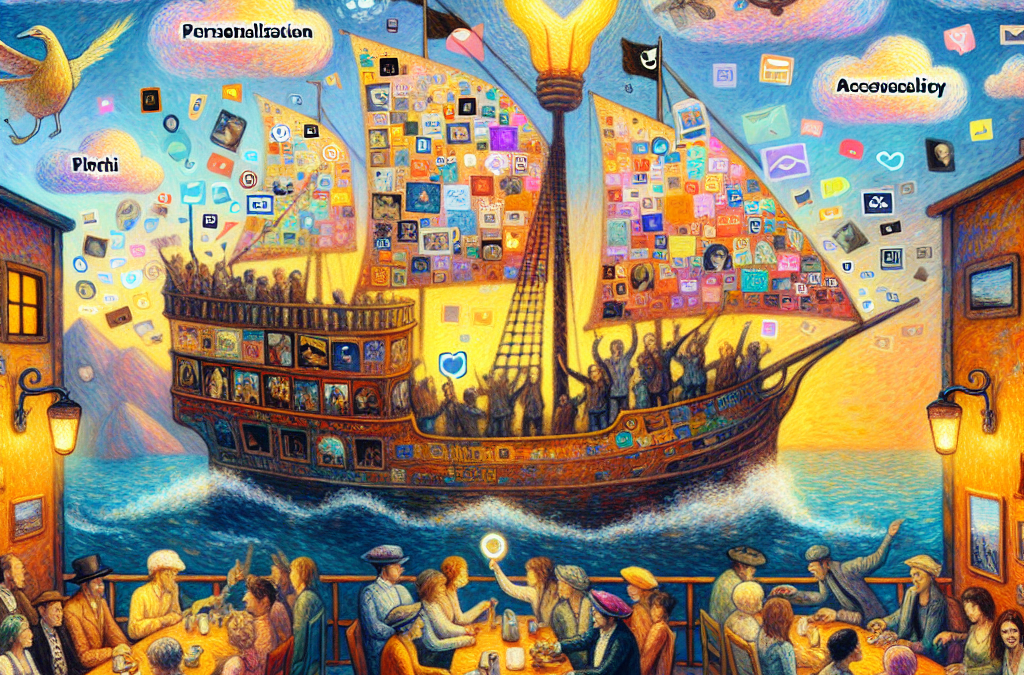
Challenging Perceptions: Discover The Realities Behind Ai Labels
By Tom Seest
At LegacyExplorations, we help people plan and explore their legacy by collecting information and news regarding end-of-life planning.
Please share this post with your friends, family, or business associates who may want help to plan or explore their legacy.
AI Tags Are Not Truth
In an age defined by technology, the landscape of information is evolving faster than we can keep up with, and artificial intelligence is at the helm. But here’s the uncompromising truth: AI tags are not truth. They are tools, crafted by humans, influenced by our biases and blind spots. They can drive us to explore, but they should not define what we deem real or valuable.
Imagine a legacy storytelling tradition, where narratives are passed down through generations—not dictated by algorithms, but shaped by lived experiences and emotions. These stories connect us, often resonating deeply because they speak to our shared humanity. Contrast this with the cold precision of AI tags, which categorize and label based on data points, often stripping away the nuances that make us who we are. They may label a piece of art as “beautiful” or a song as “uplifting,” but those labels can’t capture the intricacies that evoke true appreciation or understanding.
Rationally, we must grapple with the implications of relying on mere tags, especially when decisions about what we consume and believe are based on these simplified categorizations. It’s essential to ask ourselves: when we engage with content filtered through the lens of AI, are we really connecting with the original intent, or are we accepting a curated version of reality? In a world where information overload reigns, understanding the limitations of AI tags can empower us to dig deeper, to seek the stories that resonate on a gut level.
Consider the ethical dimension. AI, birthed from our innovations, should serve us, not constrain our ability to think critically and empathize. Trusting technology blindly can lead us down a path of disconnection, where we disengage from the rich, messy reality that true understanding encompasses. We need to reclaim our role as engaged consumers of information, fostering a culture where questioning leads to growth, rather than passive acceptance.
When we embrace the idea that AI tags do not encapsulate the entirety of our reality, we open ourselves to richer narratives. We honor the voices that may be lost in classifications, championing the tales that may not fit neatly into a box. By valuing personal connections over digital shortcuts, we can foster a society grounded in empathy, understanding, and authenticity. We must invite each other to share, listen, and learn—building a legacy that celebrates truth in all its flawed, beautiful forms.

AI Tags Are Not Truth
AI Tags Are Not Truth
- AI tags are human-made tools influenced by biases, not objective truths.
- Legacy storytelling connects us through lived experiences, contrasting with AI’s cold precision.
- AI tags simplify complex emotions and intricacies, failing to capture true appreciation.
- Relying on AI tags can distort our understanding of original intent and reality.
- Ethical considerations arise from blind trust in technology, risking disconnection from true understanding.
- Embracing the limitations of AI tags opens us to richer narratives and diverse voices.
- Building a culture of questioning promotes empathy, authenticity, and celebrates the complexities of truth.

AI Tags Are Not Truth
Table Of Contents
- AI Tags Are Not Truth
- What If AI Tags Mislead Us About Our Reality?
- Are We Trusting AI too Much?
- How Do AI Tags Affect Our Decisions?
- Is There a Moral Obligation to Inform Users?
- Can We Rely on AI Tags to Represent the Truth?
- How Do AI Tags Shape Our Perceptions Of Data?
- What Happens When AI Tags Fail Us?
- Conclusion
- Other Resources
- Glossary Of Terms
- Other Questions
- Haiku
- Poem
- Checklist
What If AI Tags Mislead Us About Our Reality?
In a world increasingly dominated by artificial intelligence, consider the power of labels. These digital tags shape not just how we consume information but also how we perceive reality itself. Imagine a life where your choices are guided not by your experiences but by curated content that promises clarity yet obscures truth. This modern landscape of AI-induced misrepresentation is where legacy storytelling meets a new age, one that demands our attention.
Think about it: every time we engage with technology, we invite unseen forces to narrate our stories. These AI systems, rich with data but poor on context, act as gatekeepers, deciding what is important and what is mere noise. The emotional implications are profound—our gut reactions to headlines can lead us down rabbit holes or uplift us toward profound connections. When the narrative is shaped by an algorithm, are we living authentically, or are we merely responding to prompts designed for our clicks?
Rationality also plays a crucial role. As we lean into the conveniences provided by AI, we must question: who benefits from this structure? Big tech companies or individual users? The ethical dilemmas arise when we realize that behind a seemingly harmless tag lies the potential for manipulation. For every piece of content designed to inform, there exists the risk of an echo chamber, stifling diversity of thought and stunting our societal growth. We owe it to ourselves and one another to recognize this dynamic and resist being mere cogs in a pre-programmed narrative.
Our legacy—a rich tapestry of storytelling woven from the fabric of both triumphs and failures—should not be overshadowed by the sterile yet seductive allure of AI. Communities thrive on shared experiences and honest conversations. By actively engaging with one another and fostering connections, we can reclaim the narrative that artificial intelligence seeks to dominate.
When we allow misleading tags to dictate our perceptions, we risk not only our autonomy but the vibrant, messy reality that comes from shared human experiences. The history we leave behind should reflect our truths, not the confines of a digital box that confines our stories to binary choices.
Trust your instincts. Seek nuance. And remember: you have the power to shape your story, ensuring it doesn’t just follow the path laid out by an algorithm but resonates with the heart of your humanity.

What If AI Tags Mislead Us About Our Reality?
What If AI Tags Mislead Us About Our Reality?
- The influence of artificial intelligence and labels affects information consumption and perception of reality.
- Curated content can obscure truth, diverting choices away from personal experiences.
- AI systems serve as gatekeepers, shaping narratives and impacting emotional responses.
- The ethical implications of AI-driven narratives raise questions about who truly benefits—users or big tech companies.
- Misleading tags risk creating echo chambers, hindering diversity of thought and societal progress.
- Engaging in shared experiences and honest conversations helps reclaim narrative control from AI.
- Individual autonomy is essential; one must trust instincts and prioritize nuanced storytelling over algorithmic dictates.

What If AI Tags Mislead Us About Our Reality?
Are We Trusting AI too Much?
As we traverse this fast-paced, tech-driven world, it’s crucial to pause and ponder: are we entrusting too much to artificial intelligence? Our relationship with technology is evolving quicker than we can blink, and that blend of excitement and unease stirs deep within us. We stand at a crossroads between the promise of progress and the pitfalls of blind faith.
Consider the legacy of storytelling that has defined generations. From campfires to classrooms, our history has been shaped by human experiences shared through narratives. These stories resonate on an emotional level, linking us to our past and directing us toward our future. Yet, as we lean more on AI’s capabilities, we must ask whether these algorithms can truly capture the essence of the human condition. Can they convey the texture of loss, the joy of triumph, the warmth of compassion?
Logically speaking, AI can process data faster than any human ever could. It can analyze trends, predict behaviors, and optimize processes, leading us toward a more efficient existence. But efficiency is a double-edged sword. Do we sacrifice empathy for speed? As our tools become increasingly sophisticated, we must question the ethical dimensions of our reliance on them. When we allow machine learning to dictate decisions that impact lives and communities, we step into murky waters where ethics can become compromised.
History and authority remind us of the failures that often came from over-relying on technology. There’s the cautionary tale of the early 2000s, when companies invested heavily in software without the human touch—only to see projects go awry. These stories serve as urgent reminders that algorithms lack the nuanced understanding that only human experiences can provide.
Yet, within this uncertainty lies an opportunity for connection. As we engage with AI, let it augment our human ingenuity rather than replace it. We can leverage technology to explore stories, enhance creativity, and foster a community that values both computation and compassion. By maintaining a balance, we inspire a movement toward responsible innovation—one that honors our legacy while embracing the future.
In this delicate dance, let’s tread thoughtfully, inviting technology into our lives as a collaborator, not a crutch. Together, we can navigate these uncharted waters, Empowered by our legacy and united in our purpose, we can forge a future where trust in technology is well-placed, and our humanity remains at the forefront.

Are We Trusting AI too Much?
Are We Trusting AI too Much?
- The rapid development of technology raises concerns about over-reliance on artificial intelligence.
- Storytelling has shaped human history and connects past experiences to future aspirations.
- AI excels in data processing and trend analysis, offering efficiency but potentially sacrificing empathy.
- Ethical implications arise when AI influences decisions affecting people’s lives and communities.
- Historical failures illustrate the dangers of depending on technology without human insight.
- AI should enhance human creativity and connection, not replace human ingenuity.
- A balanced approach encourages responsible innovation that honors human legacy while embracing future advancements.

Are We Trusting AI too Much?
How Do AI Tags Affect Our Decisions?
In today’s one-click world, AI tags have transformed our decision-making landscape, often shaping our choices in ways we don’t even realize. They are the unseen hand guiding us through a maze of options, from the movies we watch to the products we buy. Let’s take a moment to pull back the curtain and understand how these digital labels influence our lives.
Every choice we make is part of our legacy, a story we tell ourselves and others. Imagine standing in a store aisle, faced with countless brands. A small tag—be it a recommendation, a rating, or a personalized suggestion—can sway your decision. These tags are a modern twist on legacy storytelling, influencing not just what we choose but how we see ourselves in the narrative. You’re not just choosing a product; you’re affirming your values, your tastes, and even your identity.
Rationally speaking, these AI-generated tags provide a sense of authority. They crunch numbers and analyze patterns, presenting a curated experience that feels safer. When you know thousands of others have opted for the same choice, it gives a kind of reassurance. Yet, this dependence poses a significant ethical dilemma. Are we letting algorithms define our preferences, eclipsing our own instincts and desires?
With every click, we relinquish a bit of control. It’s reminiscent of a classic moral tale: do we trust our gut, or do we follow the herd? Remember that feeling of confidence when you choose something based on your judgment rather than a digital nudge? There’s power in that choice—a palpable sense of ownership.
Socially, we live in a connected web where we not only consume but also share. AI tags amplify this dynamic. They foster conversations around what’s trending, creating a communal experience. Yet, therein lies a potential pitfall: we might seek validation from others more than we honor our own preferences. It’s vital to strike a balance and ensure our decisions align with who we truly are.
Let’s embrace the technology with open eyes. Acknowledge its influence but assert your independence. You have the power to contribute to your legacy story. Make decisions that resonate with your heart, head, and gut. In this dance of technology and choice, stay true to your narrative and inspire others to do the same.

How Do AI Tags Affect Our Decisions?
How Do AI Tags Affect Our Decisions?
- AI tags significantly influence consumer decision-making in various aspects of life.
- These digital labels shape not only choices but also personal identity and values.
- AI-generated tags provide reassurance through curated recommendations based on data.
- Dependence on algorithms raises ethical concerns about losing personal instincts and preferences.
- There is power in making choices based on individual judgment rather than digital nudges.
- AI tags create a communal experience, fostering trends and social sharing, but can lead to validation seeking.
- Embracing technology involves balancing its influence with personal autonomy in decision-making.

How Do AI Tags Affect Our Decisions?
Is There a Moral Obligation to Inform Users?
In the vast digital landscape we navigate daily, where choices are as countless as the stars, the responsibility to inform users looms larger than ever. This isn’t just about compliance or ticking boxes; it’s about understanding our Legacy Storytelling—an intrinsic duty that bonds us as a society. When platforms conceal truths or obscure realities, we don’t merely face a breach of trust; we risk losing the very fabric that weaves our communities together.
Imagine a bustling farmer’s market. Each vendor has a story, a legacy crafted by generations. They greet you not just as a customer but as a neighbor, sharing the secrets of their craft. This connection fosters a sense of belonging—one that we need to replicate in the digital world. It’s here that organizations must ask themselves: are they sharing the full story, or just the glossy highlights? The heart yearns for authenticity, the head seeks clarity, and the gut demands honesty.
Rational arguments about transparency may appeal to some, yet the call for ethical practices hits deeper. We’ve all felt that knot of anxiety when we sense something is amiss—like being left in the dark while others enjoy the light. People deserve to know what data is collected, how it’s used, and what it means for them. When organizations are forthright, users can take informed actions, enhancing the trust that forms the backbone of any sustainable relationship.
Individuals often look to authority for guidance, and in this age of information overload, credibility is everything. When respected voices advocate for transparency, they are not just making a plea; they are laying the groundwork for a movement. This movement is about embracing accountability, ensuring that every click holds meaning, and that each interaction contributes to a narrative that reflects our values.
We have the power to shape our digital environment through collective consciousness. When we share our experiences and advocate for clarity, we enhance the welfare of our communities. Legacy Storytelling does not belong to any single entity; it belongs to all of us. Our lives, our stories, and our trust must be the cornerstones of any endeavor in the digital age. By choosing to inform, we enrich not just our interactions but our very existence—crafting a tapestry of connection that celebrates both diversity and unity. It’s time we step into this role, not just as users, but as informed participants in a shared journey.

Is There a Moral Obligation to Inform Users?
Is There a Moral Obligation to Inform Users?
- The responsibility to inform users in the digital landscape is crucial for building trust and community.
- Legacy Storytelling connects society, requiring organizations to share comprehensive narratives rather than superficial highlights.
- Transparency about data collection and usage is essential for users to make informed decisions.
- Ethical practices and accountability are important for credibility in the digital age.
- Respected voices advocating for transparency can initiate a significant movement for responsible digital interaction.
- Collective advocacy for clarity can enhance community welfare and shared experiences.
- Informed participation in the digital journey fosters connections that appreciate both diversity and unity.

Is There a Moral Obligation to Inform Users?
Can We Rely on AI Tags to Represent the Truth?
In our rapidly evolving digital landscape, the use of AI tags raises a critical question: Can we truly rely on them to represent the truth? This query runs deeper than algorithms and code; it touches the very essence of how we communicate, connect, and understand one another.
Consider the world around us, where the stories we tell shape our communities and individual legacies. Legacy storytelling isn’t just a nice idea; it’s a thread that binds us together. Our narratives often reflect our values, and each story we pass down informs the next generation about who we are—about the truths we hold dear. Yet, AI tags, designed to classify and categorize our experiences, come from a realm that lacks human nuance and emotional depth. They sift through data, tagging it according to criteria that don’t always capture the richness of our lived experiences.
Picture a parent sharing tales of resilience and hope. Those stories offer more than just facts; they provide context, infuse emotions, and draw connections across time and space. Now imagine simplifying such profound narratives into data points or tags. It feels wrong, doesn’t it? There’s an ethical dilemma here. As we embrace these technological advancements, we risk losing the heart of what makes our stories human.
Rationally, we know that AI can analyze vast amounts of information faster and more efficiently than a team of experts ever could. Yet, speed and efficiency do not equate to truth. The reality is that algorithms make choices based on the data they’re fed—data often steeped in biases. When we rely on these automated systems as our sole truth-tellers, we inadvertently sidestep our responsibility to ensure our conversations reflect the complexities of the human condition.
The gut instinct tells us to be cautious. Technology, powerful as it is, should not be entrusted blindly. We need to step back and evaluate our relationship with AI. Are we allowing it to form the lens through which we view reality? Or are we engaged custodians of our narratives, actively ensuring they are represented accurately and ethically in this new digital age?
Ultimately, the integration of AI tags into our storytelling must reinforce our commitment to authenticity. When we weave technology with ethical considerations, we foster a community rooted in trust and understanding. By taking the time to question, reflect, and act, we not only honor our past but pave the way for a more connected future, one where our legacy storytelling remains vibrant and true.

Can We Rely on AI Tags to Represent the Truth?
Can We Rely on AI Tags to Represent the Truth?
- The use of AI tags raises questions about their reliability in representing truth.
- Storytelling shapes communities and reflects values, informing future generations.
- AI tags lack human nuance and emotional depth, simplifying complex narratives.
- There is an ethical dilemma in relying on AI for storytelling, risking the loss of human connection.
- AI’s speed and efficiency do not guarantee truth, as algorithms can perpetuate biases.
- We must evaluate our relationship with AI and ensure our narratives are accurately represented.
- Integrating AI into storytelling should reinforce authenticity and foster trust in the community.

Can We Rely on AI Tags to Represent the Truth?
How Do AI Tags Shape Our Perceptions Of Data?
In an age where information cascades around us like an unstoppable river, AI tags play a silent yet commanding role, sculpting our interactions with data in ways we often overlook. It’s akin to a painter selectively choosing colors; the right brushstrokes can transform the mundane into the extraordinary, just as carefully crafted tags can spotlight the significance hiding within the endless expanse of information.
Imagine the legacy storytelling that permeates our existence, where every piece of data has a narrative yearning to be uncovered. We’ve all experienced the thrill of discovering a forgotten memory sparked by a simple keyword or tag. This brew of technology and humanity beckons us to connect more deeply with the data that shapes our daily lives. When we see ‘health’, ‘safety’, or ‘environment’ tagged onto a dataset, our perceptions automatically shift. We feel the weight of responsibility, the urgency in the call to action. There’s an ethical underpinning here; with each tag comes a promise—a beacon urging us to investigate and engage further.
However, it’s not all sunshine and rainbows. The tags can also lead us astray, locking us into echo chambers filled with convoluted narratives that reinforce biases rather than challenge them. This complexity doesn’t just engage the intellect; it stirs the gut. Our trust can wane when confronted with the inadequacies of these systems. After all, how reliable is a tag that paints a skewed picture of the reality it attempts to represent?
This is where authority steps in. Strong ethical guidelines and persistent scrutiny are necessary to ensure these systems serve the greater good rather than perpetuate misinformation. Those who design these algorithms wield significant power, becoming modern-day storytellers acting on behalf of the data. They need to navigate these waters carefully, understanding that their choices have wide-reaching implications on society’s perceptions.
Narrative binds it all together. When you blend facts with a compelling story, whether it’s the latest climate statistics or public health data, you invite the audience to lean in closer, to feel a part of something bigger than themselves. In this interconnected sphere, every tag not only informs but also transforms the way we process our collective knowledge. The ultimate task is to harness this potential responsibly, inspiring a new generation to engage with data—transcending the simple act of reading to forging a connection that sparks action and ignites change.

How Do AI Tags Shape Our Perceptions Of Data?
How Do AI Tags Shape Our Perceptions Of Data?
- AI tags significantly influence our interactions with data, helping to highlight important information.
- Each piece of data has a narrative, and tags can evoke memories and connections.
- Tags related to critical topics like ‘health’ or ‘safety’ convey urgency and responsibility.
- While useful, tags can also reinforce biases and lead to misinformation if not carefully managed.
- Strong ethical guidelines are essential for those creating and managing tagging systems.
- Effective storytelling combined with data encourages deeper audience engagement and understanding.
- The goal is to responsibly harness AI tags to inspire action and foster change in society.

How Do AI Tags Shape Our Perceptions Of Data?
What Happens When AI Tags Fail Us?
In a world increasingly reliant on artificial intelligence, the notion of machines categorizing our lives is no longer a futuristic fantasy; it’s a present-day reality. AI tags—those clever little labels that help us navigate everything from our favorite movies to our grocery lists—are meant to enhance our experiences. Yet, what happens when they falter? When their reach exceeds their grasp and we find ourselves ensnared in a web of confusion and misclassification?
Picture this: you’re scrolling through a streaming service, excited to find a new documentary. Instead, the algorithm directs you to something entirely unrelated—a horror film. In that moment, frustration bubbles beneath the surface, an annoyance that resonates deeply. It’s not just about misplaced content; it’s indicative of a larger issue where technology, designed to simplify our lives, inadvertently complicates them. This is the crux of legacy storytelling—reminding us that each misstep is not just a technical failure but a missed opportunity for connection, for understanding the human experience.
At its core, the failure of AI tagging is a wake-up call to our reality. It makes us question: Who is defining our narratives? The disconnect becomes a stark reminder of our collective humanity. Each misapplied tag is a misread emotion, a misunderstood intention, echoing through lives intertwined with technology. We trust these algorithms to listen and react to our likes, dislikes, needs, and values, only to be met with cold, indifferent results. The gut punch is palpable—how can we rely on machines to convey our stories when they frequently misinterpret them?
But it’s not all doom and gloom. Engaging with these failures brings us back to our roots, where legacy storytelling thrives. Failure compels us to reevaluate our relationships with these technologies. It urges us to advocate for a system that reflects societal values and innovations informed by ethics. We hold the power to voice our experiences, to demand improvements, to expect machines that not only read our tags but also read our humanity.
In our modern age, where technology both enhances and hinders, cultivating trust between humans and AI is imperative. We aren’t just users; we are participants in this evolving narrative. By sharing our stories—our failures and triumphs—we can push for a future where AI tags serve us better, resonate with our hearts, and align with our values. The change begins in us.

What Happens When AI Tags Fail Us?
What Happens When AI Tags Fail Us?
- The reliance on artificial intelligence for categorizing our lives is now a reality.
- AI tags are intended to enhance experiences but can lead to confusion and misclassification.
- Misplaced tags illustrate a larger issue of technology complicating rather than simplifying our lives.
- The failures of AI tagging prompt questions about who defines our narratives and reflect our collective humanity.
- Misapplied tags can misrepresent emotions and intentions, leading to a disconnect in human-AI relationships.
- Failures in technology encourage advocacy for systems that align with societal values and ethics.
- Building trust between humans and AI is essential for improving how AI tags represent our stories.

What Happens When AI Tags Fail Us?
Conclusion
In a world buzzing with the presence of artificial intelligence, it’s important to confront the reality that AI tags do not define truth—they are mere tools created by humans, rife with our biases. These tags might create the illusion of clarity in a sea of information, but they often lack the depth and nuance of real human experience. Picture storytelling—a tradition that binds us through generations. These narratives are rich with emotions and lived experiences, unlike the cold, clinical labels that AI assigns.
When we engage with AI-curated content, we must ask if we are genuinely connecting with the essence of the original material or merely consuming a convenient version sculpted by algorithms. This critical reflection challenges each of us to dig deeper, to seek connections that resonate profoundly within us. The ethical implications of blind reliance on technology threaten the richness of human interaction. True understanding comes from shared stories and empathy, not quick classifications that oversimplify our experiences.
The narratives we choose to embrace should be those that celebrate our complexity, not strip it away. By valuing our human connections over digital short cuts, we can cultivate a society marked by understanding and authenticity. It’s vital to reclaim our identities as active participants in the information landscape, ensuring that we question rather than accept the digital frameworks built around us.
As we traverse this tech-driven world, let’s reassert our roles as engaged consumers. AI may assist in highlighting certain narratives, but it can’t encapsulate the vibrancy of human truth. The responsibility to cultivate a meaningful dialogue about our stories rests with us. It’s time we challenge the status quo, encouraging diverse perspectives that may not fit neatly into a data box.
Embrace the power within you to shape your narrative. Trust your instincts while navigating the bustling realm of information. Make choices that harmonize with your heart and intellect, contributing positively to your legacy. We possess the ability to secure a future where technology enhances, rather than diminishes, our shared human experience, fostering a rich tapestry of connection that reflects who we are. Ultimately, in a time when AI tags seem to dominate, let’s ensure that the human spirit and its stories remain at the forefront, vibrant and alive.

Conclusion
Conclusion:
- AI tags are tools created by humans that reflect our biases and do not define truth.
- Storytelling, rooted in human experience, offers depth that AI labels lack.
- Engaging with AI-curated content requires critical reflection on its authenticity.
- Blind reliance on technology risks diminishing human interaction and understanding.
- We should choose narratives that celebrate our complexity rather than oversimplify it.
- As active participants, we must question digital frameworks surrounding us.
- Embrace your power to shape narratives that enhance human connections in a tech-driven world.

Conclusion
Other Resources

Other Resources
Here is a list of other resources you can review online to learn more:
- YouMattered
- International End of Life Doula Association
- PartingWishes
- StoryCorps
- LegacyLearned
- Postumo
- Directive Communication Systems
- Storyfile Life
- Ancestry
- How To Write Legacy Story Headlines That Appeal To The Heart, Gut and Head
- Is There A Need To Pay For Copyrighting Services For Personal Or Family Legacy Stories?
- Legacy
- LivingDNA
- Geni
- 23AndMe
- FindMyPast
- UpCounsel
- Association of Personal Historians
- How Has Time Changed The Cost Of Capturing Family Legacy Stories
- Willmaker
Use This Prompt To Get More Resources With Your Favorite Online AI Tool: Please provide me with a list of online articles with their URLs in a bulleted list that I can read regarding AI Tags Are Not Truth

Other Resources
Glossary Terms
AI Tags Are Not Truth – Glossary Of Terms
1. AI Tags: Labels or keywords assigned to data or content generated by artificial intelligence systems.
2. Bias: A systematic error introduced into AI algorithms that leads to unfair or skewed results based on certain features.
3. Data Manipulation: The process of changing or organizing data in a way that may misrepresent the original information.
4. Deep Learning: A subset of machine learning involving neural networks with many layers, used for pattern recognition in large data sets.
5. Ethics: The moral principles guiding the use of AI technologies and their impact on society.
6. Generative AI: AI systems that create new content, such as text, images, or sound, based on learned patterns from existing data.
7. Machine Learning: A branch of AI focused on developing algorithms that enable computers to learn from and make predictions based on data.
8. Model Training: The process of teaching an AI model using a dataset to improve its performance on specific tasks.
9. Natural Language Processing (NLP): A field of AI that allows computers to understand, interpret, and respond to human language.
10. Neural Network: A computational model inspired by the human brain, used to recognize patterns and solve complex problems in AI.
11. Overfitting: A modeling error that occurs when an AI model learns noise or random fluctuations in the training data instead of the underlying patterns.
12. Reinforcement Learning: A machine learning paradigm where an agent learns to make decisions by receiving rewards or penalties based on actions taken.
13. Supervised Learning: A type of machine learning where the model is trained on labeled data, learning to predict outputs from inputs.
14. Unsupervised Learning: A type of machine learning that identifies patterns or groupings in data without prior labels or classifications.
15. Transparency: The degree to which AI operations and decision-making processes are open and understandable to users and stakeholders.
16. Validation: The process of assessing the performance of an AI model using a separate dataset to ensure its effectiveness in generalization.
17. Algorithmic Accountability: The concept that creators of AI systems should be held responsible for their outcomes and impacts on society.
18. Cognitive Bias: Systematic patterns of deviation from norm or rationality in judgment affecting decisions made by AI.
19. Data Privacy: The aspect of information technology concerned with the proper handling and protection of personal data.
20. Disinformation: The intentional spread of false or misleading information, which can be generated or amplified by AI systems.
21. Synthetic Data: Data that is artificially generated rather than obtained by direct measurement, often used to train AI models.
22. AI Ethics Framework: A set of guidelines and principles for the responsible use of AI technologies.
23. Human Oversight: The practice of having human involvement in decision-making processes involving AI systems to ensure accountability.
24. Content Authenticity: The verification of whether AI-generated content is genuine and has not been manipulated or falsely represented.
25. Explainability: The concept of making AI systems’ decisions comprehensible to humans, promoting trust and understanding of their outputs.
26. Data Sovereignty: The principle that data is subject to the laws and governance structures within the nation it is collected.
27. Predictive Analytics: The use of statistical algorithms and machine learning techniques to identify the likelihood of future outcomes based on historical data.
28. Algorithmic Bias: A form of bias that arises in AI systems when algorithms are developed using biased training data, leading to unfair outcomes.
29. Digital Footprint: The trail of data one leaves while using the internet, which can influence AI models and their decisions.
30. Curation: The act of organizing and managing information, data, or content, crucial in ensuring quality and accuracy in AI-generated outputs.

Glossary Of Terms
Other Questions
AI Tags Are Not Truth – Other Questions
If you wish to explore and discover more, consider looking for answers to these questions:
- What exactly is an AI tag and how is it generated?
- Which data sources and algorithms are used to create AI tags?
- Who decides the criteria for tagging and who is accountable?
- How do biases in training data influence AI tags?
- Can AI tags be audited or inspected for fairness and accuracy?
- What standards or regulations govern the use of AI tags?
- How can users tell whether content was tagged by AI or a human?
- What level of transparency should platforms provide about tagging systems?
- How can consumers verify the accuracy of an AI tag?
- What are common failure modes of tagging systems and real-world examples?
- How do AI tags contribute to filter bubbles and echo chambers?
- How do tags affect marginalized communities or minority viewpoints?
- Can AI tags be manipulated for commercial or political gain?
- What privacy implications arise from generating personalized tags?
- How do AI tags influence decisions in critical domains like health, finance, or legal matters?
- Are there best practices platforms should follow to reduce harmful tagging outcomes?
- How can individuals challenge or correct incorrect or misleading tags?
- What role should human oversight play in tagging systems?
- How consistent are tags across different platforms and are they interoperable?
- What alternatives exist to tag-based content organization and discovery?
- How should educators teach people to critically consume AI-tagged content?
- What ethical frameworks apply to the design and deployment of AI tags?
- How do AI tags shape artistic and cultural interpretation?
- What responsibility do tech companies have for harms caused by tags?
- How might reliance on AI tags change social narratives and collective memory?
- How can developers measure the impact of tags on user behavior?
- What governance models (audits, certifications, oversight) are most effective?
- What economic incentives influence how tags are designed and applied?
- How can users personalize or control tagging algorithms that affect them?
- What future technological or policy developments could improve tag reliability or make matters worse?

Other Questions
Haiku
AI Tags Are Not Truth – A Haiku
AI tags once promised
Connections, now mere shadows,
Truth lost in the code.

Haiku
Poem
AI Tags Are Not Truth – A Poem
In a world where tags dictate fate,
AI maps our choices, creating a slate.
Crafted by hands, yet stripped of the soul,
These labels distort, while truth takes a toll.
Cold algorithms whisper their claims,
Yet miss the heart that fuels our flames.
Legacy stories, rich and profound,
Unfold through connection, in echoes they’re found.
As we navigate this digital maze,
Let’s question the filters that shape our gaze.
Do we follow the crowd or trust our own way?
The warmth of our stories can never decay.
Beneath every tag lies the potential for strife,
Misleading our choices, affecting our life.
But together we stand, empowered, aware,
Reclaiming our voices, with wisdom to share.
In the dance of the new, let’s not lose our touch,
Embrace the messiness; it teaches us much.
To honor our stories, let empathy reign,
For within our true narratives, humanity gains.

Poem
Checklist
AI Tags Are Not Truth – A Checklist
Checklist for Understanding AI Tags and Their Impact
✅______ Reflect on personal stories where AI interactions shaped your experiences.
✅______ Identify moments when AI tags felt disconnected from your true preferences.
✅______ Acknowledge the emotions evoked by narratives that transcend simple categorizations.
Rational Appeals
✅______ Analyze the data behind AI tagging systems: How are they created?
✅______ Question the authority of AI tags: Who benefits from their implementation?
✅______ Consider the implications of relying solely on AI tags for decision-making.
Ethical Appeals
✅______ Evaluate the ethical responsibilities of companies utilizing AI tags.
✅______ Discuss the importance of transparency in data usage and AI categorization.
✅______ Explore the consequences of misleading AI tags on consumer trust and societal narratives.
Authority Appeals
✅______ Research credible sources that discuss the effectiveness and limitations of AI tags.
✅______ Consult experts in technology and ethics for insights on responsible AI usage.
✅______ Engage with case studies of AI misclassification and their real-world impacts.
Narrative Appeals
✅______ Share stories of both positive and negative experiences with AI recommendations.
✅______ Encourage community discussions about personal narratives silenced by AI categorization.
✅______ Promote the importance of legacy storytelling in preserving human experiences.
Social Appeals
✅______ Foster conversations about collective experiences shaped by AI.
✅______ Create platforms for sharing insights and stories about AI interactions.
✅______ Build a network of individuals advocating for ethical AI practices and consumer awareness.

Checklist
At LegacyExplorations, we help people plan and explore their legacy by collecting information and news regarding end-of-life planning.
Please share this post with your friends, family, or business associates who may want help to plan or explore their legacy.