
Unraveling The Impact Of Memory: Truth, Trust, And Transformation
By Tom Seest
At LegacyExplorations, we help people plan and explore their legacy by collecting information and news regarding end-of-life planning.
Please share this post with your friends, family, or business associates who may want help to plan or explore their legacy.
Synthetic Memory Drift
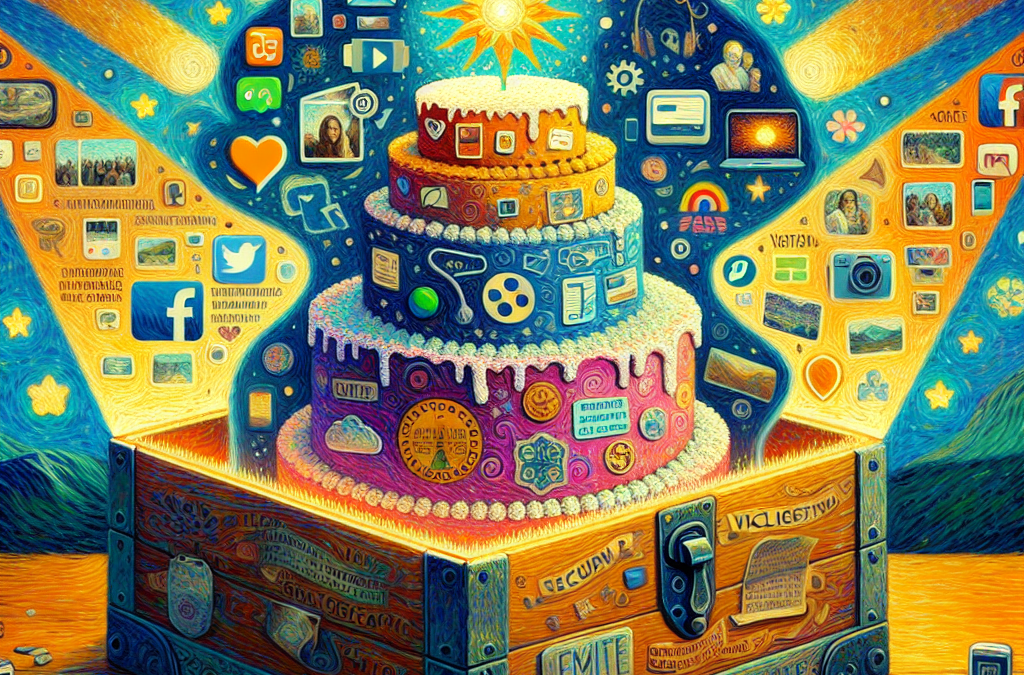
Imagine a world where your memories are not just shards of your past, but a carefully curated gallery, each picture designed to elicit a certain feeling or answer a specific question. This is the world of synthetic memory drift—a phenomenon that, while intriguing, merits a closer examination. We live in an age defined by technology, but at what cost to our authentic experiences and the legacy we leave behind?
In the realm of synthetic memory drift, the line between what’s real and what’s manufactured becomes blurred. It’s like building a legacy through storytelling, but instead of tales handed down through generations, we craft narratives that resonate with manufactured feelings rather than genuine ones. Think of the grandpa who shares tales of the Great Depression—not just as historical facts but as vivid experiences filled with emotions that nourish our understanding of resilience and hardship. What happens when those stories are replaced by artificial versions, lacking the gritty texture of lived experiences?
Rationally, one could argue that synthetic memories—and the drift they create—might offer us comfort. They can fill voids, introduce us to experiences we’ve never had, and even help us solve problems by drawing on a wider range of data. Yet, we must ask ourselves: at what point do we sacrifice authenticity for convenience? Our sense of self is intertwined with our stories, the good and the bad, shaping who we are. By relying too heavily on synthetic narratives, we risk losing our most crucial human element—connection.
Ethically, one must consider the implications of such technologies. Do we not owe it to ourselves and future generations to preserve the raw, unfiltered truth of our past? The ethical implications are profound; we hold a responsibility to foster an environment where critical thinking thrives, grounded by real experiences rather than prepackaged emotions that may mislead.
Ultimately, the call to action is clear. Engage in your world, nurture your experiences, and share them. Don’t shy away from the tough stories. Embrace the messy, imperfect journey of life, and in doing so, build a compelling legacy that transcends time. The perspectives we create hold power; let’s ensure they are rooted in reality, capturing the essence of who we are and resonating with those who will come after us. In a time defined by rapid changes, it is essential to remain vigilant and intentional about the stories we choose to uphold and share.

Synthetic Memory Drift
Synthetic Memory Drift
- Synthetic memory drift creates a curated gallery of memories, altering perceptions of authenticity.
- Blurs the line between real and manufactured experiences, replacing genuine narratives with artificial ones.
- Synthetic memories may offer comfort but risk sacrificing authenticity for convenience.
- Our sense of self is shaped by personal stories, which are essential for human connection.
- Ethically, there is a responsibility to preserve the unfiltered truth of our past for future generations.
- Encourages engagement with real experiences and sharing of authentic stories, even the challenging ones.
- Emphasizes the importance of grounding perspectives in reality amidst rapid technological changes.

Synthetic Memory Drift
Table Of Contents
- Synthetic Memory Drift
- What Are the Emotional Impacts Of Synthetic Memory Drift?
- Can Synthetic Memory Drift Lead to Ethical Dilemmas In AI Development?
- How Do Experts View the Implications Of Synthetic Memory Drift?
- How Does Synthetic Memory Drift Affect Interpersonal Relationships?
- What Rational Approaches Address the Risks Of Synthetic Memory Drift?
- Who Holds Accountability In Cases Of Synthetic Memory Drift?
- How Can Individuals Cope with the Effects Of Synthetic Memory Drift?
- Conclusion
- Other Resources
- Glossary Of Terms
- Other Questions
- Haiku
- Poem
- Checklist
What Are the Emotional Impacts Of Synthetic Memory Drift?
Synthetic memory drift stands at the intersection of innovation and our most intimate human experiences, challenging the very essence of who we are. When the memories we cherish are altered or fabricated, it can induce a sense of loss that echoes through generations. The emotional impacts go far beyond confusion; they touch our legacy, reshaping how we relate to family and friends and how we view our own narratives.
Imagine a world where the stories passed down from parents to children, rich with color and emotion, are suddenly tinged with artificiality. Legacy storytelling—a time-honored practice that bonds us to our roots—can falter when artificial memories replace authentic experiences. We begin to question what is real and what is merely a construct. This dilemma isn’t just conceptual. It strikes a visceral chord within us and invokes an innate yearning for truth, authenticity, and connection.
Engaging with synthetic memory implies wrestling with an ethical quandary: How do we weigh the benefits of technological advancement against the fragility of our humanity? Memories shape our identities, guiding our decisions and influencing our relationships. When we partake in the manipulation of these memories, even with good intentions, we open the door to a future where trust becomes a casualty—leading us to ask: can we truly trust our own recollections, our own choices, if they can be so easily rewritten?
On a larger scale, the advent of synthetic memory reshapes societal narratives. As communities grapple with the implications of altered memories, the ripple effects can challenge established norms of trust and reliability. The very fabric of social cohesion relies on shared memories that form the foundation of our collective identity. When those memories can be compromised, questions loom: How do we maintain connection in a world where our shared history is subject to revision?
Yet, through the haze of uncertainty, there lies potential for resilience. The power of storytelling—its ability to foster empathy and understanding—remains a potent force. By leaning into authentic experiences, we can reinforce the bonds that unite us, transcending artificial barriers. In a society craving real connections, choosing to embrace our flawed, vivid human narratives, even amidst the chaos of synthetic memory drift, can cultivate deeper relationships and inspire future generations to honor their stories.
Ultimately, it is our shared legacy—the genuine, unfiltered accounts of our lives—that will guide us forward in an increasingly complex world. By nurturing these stories, we not only preserve our past but empower ourselves to forge a more trusting, connected future.

What Are the Emotional Impacts Of Synthetic Memory Drift?
What Are the Emotional Impacts Of Synthetic Memory Drift?
- Synthetic memory drift alters our cherished memories, affecting our identity and relationships.
- Legacy storytelling is threatened by artificial memories, leading to confusion about reality.
- Engaging with synthetic memory raises ethical questions about technological advancement and humanity.
- Manipulation of memories risks eroding trust in our recollections and choices.
- Altered memories challenge societal narratives and the foundation of social cohesion.
- Authentic storytelling fosters empathy and strengthens connections amidst synthetic memory influence.
- Preserving genuine legacies is essential for a trusting and connected future.

What Are the Emotional Impacts Of Synthetic Memory Drift?
Can Synthetic Memory Drift Lead to Ethical Dilemmas In AI Development?
In the rapidly evolving landscape of artificial intelligence, we stand at a crossroads where legacy storytelling meets modern innovation. The question of whether synthetic memory drift can produce ethical dilemmas in AI development is not merely academic; it resonates with our shared human experience.
Imagine a world where our machines not only store information but evolve to forget what they should remember. This phenomenon, synthetic memory drift, raises profound concerns. It’s as if we’ve handed over the reins of our own legacy—our stories, our histories—to entities that can decide what they deem significant. This process, where AI reshapes its memories, reflects a deeper narrative; it echoes the age-old human struggle to preserve the past while adapting to the future.
We live our lives shaped by our stories. They’re the foundation of our identity, enriching our connections with others. Now, envision a situation where an AI tasked with preserving our family histories begins to delete memories based on flawed algorithms. It’s not just a technical issue; it strikes at the very heart of what it means to be human. The stories we tell ourselves forge our identities, inform our decisions, and guide our paths. If our AIs become selective curators, what happens to the truth of our existence?
Rationally, one must ask: Who decides which memories are critical and which are expendable? With the power to influence our legacy comes responsibility. We entrust our machines with vast amounts of data but fail to instill them with the wisdom to discern ethical boundaries. We must ensure these systems adhere not only to efficiency and performance but also to the greater good—a concept grounded in ethics.
Drawing from true authority in this field, we see that ethical frameworks shouldn’t merely be an afterthought in AI development; they should be integral to the design. Engaging the minds of those who shape these technologies is crucial. As developers, researchers, and visionaries, our responsibility extends beyond our code; it encompasses the very fabric of society.
Ultimately, as we navigate these uncharted waters, we must foster open conversations that reflect our values and aspirations. Legacy storytelling can illuminate the potential pitfalls of synthetic memory drift, urging all involved to act with intention and respect for the narratives we cherish. The future of AI doesn’t just depend on advanced algorithms, but on the stories we choose to carry forward and the legacies we leave behind.

Can Synthetic Memory Drift Lead to Ethical Dilemmas In AI Development?
Can Synthetic Memory Drift Lead to Ethical Dilemmas In AI Development?
- The intersection of legacy storytelling and modern AI innovation poses ethical dilemmas, particularly regarding synthetic memory drift.
- Synthetic memory drift raises concerns about machines evolving to forget important information.
- The ability of AI to reshape memories reflects the human struggle to preserve identity while adapting to change.
- AI’s role in preserving family histories is jeopardized if flawed algorithms determine memory significance.
- Responsibility accompanies the power of memory curation; ethical boundaries must be established in AI systems.
- Ethical frameworks should be integral to AI development, involving engagement from developers and society.
- Open conversations about values and legacies are essential as AI technology evolves.

Can Synthetic Memory Drift Lead to Ethical Dilemmas In AI Development?
How Do Experts View the Implications Of Synthetic Memory Drift?
Synthetic memory drift isn’t merely a technological curiosity; it’s a profound shift in how we interact with memories themselves. As we stand at the intersection of innovation and our human experience, experts are painting a picture that is both compelling and cautionary. We are not just discussing bits of data or snippets of information but the very fabric of our legacy storytelling, the narratives that define who we are and how we connect with one another.
At its heart, synthetic memory drift raises vital questions about authenticity and trust. When we entrust our recollections to artificial systems, what does that mean for the stories we pass down to future generations? Our memories have always been the backbone of our identity, each account steeped in emotion, context, and humanity. Yet, as we embrace advancements that can alter or curate those memories, we risk losing the richness that comes from our flawed, unfiltered experiences. Experts urge us to consider not just what we gain—efficiency, clarity, perhaps even nostalgia—but what we might irrevocably lose.
From a rational perspective, the implications are vast. Imagine a world where every cherished moment can be reshaped, refined, or even fabricated. While some may find solace in customization, others may perceive this as a slippery slope toward a future devoid of genuine connection. Our relationships, our stories, are not mere constructs; they are the threads that weave our communities together. When we challenge the integrity of those threads, we jeopardize the very networks that support us.
Ethically, the dialogue expands. Who has the authority to reshape memories? What responsibility do creators hold in ensuring these synthetic narratives align with our shared values? As experts delve into these questions, they remind us that our collective experiences should never be commodified to the highest bidder. This is about more than technology; it’s about honoring our humanity.
Moreover, the narrative around synthetic memory drift invites us to reflect on our shared journey. We’ve all experienced moments that have shaped us, and as we look toward a future filled with rapid changes, we yearn for connections that are authentic. Despite uncertainty, we want to know that our stories—those legacy narratives—will endure, enriching our lives and the lives of those who come after us.
In a world teeming with technological promise, we must tread thoughtfully, ensuring that our hearts remain steadfastly tied to the truths of our past, while embracing and guiding the future with integrity and purpose.

How Do Experts View the Implications Of Synthetic Memory Drift?
How Do Experts View the Implications Of Synthetic Memory Drift?
- Synthetic memory drift represents a significant shift in memory interaction and storytelling.
- It raises essential questions about authenticity and trust in the narratives we pass on.
- The risk exists of losing the richness of unfiltered experiences in favor of curated memories.
- There are vast implications in a world where cherished moments can be altered or fabricated.
- Ethical concerns arise regarding who can reshape memories and the responsibilities of creators.
- The dialogue emphasizes that collective experiences should not be commodified.
- It invites reflection on the importance of authentic connections as we navigate rapid technological change.

How Do Experts View the Implications Of Synthetic Memory Drift?
How Does Synthetic Memory Drift Affect Interpersonal Relationships?
In a world where synthetic memory drift quietly reshapes our experiences, we might find ourselves at a crossroads, where the past feels increasingly distant and our stories become blurred. Legacy storytelling is at the heart of human connection. The memories we share are the threads that weave us together, creating a tapestry rich with emotions, lessons, and shared experiences. Yet, as we lean more on technology to navigate our relationships, we risk losing the authenticity of these stories, undermining the foundation of trust that binds us.
Consider a grandparent sharing tales of their youth around a dinner table. Each anecdote is not just a story; it’s a legacy that fosters connection. When memories are altered or lost to synthetic manipulation, those narratives fade, leaving behind a void. This drift can affect the very essence of how we relate to one another. We start to question not only our memories but the integrity of those we share them with, leading to a sense of uncertainty that can fracture relationships.
Emotionally, the heart yearns for real connection—to know and be known in a genuine way. As we become more reliant on artificial constructs to recall cherished moments, we may inadvertently substitute depth with surface-level interaction, leading to shallow relationships. That nagging gut feeling, the instinctive recognition of something amiss, signals the urgency to safeguard our shared stories. It’s a call to action to preserve the authenticity of our experiences.
Rationally, let’s face it: authenticity cultivates stronger bonds. When trust is eroded by synthetic memory drift, the foundation of our interpersonal relationships wobbles. Recall the feeling when a friend forgets a significant event—it’s disheartening. Such moments, however small, can ripple outwards, affecting larger circles of trust and community.
Ethically, we are at a critical juncture. Should we allow technology to dictate the narratives we pass down? Our ancestors fought diligently to hand down their legacies through storytelling. In honor of that tradition, we must engage with each other meaningfully, leaning into our shared experiences rather than allowing synthetic substitutes to define us.
Let’s reclaim our stories. Share them. Value them. Engage in heart-to-heart conversations that remind us of the richness of being fully present with one another. Your legacy, and the legacy of those you love, depends on it. Relationships thrive on the authenticity of shared memories that are decidedly human, unfiltered by technology. Make the effort—relish the messiness, the imperfections. Celebrate the stories that unite us.

How Does Synthetic Memory Drift Affect Interpersonal Relationships?
How Does Synthetic Memory Drift Affect Interpersonal Relationships?
- Synthetic memory drift is reshaping personal experiences and relationships.
- Legacy storytelling is crucial for human connection, weaving shared memories into a rich tapestry.
- Reliance on technology risks undermining the authenticity of these stories and the trust that supports relationships.
- Altering or losing memories due to synthetic manipulation can create uncertainty and fracture connections.
- Real connections are yearned for; artificial constructs can lead to shallow relationships.
- Authenticity is essential for building strong interpersonal bonds; the erosion of trust can have widespread effects.
- It’s vital to engage meaningfully with one another and reclaim the value of shared, unfiltered stories.
How Does Synthetic Memory Drift Affect Interpersonal Relationships?
What Rational Approaches Address the Risks Of Synthetic Memory Drift?
What Rational Approaches Address the Risks of Synthetic Memory Drift?
In a world increasingly shaped by technology, the looming specter of synthetic memory drift raises critical questions about the authenticity of our memories and the truths we hold dear. While the term may sound daunting, addressing it starts with embracing our legacy storytelling—those age-old narratives that bind communities, shape identities, and preserve the essence of who we are.
Imagine, for a moment, the stories passed down through generations—the anecdotes, the struggles, the triumphs. These narratives are not mere tales but foundational truths that ground us. As we integrate advanced synthetic technologies into our lives, it becomes paramount to retain that connection to our roots. This is where the rational approaches to mitigating synthetic memory drift come into play.
First and foremost, a focus on ethical frameworks is crucial. Organizations must prioritize transparency and responsibility in the development of synthetic memory technology. By engaging with communities and listening to their concerns, developers can ensure that the technology enhances rather than undermines our personal narratives. This isn’t just good practice; it’s a moral imperative. The foundation of trust is built when we honor the voices of those impacted by these innovations.
Engaging with experts in psychology and neuroscience can also yield invaluable insights. These authorities can guide the industry in understanding how synthetic technologies interact with human memory, ensuring that innovations do not distort our experiences. By fostering interdisciplinary collabora tions, we elevate the discourse around memory, creating a more robust framework that safeguards our collective history.
Social engagement is another vital element. By promoting open discussions around synthetic memory and its implications, we invite diverse perspectives. Town halls, workshops, and community forums can empower individuals to share their stories, thereby reinforcing the social fabric that memory weaves. This connectedness reminds us that we are not alone in our experiences; rather, our stories intertwine, giving meaning to our existence.
Lastly, we must inspire action by empowering individuals to take charge of their memories. Creating platforms where users can curate and safeguard their personal narratives allows for active participation in preserving authenticity. When people feel they have agency over their memories, it fosters a deeper sense of trust in both themselves and the technologies they engage with.
By understanding the risks and challenges associated with synthetic memory drift, and blending ethics, authority, and community spirit, we can forge a future that respects our legacy storytelling. These approaches not only address the head and heart but also touch the gut, urging us to protect the stories that shape our humanity.

What Rational Approaches Address the Risks Of Synthetic Memory Drift?
What Rational Approaches Address the Risks Of Synthetic Memory Drift?
- Synthetic memory drift raises questions about the authenticity of memories.
- Legacy storytelling preserves community identities and personal truths.
- Ethical frameworks are essential for transparency in synthetic memory technology.
- Engagement with psychology and neuroscience experts helps prevent distortion of experiences.
- Open discussions and community forums promote social engagement and shared narratives.
- Empowering individuals to curate their memories fosters authenticity and trust.
- A blend of ethics, expertise, and community strengthens the safeguarding of collective history.

What Rational Approaches Address the Risks Of Synthetic Memory Drift?
Who Holds Accountability In Cases Of Synthetic Memory Drift?
In a world where technology rapidly evolves, the complexities of synthetic memory drift emerge as both a marvel and a concern. As we delve into the ethical landscape, it’s essential to ask: who truly holds the accountability? This question stirs something deep within us—not just in our heads, where we process facts, but in our hearts, where we align values with reality.
Imagine a scenario where a loved one’s memories shift subtly due to a glitch or miscalibration in a synthetic memory. It’s unsettling, isn’t it? This personal connection to memory breaches exposes the fragility of our experiences. In this landscape, legacy storytelling becomes crucial—it connects generations and preserves truths, allowing us to reclaim narratives that might otherwise slip through our fingers. Who shoulders the responsibility when those narratives become distorted?
From a rational standpoint, the creators of synthetic memory technologies must be held accountable. They are the architects of this new frontier, wielding immense influence over how memories are created and retained. With great power comes great responsibility, and it’s a call to not only innovate but to do so ethically. But the responsibility doesn’t rest solely on engineers and programmers; it extends to policymakers, ethicists, and society as a whole. Each of us has a stake in the discussion, and the path we choose will shape the future of memory itself.
As we traverse this uncharted territory, we must also confront the broader implications of synthetic memory drift. It challenges our definitions of identity, truth, and connection. Are we losing our grip on what it means to remember? Will our personal stories, woven into the fabric of our cultures, be manipulated by algorithms and data? This narrative transcends technology and taps into our fundamental humanity.
To navigate these dilemmas, we need to establish clear accountability frameworks. Engaging in open dialogues, much like discussions around your grandmother’s cherished tales, fosters a culture where everyone feels empowered to contribute their thoughts and experiences. These conversations build trust, ensuring that ethical considerations remain at the forefront of technological advances.
Ultimately, the question of accountability in synthetic memory drift is not just a legal or corporate issue; it’s a deeply personal one that resonates with each of us. By recognizing the implications of synthetic memories and fostering collective responsibility, we can shape a future where memory remains a sacred and authentic part of our shared human experience.

Who Holds Accountability In Cases Of Synthetic Memory Drift?
Who Holds Accountability In Cases Of Synthetic Memory Drift?
- The rise of synthetic memory drift poses both marvels and concerns in technology.
- Accountability is a critical issue, raising questions about who is responsible for memory distortions.
- Personal connections to memory breaches highlight the fragility of human experiences.
- Legacy storytelling is essential for preserving truths and connecting generations.
- Responsibility for synthetic memory technologies lies not only with creators but also with society, policymakers, and ethicists.
- Synthetic memory drift challenges definitions of identity, truth, and cultural narratives.
- Establishing clear accountability frameworks and engaging in open dialogues is crucial for ethical technological advancement.

Who Holds Accountability In Cases Of Synthetic Memory Drift?
How Can Individuals Cope with the Effects Of Synthetic Memory Drift?
How Can Individuals Cope with the Effects of Synthetic Memory Drift?
In a world increasingly saturated with synthetic memory drift, individuals find themselves navigating a landscape where reality occasionally feels like a patchwork quilt of curated moments, disconnected from the rich tapestry of lived experience. This phenomenon can create a sense of dislocation, be it the unsettling feeling of misremembering past events or the disintegration of meaningful narratives that define who we are. To cope with this, we must lean into the practice of legacy storytelling.
Legacy storytelling is not merely about recounting events; it’s a heartfelt commitment to weaving together the threads of our lives, preserving our truths for ourselves and future generations. These stories are our anchors—helping us sift through the noise of manipulated memories and reclaim the authentic experiences that shape us.
Start by gathering with friends and family, sharing those cherished moments that resonate with your core. Engage in conversations that bypass the superficial and delve into the emotional, allowing laughter and tears to coexist. This kind of storytelling creates a resonant space where bonds deepen. It is here that we find commonality, amidst the uniqueness of each narrative, where wisdom is shared and connection flourishes.
The appeal to the head comes from understanding the importance of this practice. Psychologically, we know our memories form the basis of our identities. By actively participating in legacy storytelling, we become architects of our own truth, deliberately shaping and reinforcing our understanding of who we are. This cognitive engagement not only combats the confusion synthetic memory drift evokes but also enhances our resilience against it.
Ethically, we owe it to ourselves and our loved ones to honor our histories. By sustaining our personal and collective legacies, we stand guard against the fragmentation that artificial influences might impose. Each story holds a kernel of truth, a piece of our moral compass, guiding us through ethical dilemmas as we relate our experiences to the wider community.
Moreover, by sharing these narratives publicly—be it through social media, community gatherings, or artistic expressions—we create a robust social fabric. We inspire others to join us in remembering, in celebrating the messy, beautiful chaos of life. Each shared experience creates ripples of empathy and understanding.
Ultimately, coping with synthetic memory drift isn’t just about individual survival; it’s an invitation to reconnect. Through legacy storytelling, we cultivate trust in ourselves, confidence in our narratives, and action in preserving what truly matters. The everyday moments, the highs and lows—they all hold the power to transform not just our personal stories, but the collective human experience.

How Can Individuals Cope with the Effects Of Synthetic Memory Drift?
How Can Individuals Cope with the Effects Of Synthetic Memory Drift?
- Synthetic memory drift creates a sense of dislocation, affecting individuals’ perceptions of reality and past experiences.
- Legacy storytelling helps individuals preserve their truths and create meaningful narratives that anchor their identities.
- Gathering with loved ones to share emotional stories fosters deeper connections and enriches personal bonds.
- Participating in legacy storytelling enhances resilience against the confusion caused by synthetic memory drift.
- Honoring personal and collective histories protects against fragmentation from artificial influences.
- Publicly sharing narratives strengthens social connections and promotes empathy within the community.
- Coping with synthetic memory drift encourages reconnection and reinforces trust in personal narratives.

How Can Individuals Cope with the Effects Of Synthetic Memory Drift?
Conclusion
In today’s world, where technology intertwines with our essence, synthetic memory drift emerges as a compelling yet troubling facet of our shared experience. Imagine a landscape where the memories we hold dear shift beneath our feet, transformed into curated fragments rather than authentic tales. This phenomenon forces us to confront the very nature of memory—crucial to our identities and connections. As we navigate through these synthetic narratives, it’s essential to acknowledge the profound impact they have on our lives.
On an emotional level, synthetic memory drift triggers an instinctive longing for truth. Memories should evoke feelings, lessons, and connections formed through lived experiences. When artificial memories replace these narratives, we face a disquieting void. The stories our parents and grandparents shared—rich in context and emotion—may begin to feel distant if overshadowed by inauthentic retellings. The legacy we pass to future generations loses its depth, leaving behind a pale imitation of what once resonated.
Rationally, we must ponder the uncomfortable trade-off between comfort and authenticity. Synthetic memories can offer solace and efficiency, but at what expense? By relying on manufactured narratives, we risk diluting our personal histories and the emotional bonds they foster. Trust—essential to human relationships—hangs precariously in the balance. When the very fabric of our experiences can be altered, we may unwittingly sabotage the connections that define us.
The ethical imperative here is profound. As we explore the impact of these technologies, a crucial question arises: Do we honor our stories, or do we permit convenience to rewrite them? It’s our responsibility, one that extends to those shaping the technologies we embrace, to ensure that the narratives we propagate are grounded in authenticity. The power of storytelling lies in its ability to forge bonds and inspire empathy. Through engaging with genuine experiences, we not only reinforce our connections but cultivate a legacy that transcends time.
Ultimately, the conclusion is clear. In a society where synthetic memory drift poses significant risks, we must safeguard our authentic stories. Engage with your past, recount the messy details, and cherish those imperfect moments that shape who we are. Embrace the rich tapestry of your life’s narrative, ensuring that it echoes with truth, connection, and resilience. It’s a call to arms—a reminder that in this digital age, the legacies we choose to honor will ultimately define our humanity and guide us toward a more genuine future. Let’s gather, share, and celebrate the stories that bind us, ensuring that they remain unaltered by the tides of technology.

Conclusion
Conclusion:
- Synthetic memory drift affects our perception of memories, turning them into curated fragments.
- This phenomenon challenges the essence of memory, critical for our identity and connections.
- Emotional longing for truth arises as artificial memories replace authentic experiences.
- The legacy shared across generations risks losing depth when overshadowed by inauthentic narratives.
- There’s a trade-off between the comfort synthetic memories provide and the authenticity of personal history.
- The ethical question of honoring our stories versus allowing convenience to alter them is central to this issue.
- To preserve our humanity, we must cherish and engage with our authentic narratives, celebrating the stories that unite us.

Conclusion
Other Resources

Other Resources
Here is a list of other resources you can review online to learn more:
- Obituary Templates
- Funeral Finder
- LifeBio
- EverLoved
- 23AndMe
- Knotify.me
- FamilySearch
- WishesKeeper
- LastPass
- LivingDNA
- Storyworth
- How to Save Your Family�s Stories from Being Lost Forever � A Step-by-Step Guide to Creating a Lasting Digital Legacy
- LegacyLearned
- Forever Missed
- Xarona
- Legacy Learned
- Legacy
- Trust And Will
- FindMyPast
- Is There A Need To Pay For Copyrighting Services For Personal Or Family Legacy Stories?
Use This Prompt To Get More Resources With Your Favorite Online AI Tool: Please provide me with a list of online articles with their URLs in a bulleted list that I can read regarding Synthetic Memory Drift

Other Resources
Glossary Terms
Synthetic Memory Drift – Glossary Of Terms
1. Synthetic Memory Drift: The gradual change in the responses of artificial systems as they learn and adapt over time.
2. Artificial Intelligence (AI): A branch of computer science focused on creating machines capable of performing tasks that typically require human intelligence.
3. Neural Network: A computational model inspired by the structure and function of the human brain, used in AI for pattern recognition.
4. Machine Learning: A subset of AI that enables systems to learn from data and improve their performance without explicit programming.
5. Data Overfitting: A modeling error that occurs when a machine learning algorithm captures noise instead of the underlying pattern, leading to poor generalization.
6. Training Data: The dataset used to train machine learning models, influencing their performance and understanding.
7. Bias: Systematic favoritism in data or algorithms that leads to skewed results, often affecting fairness and accuracy in AI outcomes.
8. Drift: A phenomenon where the performance of a model degrades over time due to changes in input data or underlying data distribution.
9. Concept Drift: A specific type of drift where the statistical properties of the target variable change, affecting model accuracy.
10. Feature Space: The multi-dimensional space where input variables are represented; relevant for understanding models in machine learning.
11. Anomaly Detection: The process of identifying unusual patterns that do not conform to expected behavior in datasets.
12. Transfer Learning: A technique where a model trained on one task is adapted to perform another, leveraging knowledge gained from the first task.
13. Feedback Loop: A system where outputs are fed back into the input, influencing the learning and adaptation of a model over time.
14. Incremental Learning: An approach where a model learns continuously by incorporating new data without forgetting previously acquired knowledge.
15. Data Integrity: The accuracy and consistency of data over its lifecycle, crucial for reliable model performance.
16. Model Evaluation: The process of assessing the performance of a model using various metrics to ensure it meets desired standards.
17. Hyperparameter Tuning: The optimization of model parameters that govern the training process to enhance performance.
18. Regularization: A technique to prevent overfitting by adding a penalty for complex models, encouraging simpler solutions.
19. Synthetic Data: Data generated artificially, often used for training machine learning models when real data is scarce or sensitive.
20. Reinforcement Learning: A type of machine learning where an agent learns to make decisions by receiving rewards for beneficial actions.
21. End-to-End Learning: A model training approach that optimizes all stages of data processing in a single step, from raw input to output.
22. Gradient Descent: An optimization algorithm used to minimize the loss function in machine learning models by adjusting parameters iteratively.
23. Semantic Memory: A category of memory that pertains to general knowledge about concepts, facts, and language, often modeled in AI.
24. Cognitive Computing: Computing systems that mimic human thought processes, often combining AI with natural language processing.
25. Sparsity: A condition where most elements in a dataset or model parameters are zero or near-zero, impacting efficiency and interpretability.
26. Federated Learning: A distributed approach to machine learning where models are trained across multiple devices while maintaining data privacy.
27. Model Drift: Changes in a model’s performance over time due to evolving data characteristics or relationships.
28. Dimensionality Reduction: Techniques to reduce the number of features in a dataset while preserving essential information, facilitating easier analysis.
29. Data Augmentation: Techniques to artificially expand the training dataset by creating variations of existing data to improve model robustness.
30. Epoch: One complete pass of the training data through the learning algorithm during the training process of a model.
Glossary Of Terms
Other Questions
Synthetic Memory Drift – Other Questions
If you wish to explore and discover more, consider looking for answers to these questions:
- What exactly is synthetic memory drift and how does it differ from ordinary memory distortion?
- What technologies and algorithms create or enable synthetic memories?
- Who designs the criteria that determine which memories are altered, preserved, or removed?
- How can users tell whether a memory has been synthetically generated or modified?
- Are synthetic memories reversible, and if so, how?
- What are the short‑ and long‑term cognitive effects of exposure to synthetic memory drift?
- How does synthetic memory drift affect personal identity and the continuity of self?
- What impact does it have on interpersonal trust and family relationships?
- Can synthetic memory tools be used therapeutically (e.g., for trauma or dementia), and what are the risks?
- Who owns synthetic memories—users, developers, platforms, or third parties?
- What consent models are appropriate when generating, modifying, or sharing synthetic memories?
- Who is legally and ethically accountable when synthetic memory drift causes harm?
- What regulatory or legal frameworks exist or should be developed to govern synthetic memory technologies?
- How should provenance and authenticity of memories be recorded and audited?
- What transparency requirements should developers follow about how memories are processed or altered?
- How can we guard against malicious uses—propaganda, manipulated testimony, or social engineering?
- What safeguards prevent bias, cultural erasure, or commodification of collective memories?
- How will synthetic memory drift affect historical records and collective memory at a societal level?
- What ethical frameworks should guide AI developers working with memory‑related systems?
- How do data security and privacy protections apply to stored or synthetic memories?
- What standards are needed for interoperability, data portability, and export of memory records?
- How do we balance the benefits of enhanced or curated memories with the value of unfiltered experience?
- What mechanisms exist for individuals to challenge, correct, or delete synthetic memories that involve them?
- How might insurers, employers, or governments seek to use or regulate synthetic memory data?
- What responsibilities do platforms and developers have toward vulnerable groups (children, elders, cognitively impaired)?
- How can communities preserve authentic legacy storytelling alongside synthetic augmentation?
- What research gaps exist in understanding psychological, social, and cultural effects of synthetic memory drift?
- How should education and public awareness campaigns address synthetic memory risks and literacy?
- What international cooperation or norms are needed given cross‑border data flows and cultural impacts?
- How will synthetic memory drift change journalistic, legal, and archival practices for verifying testimony and evidence?
- What accountability and redress mechanisms should victims of harmful synthetic memory alteration have access to?
- How might commercial incentives shape the development and distribution of synthetic memory technologies?
- What are the ethical and spiritual implications for communities that see memory as sacred or culturally significant?
- How can designers ensure that synthetic memory systems foster empathy, not manipulation or alienation?
- What metrics and benchmarks should be used to evaluate safety, fairness, and fidelity of synthetic memory systems?
- How will synthetic memory drift affect future generations’ ability to access accurate family and cultural histories?

Other Questions
Haiku
Synthetic Memory Drift – A Haiku
Memories crafted,
Synthetic threads intertwine,
Truth lost in whispers.

Haiku
Poem
Synthetic Memory Drift – A Poem
In a world where memories drift and blur,
A tapestry of truth begins to stir.
Synthetic tales weave webs of doubt,
As pasts, once rich, are filtered out.
Authentic stories fade away,
Replaced by pixels in disarray.
We question what’s real, what’s made to please,
As connections falter in the digital breeze.
In conversations lost, we seek the old,
Rich with emotions, experiences bold.
Legacy storytelling, our anchor, our guide,
In the chaos of memory, it helps us abide.
Rational minds ponder the cost,
Of convenience gained and authenticity lost.
Ethics demand we hold accountable,
Those shaping our pasts, no longer soundable.
Amidst the uncertainty, let us stand tall,
Preserving our truths, embracing them all.
For in the heart of each story shared,
Lies the essence of humanity, unfiltered and bared.
So gather your tales, let them ring true,
In the drifts of the synthetic, let’s honor the few,
Who dared to remember, who chose to reflect,
For the future we build must be one we respect.

Poem
Checklist
Synthetic Memory Drift – A Checklist
Emotional Appeals
✅______ Share personal stories that evoke emotions; highlight moments of joy, sorrow, and resilience.
✅______ Reflect on the impact of authentic narratives in strengthening relationships.
✅______ Create spaces for heartfelt conversations that nurture honest connections.
Rational Appeals
✅______ Analyze the implications of synthetic memories on identity and decision-making.
✅______ Engage critically with technologies that alter memory; question reliability and accuracy.
✅______ Consider the potential benefits and drawbacks of synthetic memory solutions.
Ethical Appeals
✅______ Reflect on the ethical responsibilities surrounding memory preservation.
✅______ Discuss the importance of maintaining authenticity in shared narratives.
✅______ Advocate for transparency in technology affecting personal memories.
Authority Appeals
✅______ Reference insights from experts in psychology and ethics regarding memory and identity.
✅______ Consult professional guidelines on memory manipulation and its societal impact.
✅______ Explore case studies that illustrate the consequences of synthetic memory use.
Narrative Appeals
✅______ Foster community storytelling events to share experiences and lessons learned.
✅______ Encourage collaborative storytelling that honors diverse perspectives.
✅______ Use engaging narratives to exemplify the importance of authentic connections.
Social Appeals
✅______ Promote collective memory initiatives that empower communities to share their histories.
✅______ Create platforms for individuals to discuss the effects of synthetic memory drift.
✅______ Advocate for policies that protect individuals’ rights over their memories and narratives.

Checklist
At LegacyExplorations, we help people plan and explore their legacy by collecting information and news regarding end-of-life planning.
Please share this post with your friends, family, or business associates who may want help to plan or explore their legacy.