

Unlocking Family Stories: Navigating The Keyword Search Dilemma
By Tom Seest
At LegacyExplorations, we help people plan and explore their legacy by collecting information and news regarding end-of-life planning.
Please share this post with your friends, family, or business associates who may want help to plan or explore their legacy.
The Keyword Problem In Family Archives
The Keyword Problem in Family Archives
In the digital age, our memories don’t just fade into the pages of dusty photo albums; they’re archived in bytes and pixels. Yet, amid the endless sea of family stories, the keyword problem looms large. Imagine for a moment your family history, rich with Legacy Storytelling, falling victim to obscurity simply because we haven’t tagged it properly. Each snapshot, every recorded anecdote, represents a fragment of who we are and where we came from.
As we scroll through genealogical websites or social media archives, it’s easy to overlook the significance of how we categorize our past. It’s not merely about creating labels; it’s about connecting with future generations. The heart of this issue lies in preserving the essence of family legacies that shape our identities. When we fail to use meaningful keywords, we risk alienating our story from those who might search for it in desperation or curiosity.
Consider this: our ancestors may have faced adversities that forged their character. They crafted their narratives through perseverance and tenacity, and they relied on connection, compassion, and courage. By carefully choosing the right keywords, we honor their struggles and triumphs. It’s a rational endeavor—ensuring that our family history doesn’t get lost amidst the noise of countless other tales clamoring for attention.
Ethically, it’s our duty to keep our history alive, not just for posterity, but for our contemporaries. Crafting a digital repository of our family stories and ensuring they’re tagged with thoughtful keywords can foster a sense of belonging. It creates a bridge between the present and the past, inviting descendants to step into their heritage with pride.
Narratively, think of each keyword as a thread in a vast tapestry. Ignoring this aspect is like letting loose ends unravel—each thread is essential for the tapestry to maintain its shape and meaning. By engaging with this process, we become custodians of our family’s legacy, wielding authority in how we present our stories.
Ultimately, this isn’t just an organizational challenge. It’s a call to action. When we prioritize how we document and categorize our family archives, we encourage future generations to embrace their roots, cultivating a deeper understanding of the values and experiences that define us. Let’s not let our stories languish in obscurity. Instead, let’s ensure they resonate through time, honored and cherished, reflecting the rich legacy we’ve inherited.

The Keyword Problem In Family Archives
The Keyword Problem In Family Archives
- The digital age archives family memories in bytes and pixels, raising the “keyword problem.” .
- Improperly tagging family stories risks losing their significance and connection to future generations.
- Choosing meaningful keywords honors ancestors’ struggles and preserves family narratives.
- Ethically, it is essential to document family history for both current and future generations.
- Keywords serve as threads in a tapestry, ensuring narratives maintain their shape and meaning.
- Prioritizing documentation encourages future generations to connect with their heritage.
- This is not merely organizational; it is a call to action to keep family stories alive.

The Keyword Problem In Family Archives
Table Of Contents
- The Keyword Problem In Family Archives
- What Stories Do Your Family Archives Tell About Your Heritage?
- How Can Understanding Family History Improve Personal Identity?
- What Emotional Connections Do You Find In Your Family Documents?
- How Do Family Archives Reflect Our Shared Values and Traditions?
- What Ethical Responsibilities Come with Preserving Family Memories?
- How Does Preserving Family History Strengthen Community Ties?
- What Steps Can You Take to Organize Your Family Archives Effectively?
- Conclusion
- Other Resources
- Glossary Of Terms
- Other Questions
- Haiku
- Poem
- Checklist
What Stories Do Your Family Archives Tell About Your Heritage?
Within the dusty folders and yellowed pages of family archives lies a tapestry of memories, woven together by the threads of legacy storytelling. These are not mere records of past events; they are echoes of laughter, whispers of struggle, and shouts of triumph that define who we are. Every photograph, letter, and heirloom carries weight, telling a story that transcends time and connects us to our roots.
Think about the stories that emerge from your own family archives. They pull at your heartstrings as you remember the late-night tales spun by grandparents, each tale a lesson wrapped in love. They engage your mind, provoking thoughts about choices made, paths taken, and the sacrifices that paved the way for your existence today. This connection to the past isn’t solely academic; it’s visceral. It touches your gut, igniting a sense of belonging and pride.
As we sift through our family’s history, we begin to understand our place in a broader narrative. The pillars of our family—those who came before us—are not just figures in a story; they are the architects of our identities. Their struggles resonate with our own, shaping our ethics and values. The legacy storytelling of our ancestors invites us to reflect on our behaviors and decisions, urging us to embody the principles they lived by. It leads us to consider: What responsibility do we carry to honor their journeys?
This exploration of heritage isn’t just a nostalgic trip; it establishes an authority over our future. By digging into our past, we empower ourselves and inspire future generations to take pride in their lineage. Their stories fortify our resolve, demonstrating that even in the face of adversity, resilience can triumph.
Sharing these stories fosters connection within our families and communities. When we gather around the table or sit around a fire, we establish a space where these narratives can be shared and celebrated. Each shared tale invites others to share their own, creating a rich dialogue that enhances our collective identity.
So, as you delve into your family archives, embrace the stories they hold. Let them inspire not just admiration for those who came before, but an action-driven desire to continue the legacy. By honoring where we came from, we pave the way for where we are headed. In this sense, understanding our heritage transforms our present, binding us together through the shared fabric of legacy storytelling.

What Stories Do Your Family Archives Tell About Your Heritage?
What Stories Do Your Family Archives Tell About Your Heritage?
- Family archives contain a tapestry of memories, combining echoes of laughter, struggles, and triumphs.
- Photographs, letters, and heirlooms tell stories that connect us to our roots and heritage.
- Stories from family archives evoke emotions and provoke thoughts about personal and familial choices.
- Understanding our family’s history helps us recognize our place in a larger narrative and shapes our identities.
- Exploring heritage empowers individuals and inspires future generations to carry on their lineage with pride.
- Sharing family stories fosters connections within families and communities, enhancing collective identity.
- Embracing and honoring these stories paves the way for our future, binding us through legacy storytelling.

What Stories Do Your Family Archives Tell About Your Heritage?
How Can Understanding Family History Improve Personal Identity?
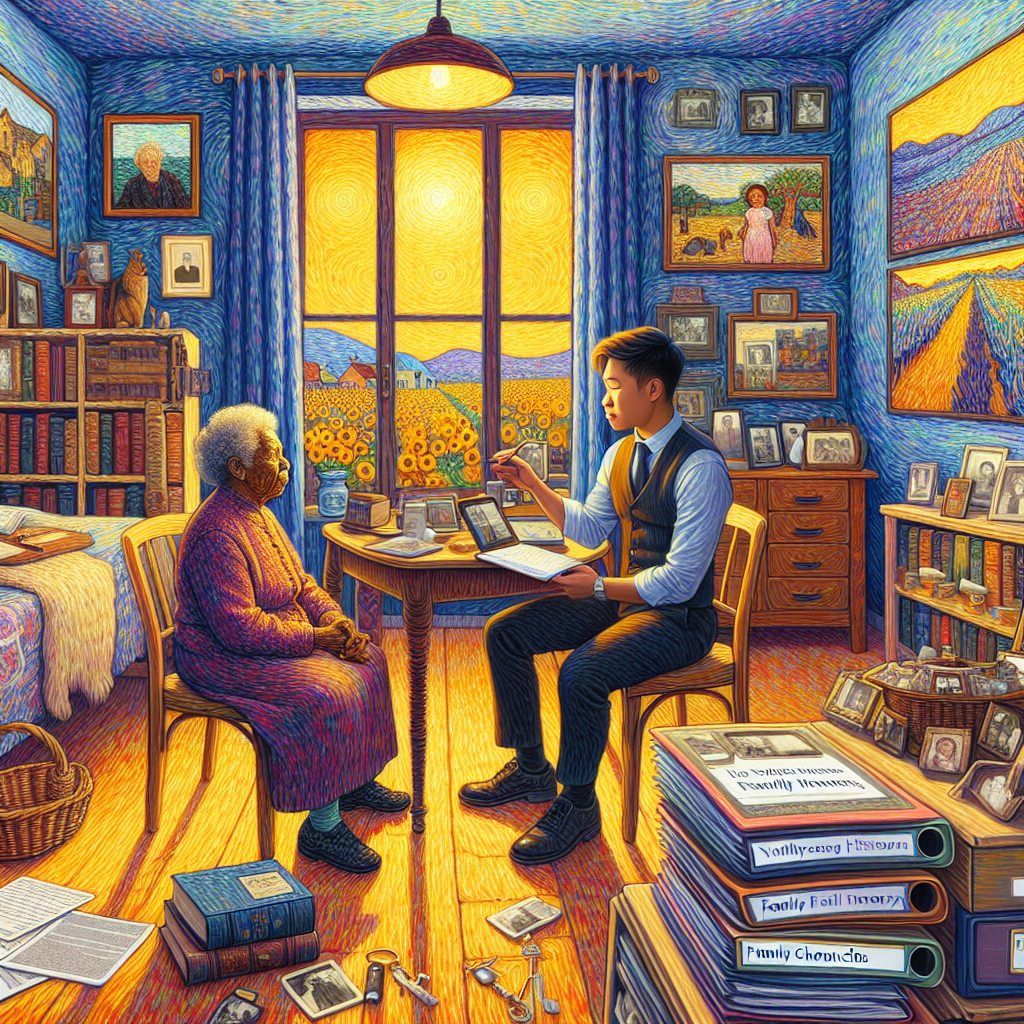
Understanding family history is like digging up treasure buried deep within the earth. Each story, each name etched on a dusty lineage chart, holds a key not just to who we are, but to who we might become. At its core, family history is a collection of LegacyStorytelling, a way to bridge the past and future, creating a tapestry rich with the threads of our ancestors’ experiences, struggles, and triumphs.
Many of us find ourselves at a crossroads in life, questioning our identity and purpose. By exploring familial narratives, we gain insight into the resilience of those who came before us. It’s in the shared challenges, the victories celebrated, and even the failures acknowledged that we see reflections of our own lives. This connection fosters a sense of belonging and solidarity. When we realize that our grandparents fought through the Great Depression or that our great-aunt broke barriers in a male-dominated field, we’re not just hearing stories—we’re inheriting courage, strength, and an unwavering sense of hope.
Furthermore, understanding family history engages the rational mind. It offers us a chance to appreciate the patterns of behavior, the values, and the traditions that have shaped our families. Digging into these histories can reveal why certain traits persist in our DNA—both biologically and culturally. We can begin to understand how past decisions and lifestyles influence present circumstances, helping us make informed choices for our future.
On the ethical side, there lies a responsibility to keep these stories alive. Our ancestors weren’t just names in a genealogy archive; they were real people with joys, fears, and dreams. Sharing their stories is about honoring them, ensuring that their sacrifices and lessons are not forgotten. Each story we pass on serves as a guide for future generations.
The emotional weight of family history can ignite a fire in the gut. When we uncover a history of perseverance, we draw strength from it, fueling our own journeys. The stories of those who overcame adversity resonate deeply, inspiring us to tackle our own challenges with tenacity and grit.
In essence, understanding family history is a powerful tool for self-discovery. It weaves a sense of identity that is both personal and collective, drawing us closer to our roots while propelling us toward the future. By embracing the LegacyStorytelling of our families, we not only enrich our own lives but also connect to a greater narrative that we all share.

How Can Understanding Family History Improve Personal Identity?
How Can Understanding Family History Improve Personal Identity?
- Understanding family history reveals personal and collective identity, serving as a bridge between the past and future.
- Exploring familial narratives provides insight into the resilience and struggles of ancestors, fostering a sense of belonging.
- Family history helps us recognize inherited traits and values that influence our present and future choices.
- There is an ethical responsibility to honor and share ancestral stories, ensuring their sacrifices and lessons are preserved.
- Uncovering histories of perseverance inspires strength and determination in facing personal challenges.
- Family history enriches self-discovery, creating a tapestry of shared experiences among generations.
- By embracing family stories, we connect to a greater narrative that transcends individual experiences.
How Can Understanding Family History Improve Personal Identity?
What Emotional Connections Do You Find In Your Family Documents?
Family documents serve as vital conduits of legacy storytelling, transporting us through time and allowing us to engage deeply with our lineage. The letters, photographs, and treasured keepsakes often reveal not just facts but the very essence of who we are. They connect us to our ancestors, inviting us to understand their struggles, triumphs, and dreams. In nuanced ways, these artifacts convey a shared narrative that transcends generations, reminding us that we are part of something bigger—a tapestry woven from countless threads of experience.
Imagine opening a yellowed envelope and finding a letter penned in elegant cursive. Each word becomes a bridge to a past life, granting insight into the emotions and aspirations of a relative you never met. The writer’s hopes and fears echo your own, forging a bond that spans decades. This resonates on a human level, inviting you to not only read but to feel. When we discover these pieces of our family history, we recognize elements of ourselves reflected back. We begin to understand that while time may separate us, the human experience we share remains constant, and it’s in these connections that we find solace and understanding.
Moreover, family documents offer a lens through which we can confront our own identity. They present a unique opportunity for legacy storytelling to flourish. Each artifact holds authority—an unspoken validation of our heritage. They urge us to acknowledge where we came from and to honor those who paved the way so we could stand here today. By engaging with these documents, we recognize the ethical responsibility we have to keep these stories alive, not just for ourselves but for future generations. We foster a sense of continuity, ensuring that our children and grandchildren can draw from the well of family knowledge and experience.
On a social level, sharing these discoveries encourages dialogue. When we gather to discuss an old photograph or a poignant letter, we share laughter, tears, and reflections, knitting ourselves more tightly together as a family. Each conversation becomes an act of legacy storytelling that enriches our collective memory and strengthens our bonds.
The emotional connections found in family documents are profound. They stir not just nostalgia but inspire action—an eagerness to delve deeper, to understand more fully, and to cultivate a rich family narrative that will endure long after we’ve turned the last page of our own stories. Embrace these connections; they are the heartbeat of your legacy.

What Emotional Connections Do You Find In Your Family Documents?
What Emotional Connections Do You Find In Your Family Documents?
- Family documents facilitate legacy storytelling, connecting us with our lineage.
- Artifacts such as letters and photographs reveal the essence of our identity and ancestral experiences.
- They foster emotional bonds by highlighting shared human experiences across generations.
- Engaging with these documents allows us to confront and understand our own identity.
- Sharing discoveries enhances family dialogue and strengthens collective memory.
- These artifacts hold the responsibility of preserving stories for future generations.
- Emotional connections motivate deeper exploration and cultivation of family narratives.

What Emotional Connections Do You Find In Your Family Documents?
How Do Family Archives Reflect Our Shared Values and Traditions?
Family archives are more than mere collections of photographs, letters, and heirlooms; they represent the fabric of our shared values and traditions. They are a living testament to our legacy, a tangible manifestation of who we are and where we come from. Each item tells a story, weaving together the narratives of generations that precede us. In those dusty albums and well-worn boxes lies the essence of legacy storytelling—an art that fosters connection between past and present.
As we sift through the remnants of our family histories, we encounter strides and struggles that shaped our ancestors’ lives, decisions that echo through time, and lessons learned the hard way. These archives invite us not just to reflect but to engage with the very heart of our identity. When we hear Aunt Millie’s tales of resilience during tough times or see Grandpa’s handwritten letters to a loved one, it’s as if they reach out from the past, reminding us of the values they’ve instilled—perseverance, love, and tenacity.
On a rational level, family archives serve a purpose beyond nostalgia. They provide a sense of continuity in a world that often feels chaotic and transient. By understanding our history, we can find solace and guidance for today’s challenges. They present opportunities for intergenerational dialogues, connecting young and old through stories and experiences that shape our collective wisdom. In this way, archives hold the potential to nurture a sense of belonging, grounding us in our roots while inspiring us to forge our unique paths.
From an ethical standpoint, preserving our family stories honors the lives that came before us. It is a responsibility we carry, ensuring that their legacies are passed down with integrity. By sharing these narratives, we embrace the richness of diverse experiences and foster empathy toward one another, bridging gaps of understanding across generations.
Socially, family archives create a sense of community. They remind us we are not isolated in our struggles but connected through shared experiences. Each story inspires trust and confidence in our ability to overcome obstacles, echoing the age-old truth that no one truly walks alone. By embracing and sharing these legacies, we breathe life into our family’s history, transforming them into a powerful testament of resilience that resonates deep within us.
In this intricate dance between the past and the present, we find not just who we are, but who we aspire to be. The stories we preserve will guide us, inspire us, and ultimately weave a tapestry of our shared ideals, values, and traditions for generations to come.
How Do Family Archives Reflect Our Shared Values and Traditions?
How Do Family Archives Reflect Our Shared Values and Traditions?
- Family archives represent shared values and traditions, providing a living testament to our legacy.
- Each item in an archive tells a story, connecting the narratives of past generations.
- Exploring family histories reveals lessons learned and the experiences that shaped our ancestors’ lives.
- Archives foster intergenerational dialogue, promoting understanding between young and old.
- Preserving family stories honors past lives and ensures legacies are passed down responsibly.
- Family archives create a sense of community and shared experience, emphasizing resilience in overcoming struggles.
- The stories preserved in archives guide and inspire future generations, weaving a tapestry of collective ideals and traditions.

How Do Family Archives Reflect Our Shared Values and Traditions?
What Ethical Responsibilities Come with Preserving Family Memories?
Preserving family memories is more than a nostalgic pastime; it’s an act steeped in ethical responsibilities that connect the past to the present and beyond. As we engage in Legacy Storytelling, we must recognize that the memories we choose to hold onto and share carry weight. They shape how future generations understand their roots, identity, and values. The act of chronicling family stories isn’t just about recording events; it’s about providing context, fostering understanding, and building bridges across time.
When we dig through old photographs, letters, or heirlooms, the emotions can flood back—laughter, love, and sometimes sorrow. These memories are not just personal; they belong to a collective narrative that informs our family’s identity. Ethically, there’s a responsibility to preserve this narrative with integrity. In selecting which stories to tell, we tread a careful line. Highlighting the triumphs of our ancestors while acknowledging their struggles creates a fuller, more authentic representation of who we are. This honesty fosters trust within the family and enhances the emotional impact of our shared history.
Yet, the ethical challenges extend to how we share these stories. Each tale carries with it a host of ethical considerations, especially when they involve sensitive topics. The narratives we choose to pass down can have lasting effects, shaping self-perceptions and family dynamics for generations. It’s essential to approach each story with respect for those who lived it—balancing truth with tenderness. When opening the vault of memory, invite others into the conversation. Approaching Legacy Storytelling as a collaborative effort can ensure that multiple voices are heard, leading to a richer, more inclusive family narrative.
Moreover, in an age where sharing memories can be as simple as a social media post, it’s crucial to consider the implications of our digital legacy. What we put out into the world can echo beyond our intent. The responsibility extends not just to what stories we tell, but to whom we tell them and how. Engaging with family members to curate these memories fosters connection and strengthens bonds. By actively including loved ones in these discussions, we cultivate a collective memory that resonates not just with our heads, but with our hearts and guts.
Preserving family memories is a profound opportunity to cherish our heritage, honor our ancestors, and ignite a sense of belonging in those who come after us. By embracing the ethical responsibilities of Legacy Storytelling, we don’t just keep memories alive; we breathe life into our family’s future.

What Ethical Responsibilities Come with Preserving Family Memories?
What Ethical Responsibilities Come with Preserving Family Memories?
- Preserving family memories connects the past with the present and future, emphasizing ethical responsibilities.
- Legacy Storytelling influences how future generations understand their roots, identity, and values.
- Chronicling family stories provides context, fosters understanding, and builds connections over time.
- Ethically, it is important to preserve family narratives with integrity, balancing triumphs and struggles.
- Sharing stories involves ethical considerations, especially regarding sensitive topics that can impact family dynamics.
- Collaboration in Legacy Storytelling ensures multiple voices are heard, enriching the family narrative.
- Engaging family members in memory preservation fosters connection and strengthens familial bonds.

What Ethical Responsibilities Come with Preserving Family Memories?
How Does Preserving Family History Strengthen Community Ties?
Preserving family history isn’t just about dusting off old photo albums or compiling names into a family tree. It’s about laying down roots that extend beyond our individual lives and connect us to a larger community. At its core, family history is a form of Legacy Storytelling—an intimate tapestry woven from the experiences, challenges, and victories of those who came before us. When we share these narratives, we fulfill a vital role in our communities, enriching the collective human experience.
Consider how each story contributes to an understanding of where we come from and the values we aspire to live by. These stories aren’t merely entertainment; they offer a moral compass, guiding younger generations as they navigate their own lives. Each family narrative is a thread that can bind us together, generating a shared understanding and a sense of belonging. The emotional pull of these tales resonates, engaging our hearts and stirring a deep-seated desire for connection.
Rationally, studies show that communities with strong family ties often enjoy better social cohesion and lower crime rates. When individuals feel that they belong to a legacy—a continuing story that stretches through generations—they’re more likely to invest in the well-being of their neighbors. This isn’t just about nostalgia; it’s about creating a fertile ground for cooperation, empathy, and mutual respect.
Ethically, honoring family histories reminds us of our responsibilities to one another and the world we inhabit. When we recognize the sacrifices made by our ancestors, we cultivate a sense of gratitude and accountability. These stories also remind us of the diversity that exists within our communities, encouraging us to celebrate differences while finding common ground.
Rooted in authority, family history functions as a guiding light. Grandparents, mentors, and local historians hold vast reservoirs of knowledge that can inform younger generations. When we listen, we engage with wisdom that’s often lost to the hustle of modern life.
Narratively, every family has a saga worth telling—stories filled with triumphs, struggles, loves, and losses. Sharing these tales encourages dialogue, allowing individuals to relate their personal experiences to those of their neighbors. In a society often dominated by isolation, these exchanges remind us that we are not alone; we are part of something bigger.
As we engage in Legacy Storytelling, we invite everyone to own their part of history. By preserving family legacies, we strengthen the very fabric of our communities, creating a mosaic that reflects our shared humanity. Through understanding, we not only honor our past but also inspire action and hope for the future.

How Does Preserving Family History Strengthen Community Ties?
How Does Preserving Family History Strengthen Community Ties?
- Family history involves more than archiving; it connects individuals to a larger community.
- It serves as Legacy Storytelling, weaving together experiences and challenges of ancestors.
- Family narratives provide a moral compass for younger generations, fostering values and a sense of belonging.
- Strong family ties contribute to better social cohesion and lower crime rates in communities.
- Honoring family histories cultivates gratitude and accountability while recognizing community diversity.
- Grandparents and local historians offer valuable wisdom and insights often overlooked in modern life.
- Sharing family stories encourages dialogue, reinforcing the connection between individuals and their communities.

How Does Preserving Family History Strengthen Community Ties?
What Steps Can You Take to Organize Your Family Archives Effectively?
Managing family archives is more than just sorting through boxes of old papers and photographs; it’s about preserving your legacy. Each crumpled letter or faded photograph tells a piece of your family’s story, weaving together memories that span generations. Here’s how to approach the task of organizing your family archives effectively, with a practical yet heartfelt perspective.
First, gather your materials in a single place. This includes letters, photos, journals, and even digital files. With everything in one location, you’ll visualize the entirety of your family’s history, creating a narrative that’s both compelling and necessary to preserve. As you sift through these pieces, engage with the emotions behind each item. Whether it’s the excitement of a wedding announcement or the somber reflection of a farewell, these moments capture the essence of your family’s life journey. This is your opportunity for Legacy Storytelling, inviting your family’s history to inform and inspire your present.
Next, categorize your collected items. Create sections for significant life events—births, marriages, travels, and celebrations. This organization will not only clarify your archive but also make it easier for future generations to connect with their roots. Rational thought plays a vital role here; having a clear structure allows information to be accessed easily when curiosity strikes.
As you catalogue your items, consider the ethical implications of preserving these memories. Think about how future family members might feel when they discover the stories behind the pictures or the events that shaped their ancestors. Sharing these tales creates a sense of belonging, fostering connection not just to the past, but also to each other.
Digitizing your materials can add further layers of accessibility, safety, and longevity. In this digital age, sharing your findings with family members—even those who are far away—can prompt conversations that transcend time and distance. Emotional ties may strengthen as each relative learns more about their roots, deepening connections that might have faded.
Finally, turn this project into a family endeavor. Invite your loved ones to participate in the organizing and storytelling process. This is more than a chore; it’s a chance to build shared memories, fostering a sense of unity. Organizing your archives becomes a celebratory act, reinforcing trust and confidence in your family’s rich history. By taking these steps, you ensure that your family’s legacy isn’t just preserved but thrives for generations to come.

What Steps Can You Take to Organize Your Family Archives Effectively?
What Steps Can You Take to Organize Your Family Archives Effectively?
- Managing family archives involves preserving your legacy beyond sorting papers and photographs.
- Gather all materials like letters, photos, and digital files in one place to visualize your family’s history.
- Engage emotionally with each item, fostering legacy storytelling and connecting with family memories.
- Organize items into categories based on significant life events to clarify archives for future generations.
- Consider the ethical implications of sharing memories, fostering belonging and connection within the family.
- Digitizing materials enhances accessibility and facilitates sharing with distant family members, reinforcing emotional ties.
- Involve family members in the organizing process to create shared memories and strengthen unity around the family’s history.

What Steps Can You Take to Organize Your Family Archives Effectively?
Conclusion
Preserving family stories is crucial in our digital age, where memories risk floating into obscurity without proper tagging or attention. Every photo, letter, and anecdote weaves into the fabric of our identity, linking us to our past and offering future generations a window into their heritage. This isn’t merely about organization; it’s an emotional journey that calls for careful consideration of how we share our lived experiences.
Each keyword we choose serves not only as a label but as a bridge connecting us to our ancestors’ struggles and triumphs. These aren’t just historical figures but real people who endured hardships and celebrated successes, stories worth honoring. When we label our stories thoughtfully, we transform our family’s history into an accessible narrative that future generations can understand and appreciate.
Emotionally, we find strength in recalling tales from our family archives, which echo the values instilled in us. Think of the lessons learned from your grandparents’ perseverance during tough times or the quiet tenacity of those who came before you. By engaging with these stories, we fill our hearts with empathy, pride, and a sense of belonging. This deeper connection strengthens our resolve and fuels our desire to thrive amidst life’s challenges, inspiring us to cultivate similar legacies for our descendants.
On a rational level, maintaining a systematic approach to our family archives enhances our understanding of patterns within our lineage, clarifying how our heritage shapes our contemporary identities. Ethically, we have a responsibility to ensure our family narratives don’t disappear. Chronicling these stories, especially those of hardship and resilience, honors our ancestors and provides context for understanding where we fit in the broader timeline of our family history.
That narrative not only binds individual families but can strengthen communities as well. When shared, family stories encourage dialogue, foster understanding, and create a sense of togetherness. Society becomes enriched when families gather to share their unique tales. Each contribution enhances communal identity, illustrating that while we may be unique in our experiences, our foundations interlink.
Ultimately, the act of preserving family memories isn’t just for the sake of nostalgia; it’s about ensuring that these legacies breathe life into our future. Each effort we make—organizing archives, sharing stories, and involving loved ones—nurtures the bond that ties us to our past, forms our present, and shapes our future. This is the heartbeat of what it means to be part of a family: to cherish our roots, grow from our shared experiences, and pass on the wisdom that can guide us all.

Conclusion
Conclusion:
- Preserving family stories is essential to avoid memories fading into obscurity in the digital age.
- Each photo, letter, and anecdote contributes to our identity and connects us to our heritage.
- Thoughtful labeling of stories transforms family history into an accessible narrative for future generations.
- Engaging with family tales fosters empathy, pride, and a sense of belonging.
- A systematic approach to archives clarifies lineage patterns and shapes contemporary identities.
- Sharing family stories can strengthen community ties and enhance collective identity.
- The act of preserving memories nurtures the bonds between past, present, and future generations.

Conclusion
Other Resources

Other Resources
Here is a list of other resources you can review online to learn more:
- How To Write Legacy Stories That Appeal To The Heart, Gut and Head
- Is There A Need To Pay For Copyrighting Services For Personal Or Family Legacy Stories?
- WishesKeeper
- FutureMe
- 23AndMe
- EverLoved
- NoLo
- Your Digital Afterlife
- How To Write Legacy Story Headlines That Appeal To The Heart, Gut and Head
- Obituary Templates
- Storyfile
- Association of Personal Historians
- Personal Legacy Advisors
- Geni
- Xarona
- Legacy
- LegalNature
- Memorial Matters
- Storyfile Life
Use This Prompt To Get More Resources With Your Favorite Online AI Tool: Please provide me with a list of online articles with their URLs in a bulleted list that I can read regarding The Keyword Problem In Family Archives

Other Resources
Glossary Terms
The Keyword Problem In Family Archives – Glossary Of Terms
1. Accession: The process of formally acquiring and documenting new items in a family archive.
2. Artifact: An object made or used by humans, which holds historical or cultural significance in family history.
3. Archival Material: Documents, records, and other items stored within an archive that hold historical value.
4. Arrangement: The systematic organization of archival materials in a way that facilitates access and understanding.
5. Audiovisual Records: Media that capture sound and moving images, often critical for documenting family histories.
6. Born-Digital: Items that originate in digital format and do not have a physical counterpart, such as digital photographs or emails.
7. Breach of Privacy: An issue that arises when sensitive family information is accessed or shared without consent.
8. Metadata: Data that provides information about other data, often used to enhance the discoverability of archival materials.
9. Preservation: The efforts made to maintain and protect archival materials from deterioration or loss.
10. Provenance: The history of ownership and custody of an archival item, important for establishing its authenticity and significance.
11. Recordkeeping: The systematic capturing and maintaining of records related to family history and events.
12. Reference: The use of archival materials by individuals seeking information for research or personal use.
13. Restoration: The processes undertaken to repair or rehabilitate archival materials that have suffered damage.
14. Secondary Sources: Works that analyze, interpret, or describe primary sources related to a family’s history, like biographies or histories.
15. Shredding: A method of destruction for sensitive documents to protect personal family information.
16. Social Media Archives: Collections of digital content from social media platforms significant for documenting contemporary family narratives.
17. Statement of Purpose: A document outlining the objectives and intended use of a family archive.
18. Storage Conditions: The specific environmental parameters needed to preserve archival materials, including temperature, humidity, and light exposure.
19. Thesaurus: A controlled vocabulary used to aid navigation through an archive by categorizing terms and related concepts.
20. Transcription: The process of converting handwritten or audio records into a readable text format for better accessibility.
21. User Agreement: A legal document that users must agree to when accessing potentially sensitive family archives.
22. Vital Records: Documents that provide essential information about family events, including birth, marriage, and death certificates.
23. Wills and Testaments: Legal documents that outline the distribution of assets and responsibilities after a family member’s death.
24. Finding Aid: A guide or inventory that helps users locate specific items or collections within an archive.
25. Digital Preservation: Techniques used to maintain and protect digital records from technological obsolescence and data loss.
26. Contextualization: Providing background information to better understand items within a family archive and their significance.
27. Genealogy: The study of family history and lineage, often using archival resources to trace familial connections.
28. Oral History: Recorded interviews and narratives that capture personal accounts of family experiences and histories.
29. Inventory: A detailed list of items contained within a family archive, often used for management and access.
30. Deaccessioning: The process of removing items from a family archive, usually due to redundancy, irrelevance, or condition issues.

Glossary Of Terms
Other Questions
The Keyword Problem In Family Archives – Other Questions
If you wish to explore and discover more, consider looking for answers to these questions:
- What exactly is the “keyword problem” in family archives and why does it matter?
- Which keywords are most useful for tagging photos, letters, and other family documents?
- How specific should my keywords be (people’s names vs. roles vs. events)?
- How many keywords should I assign to a single item?
- Should I use a controlled vocabulary or free-form tags?
- Which standards or vocabularies (Dublin Core, Library of Congress, Getty AAT, etc.) are best for family archives?
- How do I create a consistent tagging system that other family members can follow?
- How can I handle synonyms, nicknames, and spelling variations in keywording?
- How do I tag items for people who have changed names (marriage, adoption, legal changes)?
- How should I tag items with uncertain dates or locations?
- What metadata fields (date, place, people, event, source) should I include for each item?
- How do I record provenance and the source of each item?
- How can I balance tagging for searchability with preserving the emotional or narrative context?
- What are best practices for file naming and folder structures for digitized items?
- Which file formats and resolutions should I use for long-term digital preservation?
- How do I create backups and ensure my digital archive remains accessible over time?
- What tools and software are recommended for organizing, tagging, and searching family archives?
- Can I use AI (automated tagging, face recognition, OCR) to speed up indexing, and what are the trade-offs?
- How accurate are OCR and automated transcription tools for old handwriting and faded documents?
- How should I handle sensitive or traumatic material when tagging and sharing archives?
- What privacy and consent issues arise when sharing photos or documents of living individuals?
- How do copyright and intellectual property laws affect digitizing and sharing family materials?
- Who legally owns family documents and who can decide to publish or remove them?
- How do I prepare oral histories and incorporate transcripts and timestamps into the archive?
- What interviewing techniques produce the most useful long-term archive material?
- How do I deal with conflicting family stories or inaccuracies in documents?
- How should I document sources, citations, and verification for genealogical claims?
- How can I involve relatives of different generations in tagging and curating the archive?
- What strategies help motivate family members to contribute memories and metadata?
- How do I make the archive accessible and usable for nontechnical family members?
- Should archives be private, shared with family only, or made public—and how do I decide?
- What ethical responsibilities should guide what I include, omit, or redact?
- How do cultural differences affect how items should be described and shared?
- How should multilingual materials be tagged and indexed for future searches?
- What is the best way to tag and preserve ephemeral items (tickets, receipts, fabrics, objects)?
- How do I prioritize what to digitize and tag when time or budget is limited?
- How can community archives, local libraries, or historical societies help preserve family collections?
- What costs should I expect for digitization, storage, and preservation, and are there affordable options?
- How do I plan for long-term maintenance, format migration, and future-proofing my digital archive?
- Where can I find templates, checklists, or training resources for cataloging family archives?

Other Questions
Haiku
The Keyword Problem In Family Archives – A Haiku
Family stories in time,
Threads of legacy unite,
Roots nourish our hearts.

Haiku
Poem
The Keyword Problem In Family Archives – A Poem
Within the archives where stories lie,
Echoes of laughter and whispers sigh.
Each photograph, a thread in the weave,
Captures the essence of those who believe.
Guardians of legacies, we hold the key,
To a tapestry rich with our ancestry.
With careful tagging, we honor the past,
So future generations may hold it steadfast.
Resilience and courage, their triumphs unfold,
In the narratives shared, our hearts they uphold.
Wisdom of elders, the lessons they teach,
In every lost letter, their histories reach.
Through triumph and trial, we learn who we are,
From struggles of ancestors, we gather our stars.
In community bonds, our stories unite,
Creating connections that shine through the night.
Ethics demand we cherish and share,
The weight of each tale, a responsibility rare.
For in every document, a duty we find,
To keep alive memories, to nurture the mind.
So gather the fragments and weave them with care,
In the rich tapestry of love, let us dare.
To ensure that our stories forever resound,
As we honor our history, together, were bound.

Poem
Checklist
The Keyword Problem In Family Archives – A Checklist
Emotional Appeals
✅______ Reflect on memories: Spend time reminiscing about the significance of each item in your collection. Consider how each memory connects you to your family’s legacy.
✅______ Share stories: Encourage family members to share personal anecdotes related to photographs or heirlooms to deepen emotional connections.
✅______ Create a family memory wall: Display cherished photos and artifacts in a way that tells your family’s story visually.
Rational Appeals
✅______ Categorize archives: Organize materials by life events (births, marriages, milestones) for easy access and a better understanding of your family timeline.
✅______ Document key information: Write brief descriptions for each photo or document, identifying people, dates, and locations to preserve context.
✅______ Consider digital preservation: Scan documents and photos to create a digital backup, ensuring safety and accessibility for future generations.
Ethical Appeals
✅______ Maintain integrity: Be honest in depicting family stories, acknowledging both triumphs and challenges to present a well-rounded narrative.
✅______ Involve family in decision-making: Consult relatives about which stories and documents to preserve and share, fostering inclusivity and respect for differing perspectives.
✅______ Protect sensitive information: Approach delicate subjects with care, ensuring that shared stories honor all family members’ feelings and histories.
Authority Appeals
✅______ Consult family historians: Engage with relatives who may have more knowledge about family history to enrich your archive with accurate narratives.
✅______ Research family histories: Utilize online genealogy resources or local historical societies to gather important historical context and verify facts.
Narrative Appeals
✅______ Create a family storybook: Compile a narrative that weaves together individual stories and milestones into a cohesive family history.
✅______ Host storytelling nights: Gather family members to share stories around a table, creating a living narrative that evolves with each generation.
Social Appeals
✅______ Encourage family contributions: Invite relatives to add their submissions to the family archives, fostering a sense of ownership and community.
✅______ Organize family reunions: Use gatherings as opportunities to share and celebrate family histories, strengthening bonds and passing down stories.
✅______ Share your archives: Consider creating a family website or social media group where stories and photos can be shared among extended family, promoting ongoing dialogue and connection.

Checklist
At LegacyExplorations, we help people plan and explore their legacy by collecting information and news regarding end-of-life planning.
Please share this post with your friends, family, or business associates who may want help to plan or explore their legacy.