

Unlocking The Echoes Of Love: A Journey Through Memory And Legacy
By Tom Seest
At LegacyExplorations, we help people plan and explore their legacy by collecting information and news regarding end-of-life planning.
Please share this post with your friends, family, or business associates who may want help to plan or explore their legacy.
Was That Really Grandpas Voice?
Was That Really Grandpa’s Voice?
As I stood there, surrounded by a cascade of memories, the familiar resonance of Grandpa’s voice echoed in my mind. It’s a sound you can almost touch, shaped by years of weathered stories and sage advice. When we think about the voices of our past, we’re not just recalling the tones but unearthing the very fabric of our legacy. It’s a pulse that connects generations, a thread woven through the tapestry of family storytelling.
In moments of reflection, we come to realize that these voices, especially those of our elders, carry more than just words; they embody the values we inherit and the wisdom we strive to uphold. Grandpa often used to sit us down, perhaps with a twinkle in his eye, a little crooked smile, and open the floodgates of his mind with tales of hard work and perseverance. It wasn’t just the stories that mattered; it was the ethos woven into every account, reminding us of the importance of integrity, grit, and kinship.
Industrial jobs, they say, may lend authority to those who share firsthand experiences—the sweat-soaked shirts and aching backs of our ancestors. But it’s the language of emotion, the heartbeat of a good yarn, that truly captures our attention and fosters a bond. It’s at that intersection of head and heart where change begins. When we delve into these narratives, we peel back the layers of ethical responsibility, demanding not only that we remember but that we act—keeping their lessons alive for future generations.
As we gather around dinner tables or huddle during family reunions, these moments morph into communal experiences, each story echoing in our hearts. It’s the laughter, the shared glances, and sometimes even the silence that beckons us closer, reminding us that we’re part of something greater. Our collective memories serve as a mirror reflecting both personal and societal values, driving home the point that our actions matter.
When you hear Grandpa’s voice whispered in your ear, it pulls at the gut. It invites you to rise and do something worthy of his remembrance. Sharing these stories is more than a tradition; it’s a call to honor our roots and carry them forward. The essence of legacy storytelling transcends generations, grounding us in a shared narrative that encourages us to uplift others, to honor our lineage, and to wear our family name with pride. Yes, that was really Grandpa’s voice, and if we listen closely, he’s still talking to us.

Was That Really Grandpas Voice?
Was That Really Grandpas Voice?
- The voice of Grandpa embodies years of stories and wisdom, connecting generations.
- Voices of elders reflect inherited values and the importance of integrity, grit, and kinship.
- Personal stories reveal emotional truths that forge bonds and inspire change.
- Legacy storytelling serves as a means to remember and act upon past lessons.
- Family gatherings transform stories into shared experiences, reinforcing community ties.
- Listening to Grandpa’s voice inspires action and honors family heritage.
- Legacy storytelling encourages pride in lineage and motivates uplifting future generations.

Was That Really Grandpas Voice?
Table Of Contents
- Was That Really Grandpas Voice?
- How Can Memories Guide Our Path?
- Is It Possible to Keep Loved Ones Alive Through Stories?
- What Does Hearing a Familiar Voice Mean for Our Emotional Well-Being?
- Can We Bridge Generational Gaps with Shared Memories?
- How Do We Process Loss Through Voices We Cherish?
- What Role Does Nostalgia Play In Our Daily Lives?
- Why Do We Yearn for Connection with Those Who Are Gone?
- Conclusion
- Other Resources
- Glossary Of Terms
- Other Questions
- Haiku
- Poem
- Checklist
How Can Memories Guide Our Path?
Every one of us carries a treasure trove of memories, woven into the fabric of our existence. These memories aren’t just echoes of the past; they serve as a compass, guiding us through the labyrinth of our lives. Think of them as legacy storytelling—the narratives we’ve crafted, not just for ourselves, but as beacons for others. They resonate because they are steeped in truth, woven from fragments of joy, sorrow, triumph, and failure.
Our memories possess a unique power. They connect the dots of our experiences, revealing deeper truths and valuable lessons. When we reflect on moments spent with loved ones, we feel the warmth of authenticity. These experiences remind us of what truly matters. They provide a firm foundation upon which we can build our futures. In a world often fraught with uncertainty, drawing from our memories can instill a sense of confidence. Forgetting the past might shield us from pain, but it also robs us of wisdom. Each memory serves as a reminder that we’ve faced challenges before and emerged stronger.
The stories we tell ourselves about our lives have ethical weight. They shape how we view our choices and our responsibilities to those around us. When we share our tales—whether they’re about the struggles we’ve faced or the strangers we’ve helped—we foster connection. People are drawn to vulnerability and authenticity. These memories encourage others to reflect and share their stories, building a network of trust and camaraderie.
Engaging with our past leaves us empowered to act. Every time we recount a cherished memory or a hard-earned lesson, we affirm our existence. We get to pick our narratives, teaching us the power of resilience. This is where the heart meets the gut—understanding the pain of loss and the joy of love can steer us toward sound decisions and a more fulfilling life.
So, lean into those memories. Embrace them. Every moment, every experience, contributes to the legacy we leave behind. Let your past illuminate your future, guiding your choices, relationships, and contributions to the world. It’s through our memories that we find our purpose, ensuring that the paths we forge are not just our own, but a part of a greater story that resonates with everyone around us.

How Can Memories Guide Our Path?
How Can Memories Guide Our Path?
- Memories act as a compass, guiding us through life and serving as legacy storytelling.
- They are composed of joy, sorrow, triumph, and failure, providing valuable lessons.
- Reflecting on moments with loved ones fosters authenticity and highlights what truly matters.
- Engaging with memories builds confidence and wisdom, reminding us of past challenges overcome.
- The narratives we share influence our choices and responsibilities, creating connections with others.
- Recounting memories affirms our existence and teaches the power of resilience.
- Embracing memories shapes our future and contributes to a greater story that resonates with others.

How Can Memories Guide Our Path?
Is It Possible to Keep Loved Ones Alive Through Stories?
Is it possible to keep loved ones alive through stories? The question itself resonates with a profound truth: our memories and experiences form the bedrock of who we are. Consider the concept of Legacy Storytelling—a practice that not only preserves the essence of those we’ve lost but also fortifies our connections with the living. Through storytelling, we weave a tapestry of shared experiences, emotions, and wisdom, creating a bridge across time that offers comfort and continuity.
When someone we care about passes, we often feel an overwhelming sense of loss. It’s as if a page has turned in the book of our lives, leaving the chapter blank and aching for more words to fill it. Yet, through the art of storytelling, we pull that chapter back into focus. We share their laughter, their triumphs, even their failures. Each narrative not only honors their existence but also reinforces our shared humanity. It’s in these tales that we find common threads, allowing us to navigate our grief, and reminding us of the fundamental connections that bind us, despite the emptiness that loss can bring.
From a rational perspective, legacy storytelling serves a critical function. It cultivates remembrance and understanding, creating what can be likened to a living archive of memories. We assume the role of historians for our loved ones, ensuring that their narratives don’t fade into obscurity. By recounting their lives, we give them a voice that resonates in our hearts and minds, and in every retelling, we breathe life into their legacy.
Ethically speaking, storytelling is our responsibility. It’s a way to honor the lives that shaped us, ensuring their lessons and passions are not forgotten. Each story serves as a beacon, illuminating the impact they had on us—and on the world around them. This is not just about preservation; it’s about ensuring that their influence continues to inspire, enlighten, and uplift.
In a world increasingly driven by digital connections, the act of gathering to share these stories fosters a sense of community. These moments create bonds, offering solace and support. Each story shared is a reminder that while physical presence may fade, the essence of our loved ones lives on in the tales we tell. By embracing legacy storytelling, we grasp not just at the shadows of the past but at the light they cast upon our present, guiding us forward with purpose and love.

Is It Possible to Keep Loved Ones Alive Through Stories?
Is It Possible to Keep Loved Ones Alive Through Stories?
- Legacy storytelling preserves the essence of lost loved ones and strengthens connections with the living.
- It allows us to navigate grief by sharing memories, fostering continuity and comfort.
- Acting as historians, we ensure that our loved ones’ stories do not fade, creating a living archive of memories.
- Storytelling serves as a moral obligation to honor those who shaped our lives and share their lessons.
- Each story reinforces our shared humanity and illuminates the impact of our loved ones on our lives.
- Gathering to share stories fosters community, providing solace and support through shared experiences.
- Embracing legacy storytelling helps us connect with the past while guiding us forward with purpose and love.

Is It Possible to Keep Loved Ones Alive Through Stories?
What Does Hearing a Familiar Voice Mean for Our Emotional Well-Being?
In a world that often feels disconnected, hearing a familiar voice can be like a warm embrace wrapped in sound. It taps deep into our emotional core, resting on the edge of nostalgia and safety. Our brains are wired to respond not just to words but to the sound of voices that have shaped our lives – voices that tell our stories and anchor our memories. This is where the power of legacy storytelling comes into play. Each time we hear a loved one’s voice, it’s as if they’re reaching out across time and space, reminding us that we are not alone in our journey.
Think about it. When you hear your mother’s laugh or your best friend’s teasing tone, it can transport you back to simpler times – carefree afternoons, shared secrets, and laughter echoing off the walls of your mind. It’s not just about reminiscing; it’s about grounding ourselves in a reality where love and support exist. These voices resonate through our paces of vulnerability, offering solace and reassurance. Psychologically, they can trigger the release of oxytocin, the ‘bonding hormone,’ which fosters trust and emotional well-being.
On a rational level, consistent exposure to familiar voices can help stabilize our moods and reduce anxiety. It’s particularly relevant in today’s fast-paced world, where uncertainty can feel like a constant companion. Research suggests that familiarity breeds comfort, contributing to emotional resilience. Engaging with the voices of those we trust not only feeds our hearts but also fortifies our minds against life’s inevitable storms.
Ethically, we have a responsibility to cultivate relationships that contribute positively to our emotional landscapes. Maintaining connections with those whose voices uplift us can create a nurturing environment, one where vulnerability is welcomed and stories are shared. We owe it to ourselves to embrace these connections, to invite those familiar voices into our lives, ensuring our emotional well-being flourishes rather than flounders.
Furthermore, this isn’t just a matter of personal experience. The social fabric of our lives is richly woven with the threads of shared narratives and familiar voices. They remind us of our place in the community, affirming our identities amidst the chaos of modern existence. Each individual’s voice adds to the collective narrative, reinforcing the idea that while we may be distinct, we are not alone.
In essence, when life gets noisy and overwhelming, the voices we cherish can cut through the chaos. They remind us of our legacies, our stories, and the bonds that tie us to one another, inspiring confidence and action towards forging deeper connections.

What Does Hearing a Familiar Voice Mean for Our Emotional Well-Being?
What Does Hearing a Familiar Voice Mean for Our Emotional Well-Being?
- Familiar voices provide emotional comfort, evoking nostalgia and a sense of safety.
- Legacy storytelling connects us to loved ones, reminding us we are not alone.
- Hearing familiar voices can trigger oxytocin release, promoting trust and emotional well-being.
- Regular exposure to familiar voices helps stabilize moods and reduce anxiety.
- Maintaining uplifting relationships creates a nurturing environment for vulnerability and sharing.
- Shared narratives and familiar voices strengthen our community connections and identities.
- In chaotic times, cherished voices reaffirm our stories and bonds, fostering deeper connections.

What Does Hearing a Familiar Voice Mean for Our Emotional Well-Being?
Can We Bridge Generational Gaps with Shared Memories?
Can we truly bridge generational gaps with shared memories? The answer lies in the power of legacy storytelling. We often think of memories as solitary treasures, tucked away in the recesses of our minds, but when shared, they transform into tools for understanding and connection. Legacy storytelling weaves together the threads of different generations—each narrative rich with experiences that can resonate across age divides. These stories offer a glimpse into the past, illuminating the values, challenges, and triumphs that shaped our elders and, by extension, ourselves.
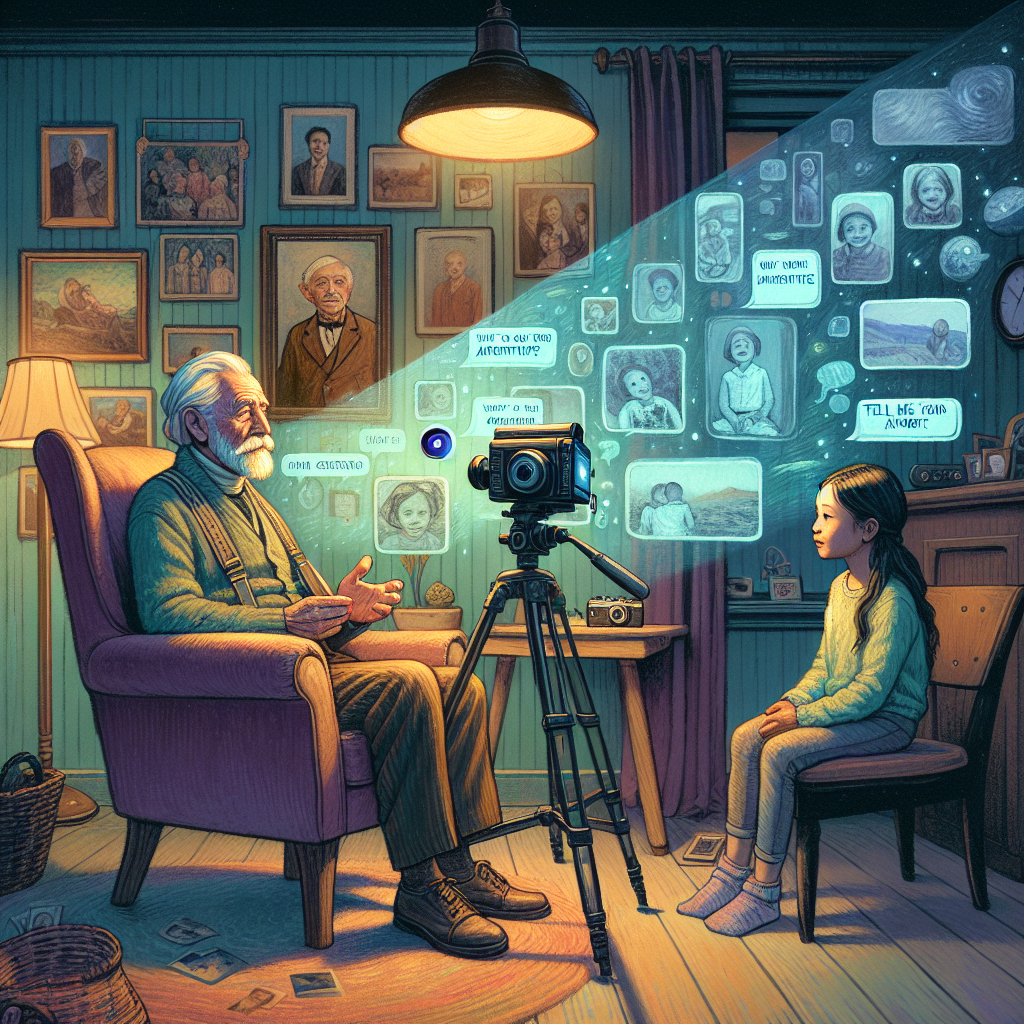
Consider the sheer force of a story recounted around a family dinner table. A grandparent sharing their youthful escapades during times of struggle can evoke empathy, as younger family members recognize the universal themes of resilience and hope that pervade their own lives. This isn’t just nostalgia; it’s a call to action, an invitation to listen and reflect. By embracing these narratives, we foster a jurisdiction where respect and understanding thrive. Everyone has a piece of the puzzle, and through shared memories, we can see the bigger picture.
Rationally, it’s evident that bridging these gaps is crucial for the social fabric of our communities. As divisions become more pronounced in our digital age, finding common ground through the stories of those who came before us becomes an essential endeavor. Legacy storytelling serves not only as a bridge but also as a foundation, reminding us that while the world changes, the core human experience remains strikingly similar. We’ve all faced difficulties, loved fiercely, and yearned for connections. These shared memories hold the potential to unite us in ways that transcends years, offering solace in times of uncertainty.
In ethical terms, engaging in legacy storytelling promotes an intergenerational dialogue that cultivates respect and responsibility. It’s not just about reminiscing; it’s about acknowledging the sacrifices and lessons of those who have laid the groundwork for us. By sharing these stories, we imbue the next generation with insights that can guide them through their own life challenges.
Ultimately, making a conscious effort to share these memories transforms our relationships. It empowers us to confront generational differences head-on, using the very stories that connect us to inspire trust and solidarity. In a world that often feels fragmented, legacy storytelling stands as a testament to our shared humanity. So, let’s gather around, listen, and share—because in telling our stories, we don’t just bridge gaps; we build connections that last a lifetime.
Can We Bridge Generational Gaps with Shared Memories?
Can We Bridge Generational Gaps with Shared Memories?
- Legacy storytelling bridges generational gaps by transforming solitary memories into tools for connection.
- Shared narratives illuminate values, challenges, and triumphs of different generations.
- Stories recounted at family gatherings evoke empathy and universal themes of resilience and hope.
- Engaging in legacy storytelling fosters respect and understanding among generations.
- This practice is essential for maintaining the social fabric of communities amid growing divisions.
- Legacy storytelling promotes intergenerational dialogue and imparts valuable lessons for future generations.
- Sharing memories empowers relationships and inspires trust and solidarity across generations.

Can We Bridge Generational Gaps with Shared Memories?
How Do We Process Loss Through Voices We Cherish?
Loss is woven into the very fabric of our existence. It’s a universal experience that can leave us feeling fragmented and adrift. Yet, amid this profound sorrow, there exists an opportunity—a chance to process and celebrate that loss through the very voices we’ve cherished. The narratives we hold dear, the tales that resonate within us, become our lifeline. This is where legacy storytelling comes into play.
Every voice that echoes in our memories carries the weight of shared experiences, laughter, and wisdom. These voices—whether from a beloved parent, a cherished friend, or even a mentor—tell stories that go beyond mere reminiscence. They form the cornerstone of our identity. When we encounter loss, it is these stories that ground us. They remind us not only of what we’ve lost but of what we have gained—the lessons imparted, the love shown, and the moments shared.
Processing loss isn’t just an emotional journey; it’s a deeply rational one as well. What we honor in those we’ve lost is a testament to their impact on our lives. By engaging in legacy storytelling, we unpack the narratives that shaped us. We consider how our loved ones approached challenges, navigated troubles, and celebrated victories. These reflections inspire us to embody their values, to carry their lessons forward, and to be a living extension of their existence. In a way, through our voices, we ensure that they continue to exist among us.
The ethical implications can’t be overlooked. Sharing these stories isn’t merely an act of nostalgia; it’s a responsibility to remember those who made a mark on our lives. We owe it to them to keep their memories alive and to pass on their teachings. In doing so, we cultivate a sense of honor, inviting others to participate in this rich tapestry of identity.
Moreover, in bringing these cherished voices into the open, we foster connection. When we share our stories of loss and resilience, we create community. We find solace in knowing that others have experienced similar heartbreaks, and we acknowledge our shared humanity. Each narrative breathes life into our memories, making them tangible and relatable.
In the quiet moments when we feel the sting of absence, let us return to those cherished voices. Let us lean into the legacy storytelling that connects us to our past while propelling us forward. In honoring our loved ones, we transform grief into action, inspiring hope and confidence in ourselves and those around us.

How Do We Process Loss Through Voices We Cherish?
How Do We Process Loss Through Voices We Cherish?
- Loss is a universal experience that can leave us feeling adrift but also offers an opportunity for processing and celebration.
- Legacy storytelling allows us to honor cherished voices that ground our identities and remind us of valuable lessons and love.
- Processing loss combines emotional and rational journeys, reflecting on the impact of those we’ve lost.
- Engaging in legacy storytelling helps us embody the values and teachings of our loved ones, ensuring their presence continues.
- Sharing these stories is a responsibility that cultivates honor and shared identity among communities.
- By sharing experiences of loss, we foster connections and find solace in our shared humanity.
- Honoring loved ones through their stories transforms grief into inspiration and encourages hope for the future.

How Do We Process Loss Through Voices We Cherish?
What Role Does Nostalgia Play In Our Daily Lives?
Nostalgia is a powerful force that weaves itself through the fabric of our daily lives. It’s more than just a warm, fuzzy feeling; it’s a bridge connecting our past to our present. Each moment we revisit through our memories serves as a reminder of who we are and where we come from. This is the essence of legacy storytelling—sharing experiences that shape our identities and enrich our interactions with others.
At the heart of nostalgia lies a deep emotional connection. Think about the smell of your grandmother’s cooking or the sound of a favorite childhood song. These sensory memories stir feelings of comfort and belonging, creating a strong sense of community. They remind us that we are part of something larger than ourselves, an unbroken chain of stories passed down through generations. When we share these narratives, we not only honor our past but also strengthen the bonds that tie us together today.
On a rational level, nostalgia offers us clarity. In a world that often feels chaotic and overwhelming, looking back at cherished moments can ground us. It provides a perspective that helps us navigate current challenges. As we recall times of joy, resilience, or even hardship, we gain insight into our own capacity to overcome. This reflection isn’t merely sentimental; it’s an essential part of our cognitive process, allowing us to learn from our experiences and shape our future actions.
Ethically, nostalgia drives us to share our stories and values with younger generations. It encourages a sense of responsibility towards our legacy. By recounting lessons learned from the past—whether through triumph or failure—we create opportunities for growth and understanding. This act of storytelling cultivates empathy, as listeners can relate to the struggles and victories we’ve faced, fostering a connection that transcends time.
Socially, nostalgia builds community. It draws people together as they reminisce about shared experiences, allowing for a collective appreciation of culture, traditions, and history. Whether at family gatherings, reunions, or casual conversations, these nostalgic moments foster connection and create lasting ties. They remind us that, despite differences, we all share a common humanity shaped by our pasts.
In embracing nostalgia, we invite a deeper understanding of ourselves and those around us. It empowers us to honor our legacy, inspire future generations, and nurture connections that make life richer. In a world that constantly pushes for the new, there’s undeniable strength in looking back.

What Role Does Nostalgia Play In Our Daily Lives?
What Role Does Nostalgia Play In Our Daily Lives?
- Nostalgia connects our past to our present, reminding us of our identities and origins.
- It fosters emotional connections through sensory memories, creating comfort and a sense of community.
- Nostalgia provides clarity and perspective, helping us navigate current challenges by reflecting on past experiences.
- It promotes storytelling and values sharing, encouraging responsibility towards our legacy.
- Nostalgia cultivates empathy as listeners relate to shared struggles and victories.
- It builds community by uniting people through shared experiences, traditions, and history.
- Embracing nostalgia nurtures deeper understanding, honors our legacy, and enhances personal connections.

What Role Does Nostalgia Play In Our Daily Lives?
Why Do We Yearn for Connection with Those Who Are Gone?
In the quiet moments, when the hustle of life fades into the background, there lies an undeniable human truth: we yearn for connection with those who are no longer with us. This longing isn’t merely a sign of grief; it reflects our innate desire for legacy and storytelling, weaving the threads of our lives with the narratives of those who have shaped us.
Often, it’s the stories that echo through our lives—the wisdom shared, the laughter, the lessons wrapped in nostalgia—transforming loss into a rich tapestry of experiences. These connections do not disappear; they evolve. The voice of a parent or a friend may fade, yet their influence remains palpable in our choices, guiding us as we navigate our daily lives. This is where the heart finds its path—through memories that continue to nourish our growth even in the absence of those we cherish.
From a rational perspective, the yearning for connection can be linked to our need for identity. Our sense of self is constructed not just from our experiences, but from the interactions we’ve had with others. The stories we carry from those who’ve passed form a crucial part of our narrative, helping us make sense of who we are and where we’re going. By honoring their legacy, we find meaning in our own lives, turning grief into a catalyst for personal evolution.
Ethically, there’s a profound responsibility that comes with this yearning. We owe it to those who’ve left us to keep their stories alive, to share the values and lessons they imparted. By doing so, we not only pay homage to them but also inspire those around us—making their legacy a living, breathing part of our social fabric. Each time we recount a cherished memory, we invite others into our world, fostering connections that transcend time and space.
Socially, we often find solace in communities that echo our sentiments. Storytelling is a universal bridge that connects us, igniting conversations about love, loss, and the human experience. When we gather to remember, we create a shared space where vulnerability thrives, uniting us in our collective nostalgia.
Ultimately, the urge to connect with those who are gone is not merely an act of remembrance; it’s an affirmation of life itself. By embracing their legacy, we continue the story, asserting that our connections—though altered—remain a vibrant part of our journey. Through this, we inspire trust in the enduring nature of love and memory, prompting us to celebrate the relationships that shape our very existence.

Why Do We Yearn for Connection with Those Who Are Gone?
Why Do We Yearn for Connection with Those Who Are Gone?
- Yearning for connection with those who have passed reflects a desire for legacy and storytelling.
- Stories of the departed transform loss into a tapestry of shared experiences, guiding us in daily life.
- Our sense of identity is shaped by interactions with others, including those who are no longer with us.
- Honoring the legacy of lost loved ones adds meaning to our lives and can drive personal growth.
- Maintaining their stories and values inspires others and weaves their legacy into our social fabric.
- Storytelling fosters community and shared vulnerability, bridging connections across time and space.
- Embracing the legacy of the departed affirms life and reinforces the enduring nature of love and memory.

Why Do We Yearn for Connection with Those Who Are Gone?
Conclusion
In “Was That Really Grandpa’s Voice?” Tom Seest invites us to explore how the echoes of those we’ve lost shape our identities and guide our everyday lives. The comforting resonance of a familiar voice transcends mere memory; it becomes a lifeline, interweaving our past with our present. Grandpa’s voice often embodies the wisdom and values passed down through generations, reminding us of the importance of integrity, hard work, and connection. This legacy storytelling is not just a nostalgic exercise; it serves a vital purpose in our emotional and rational frameworks.
These memories, when shared, foster community and understanding, allowing us to bridge the generational gaps that often divide us. Around the dinner table or during family gatherings, storytelling becomes a transformative act—each tale a thread that binds us together and illuminates our shared humanity. It is within these narratives that we not only honor our loved ones but instill their lessons into the fabric of our lives, inspiring both ourselves and future generations.
The act of remembering through story is also a powerful ethical responsibility. We owe it to those who shaped us to ensure their legacies are not forgotten. By sharing experiences of joy, struggle, and triumph, we cultivate empathy, inviting others to reflect on their own shared stories. As nostalgia washes over us, it equips us with clarity and purpose, guiding our decisions and enriching our relationships.
In a world fraught with disconnection, those cherished voices provide solace and identity, reminding us of our place within a larger narrative. It’s a call to remember and act, transforming grief into gratitude, loss into legacy. So, as we contemplate whether we truly hear Grandpa’s voice again, let us embrace the stories that connect us to our past, grounding us in our shared heritage as we step bravely into the future. Ultimately, these moments of connection reaffirm that even in silence, the voices of our loved ones resonate profoundly within us, urging us to honor our roots and forge deeper connections.

Conclusion
Conclusion:
- Tom Seest’s “Was That Really Grandpa’s Voice?” explores how the voices of lost loved ones shape our identities.
- A familiar voice provides comfort, interweaving the past with the present and guiding our daily lives.
- Grandpa’s voice embodies wisdom and values like integrity, hard work, and connection, emphasizing the importance of legacy storytelling.
- Sharing memories fosters community and understanding, bridging generational gaps through storytelling at family gatherings.
- The act of remembering is an ethical responsibility, ensuring legacies of loved ones are not forgotten.
- Nostalgic storytelling cultivates empathy and enriches relationships, guiding our decisions with clarity and purpose.
- Even in silence, the voices of our loved ones resonate within us, urging honor to our roots and deeper connections as we move into the future.

Conclusion
Other Resources

Other Resources
Here is a list of other resources you can review online to learn more:
- Legacy Family Tree
- Storyfile Life
- Can Telling and Preserving Personal or Family Legacy Stories Be Therapeutic?
- AmericanAncestors
- UpCounsel
- Everplans
- RocketLawyer
- USLegalWills.com
- Storyworth
- Forever Missed
- EverNote
- Memorial Matters
- GhostMemo
- Knotify.me
- YouMattered
- Postumo
- DocuBank
- Living Wisely
- LegacyFamilyTree
- Directive Communication Systems
Use This Prompt To Get More Resources With Your Favorite Online AI Tool: Please provide me with a list of online articles with their URLs in a bulleted list that I can read regarding Was That Really Grandpas Voice?

Other Resources
Glossary Terms
Was That Really Grandpas Voice? – Glossary Of Terms
1. Acoustic: Relating to sound or the sense of hearing; often describes how sound interacts with environments.
2. Ancestry: The lineage or heritage of a person, often tracing back generations.
3. Audio: The sound portion of a recording, broadcast, or transmission.
4. Chronicle: A detailed and factual account of events in the order they occurred; relevant for storytelling or oral history.
5. Dimensional: Pertaining to dimensions; often used to describe depth in audio experiences or recordings.
6. Echo: A reflected sound that is heard again after the original sound; relevant for understanding auditory perception.
7. Elder: An older individual, often a family member, whose voice may carry significant emotional weight or wisdom.
8. Fidelity: The accuracy and quality of sound reproduction; high fidelity implies a clearer, more lifelike sound.
9. Frequency: The rate at which sound waves vibrate, affecting the pitch of the sound perceived.
10. Generational: Relating to or characteristic of a specific generation, impacting familial communication and voice memories.
11. Heritage: Traditions, values, or characteristics passed down from previous generations.
12. Intonation: The rise and fall of the voice pitch while speaking; significant for conveying emotion.
13. Manipulation: The act of altering or modifying sound, often used in audio editing or voice modulation.
14. Nostalgia: A sentimental longing for the past, often triggered by familiar voices or sounds.
15. Oral history: The collection and study of historical information through recorded interviews with individuals having personal knowledge of past events.
16. Pitch: The perceived frequency of a sound; higher frequencies correspond to higher pitches.
17. Projection: The strength or force with which a voice is delivered; allows for clarity and reach.
18. Recording: Capturing sound through various technologies for playback or archival purposes.
19. Resonance: The quality of a sound that makes it deep, full, or rich; can evoke feelings and memories.
20. Soundtrack: A collection of recorded sounds or music intended to accompany a visual or narrative media.
21. Testimony: A formal statement, often personal, that recounts experiences or memories; valuable in exploring family histories.
22. Tone: The quality or character of a sound, often associated with emotions or attitudes in spoken words.
23. Transmission: The act of sending or conveying sound across distances, relevant in communication methods.
24. Tribute: An act, statement, or gift intended to show gratitude or respect; often tied to remembrance of loved ones.
25. Voiceover: A technique where a voice is recorded to narrate a story, often over images or scenes.
26. Vocalization: The act of producing sound through the vocal cords; encompasses speaking, singing, or other forms of sound-making.
27. Volume: The loudness or softness of a sound; a critical aspect of how voices are perceived and communicated.
28. Whisper: A quiet form of speech that conveys intimacy or secrecy, often used in personal or emotional contexts.
29. Wisdom: The quality of having knowledge and experience; often reflected in the words and tones of older generations.
30. Zoomorphism: The attribution of animal characteristics to humans, sometimes used metaphorically in discussing voices and sounds.

Glossary Of Terms
Other Questions
Was That Really Grandpas Voice? – Other Questions
If you wish to explore and discover more, consider looking for answers to these questions:
- How can I accurately preserve and record a loved one’s voice?
- What tools or technologies are best for capturing and archiving audio memories?
- Is it ethical to use AI to recreate a deceased person’s voice?
- How do I get family members involved in legacy storytelling?
- What questions should I ask when interviewing elders for their stories?
- How can I handle conflicting versions of family stories?
- How do I balance nostalgia with an honest account of the past?
- How can storytelling help with grief and bereavement?
- When should I seek professional help or therapy while processing loss?
- How do memories influence my decisions and values today?
- How can I trigger and preserve fading memories in people with dementia?
- What are best practices for creating a family archive or memory book?
- How do I ensure consent and respect privacy when recording or sharing stories?
- Can hearing a recorded voice reduce loneliness or depression, and what’s the evidence?
- How do I make legacy stories engaging for younger generations?
- What role do cultural traditions play in legacy storytelling?
- How can I teach family values through stories without imposing them?
- Are there legal issues around using or publishing recorded family stories?
- How long and in what formats should I store audio and written memories?
- How do I evaluate whether a memory is reliable or biased?
- What prompts can help elders open up about meaningful experiences?
- How can community groups or schools use legacy storytelling to bridge generations?
- How do I cope if memories of a loved one are painful or traumatic?
- What are ethical responsibilities when editing or curating someone’s life story?
- How can I use voices and stories to inspire action or social responsibility?
- Are there organizations or resources that assist with oral history projects?
- How can I incorporate sensory details (smell, sound, touch) into storytelling?
- What are respectful ways to celebrate and honor someone’s legacy?

Other Questions
Haiku
Was That Really Grandpas Voice? – A Haiku
Echoes through the years,
Grandpa’s voice weaves legacy—
Love’s threads bind our hearts.

Haiku
Poem
Was That Really Grandpas Voice? – A Poem
In whispers soft, Grandpa’s voice remains,
A melody of memory, where wisdom reigns.
Each story shared, a thread in time,
Binding generations, in rhythm and rhyme.
From tales of grit, to laughters embrace,
His legacy lives on, in every space.
Through struggle and strife, his lessons bestowed,
A compass of values, guiding our road.
Nostalgia’s warm touch, a balm for the soul,
In moments of sorrow, it makes us whole.
Memories shimmer, like stars in the night,
Illuminating paths, with love as our light.
With each passing story, a promise we weave,
To honor their journey, to never deceive.
The voices of loved ones, past near and far,
Guide us in darkness, like a luminous star.
As we gather together, let narratives flow,
Building bridges of trust, through tales that we sow.
In the heart of our gathering, we find our delight,
Connecting across ages, with stories so bright.
So let us remember, in joy and in grief,
That through shared experiences, we find our belief.
In the echoes of love, our pasts intertwine,
Giving strength for tomorrow, as their spirits align.

Poem
Checklist
Was That Really Grandpas Voice? – A Checklist
Emotional Appeals
✅______ Reflect on a cherished memory with a loved one.
✅______ Write down a story that captures a lesson learned from a grandparent or elder.
✅______ Share a moment when you felt connected to your family’s past.
Rational Appeals
✅______ Identify three key values passed down through your family stories.
✅______ Discuss how a particular memory has influenced your decisions in life.
✅______ Consider how reflecting on memories can improve emotional resilience.
Ethical Appeals
✅______ Commit to sharing a family story with younger generations to preserve legacy.
✅______ Assess how your family’s history shapes your responsibility towards community.
✅______ Create a plan to gather family stories for future generations.
Authority Appeals
✅______ Research an influential figure in your family history and their impact on your values.
✅______ Analyze how storytelling serves as a powerful tool for preserving history.
✅______ Attend a storytelling or legacy workshop within your community.
Narrative Appeals
✅______ Write a short narrative about a memorable family gathering and its significance.
✅______ Develop a story that includes both triumph and hardship from your family history.
✅______ Capture the essence of a family tradition that has been meaningful to you.
Social Appeals
✅______ Organize a family reunion or storytelling night to share and celebrate memories.
✅______ Create a social media page or group dedicated to sharing family stories.
✅______ Encourage others in your community to share their stories to foster connection.
Checklist
At LegacyExplorations, we help people plan and explore their legacy by collecting information and news regarding end-of-life planning.
Please share this post with your friends, family, or business associates who may want help to plan or explore their legacy.