

Finding Clarity In Chaos: The Power Of Truth In Our Lives
By Tom Seest
At LegacyExplorations, we help people plan and explore their legacy by collecting information and news regarding end-of-life planning.
Please share this post with your friends, family, or business associates who may want help to plan or explore their legacy.
Without a Source Of Truth, Everything Is Revision
Every family has a legacy, stories passed down through generations that shape beliefs and identities. These narratives form the backbone of who we are, yet without a source of truth, those tales can easily morph into something unrecognizable. Imagine gathering around a table, sharing memories that have been altered with every retelling—embellished for flair, shaped by bias, or forgotten over time. The heart aches for genuine connection. We crave authenticity in a world overflowing with noise. When the foundation of our stories is shaky, how can we forge bonds that withstand the test of time?
Legacy storytelling carries profound importance. It isn’t just about recalling events; it’s about instilling values and ethics that guide our actions. Without a firm grounding in truth, these stories become mere revisionist accounts. We see time and again how history can be rewritten to serve particular agendas, leading to distrust and division. As guardians of our narratives, we must strive to reclaim our truth, for it’s the bedrock upon which communities are built. A shared understanding fosters unity, inspires confidence, and encourages collective action.
Rationally, it makes sense—without the objective facts that anchor our recollections, every voice becomes equally valid, leading to chaos. We can look to authorities, historians, or elders in our lives to lay down credible markers of what truly transpired. Their perspectives can shine light on paths once obscured by noise, but those markers must be anchored in verifiable truth. A sack of pearls isn’t worth much if it’s just a bag of stones masquerading as treasure.
But consider this: Even as we seek the truth, emotions run high, for personal investment affects our narratives deeply. We owe it to ourselves to engage with the stories that shape our ethics, understanding that each retelling bears the weight of someone’s experience. When we embrace our legacy storytelling with honesty, we allow others’ wounds and triumphs to resonate, creating a tapestry rich with empathy and understanding.
In this journey of collective memory, we become our own storytellers, but we must be vigilant. Without a source of truth, stories lose their meaning—and when that happens, our shared human experience turns into a game of revision, where authenticity is sacrificed on the altar of convenience. So let’s commit to the duty of upholding our legacies with integrity, for it is through this effort that we will inspire trust, foster connection, and engender action that echoes through time.

Without a Source Of Truth, Everything Is Revision
Without a Source Of Truth, Everything Is Revision
- Every family has a legacy of stories that shape beliefs and identities.
- Without a source of truth, narratives can become distorted and unrecognizable.
- Legacy storytelling is crucial for instilling values and ethics that guide actions.
- Reclaiming our truth is essential to foster unity and collective action within communities.
- Authorities and credible markers help anchor stories in verifiable truth.
- Emotional investment deeply affects personal narratives and their retelling.
- Upholding our legacies with integrity inspires trust and creates meaningful connections.

Without a Source Of Truth, Everything Is Revision
Table Of Contents
- Without a Source Of Truth, Everything Is Revision
- What Does It Mean to Live Without a Defined Truth?
- How Do We Establish Trust In Information?
- Can Uncertainty Drive Us to Better Conclusions?
- In What Ways Do Biases Distort Our Perceptions Of Reality?
- How Does the Lack Of a Common Truth Affect Our Decisions?
- Is It Ethical to Manipulate Facts for a Desired Outcome?
- How Do Narratives Shape Our Understanding Of Truth?
- Conclusion
- Other Resources
- Glossary Of Terms
- Other Questions
- Haiku
- Poem
- Checklist
What Does It Mean to Live Without a Defined Truth?
Living without a defined truth can feel like navigating a vast, uncharted ocean. It’s both liberating and unsettling. Without a compass, we drift, searching for meaning in the waves of our experiences. Each moment has the potential to shape our legacy—a tapestry woven with the threads of our choices. Yet, this lack of certainty can lead to confusion and a sense of isolation.
Consider the power of legacy storytelling. Each story we tell, whether about our triumphs or failures, becomes a piece of our legacy. These narratives cultivate connection; they remind us that while we may not have concrete answers, we share the same human experiences. They bind us together in our uncertainties. In a world where truth is often questioned, engaging in personal storytelling allows us to affirm our identities, cultivating trust in ourselves and in one another.
The heart of the matter is that living without a defined truth challenges us to embrace ambiguity. It urges us to examine the values we hold dear—those ethical pillars that guide our decisions. We ask ourselves, “What do I stand for?” and therefore, “What am I willing to fight for?” These reflections create a robust framework for navigating complexity. When we approach our lives through a lens of ethics and personal responsibility, we find purpose.
Rationality intertwines with narrative in this exploration. Humanity thrives on stories, and sharing those narratives offers a space to confront the chaos around us. It’s essential to recognize that our truths—though often fluctuating—are valid. Each perspective enriches the dialogue, grounding us in our shared humanity. This interplay between heart and mind can stir our gut reactions and challenge us to act.
In society, we can feel an ever-present pull toward conformity, making it easy to lose sight of our individuality. However, embracing our unique perspectives in the absence of defined truth not only fosters authenticity but also empowers us to connect more deeply with others. Through this understanding, we can become sources of inspiration in our communities, inviting others to share their truths and stories.
Ultimately, living without a defined truth isn’t merely about uncertainty; it’s an invitation to explore, connect, and grow. As we navigate this journey, we recognize that our stories—our legacies—are the beacons that guide us through the murky waters, reminding us that together, we create a shared understanding of what it means to be human.

What Does It Mean to Live Without a Defined Truth?
What Does It Mean to Live Without a Defined Truth?
- Living without a defined truth is liberating yet unsettling, akin to navigating an uncharted ocean.
- Each moment shapes our legacy, comprising the choices we make and reflecting our experiences.
- Legacy storytelling connects us through shared human experiences, even amid uncertainty.
- Absence of defined truth encourages self-reflection on personal values and ethical principles.
- Rationality and narrative intertwine, making our fluctuating truths legitimate and enriching dialogue.
- Embracing unique perspectives fosters authenticity and deeper connections in a conformist society.
- Living without a defined truth invites exploration and growth, with stories guiding our shared understanding of humanity.

What Does It Mean to Live Without a Defined Truth?
How Do We Establish Trust In Information?
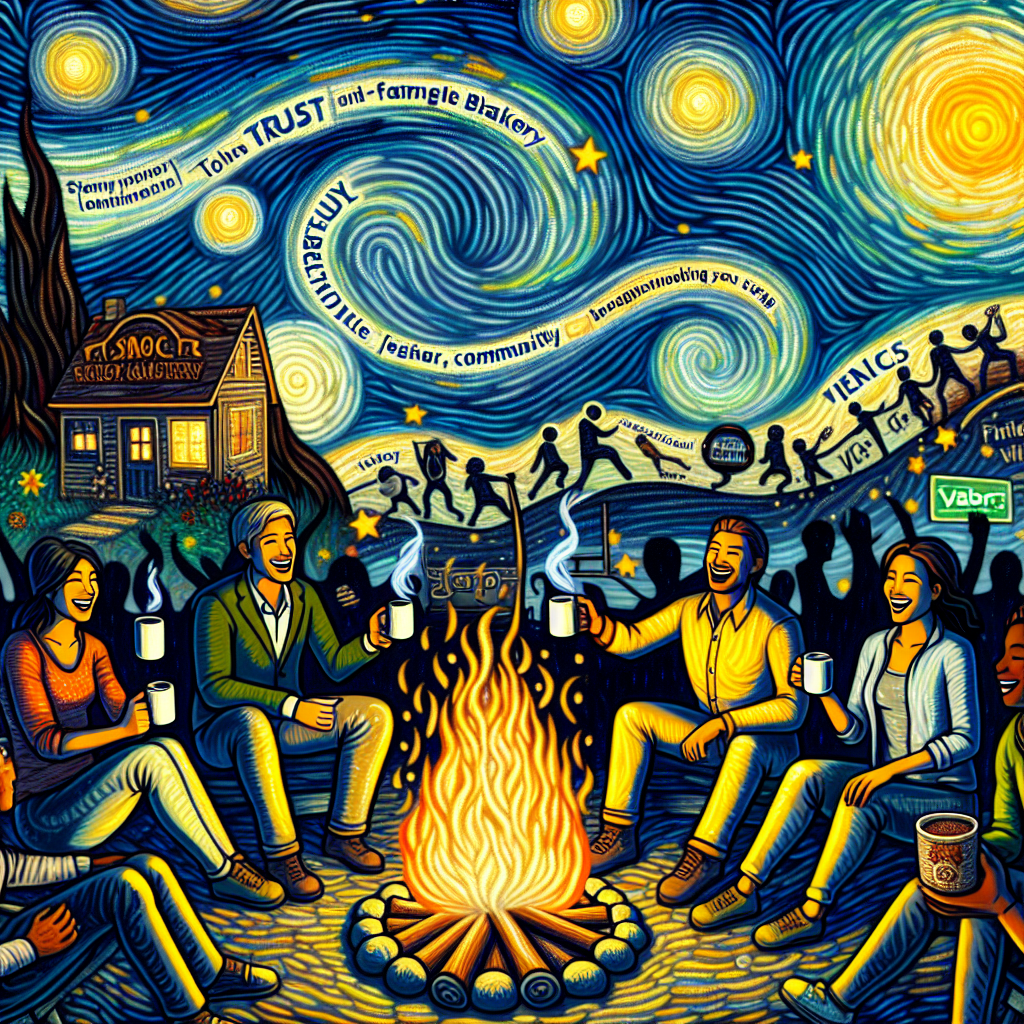
How do we establish trust in information? It starts with the stories we tell. Stories have always been the backbone of human communication, a path etched in our collective legacy. When we share information, we’re not just relaying facts; we’re weaving threads of our experiences, values, and truths, carving out a legacy that resonates. The narrative isn’t merely about the data points but how they intertwine with our lives and shape our understanding of the world.
Imagine a time when your best friend recounted a harrowing experience. The fear, joy, or triumph in their voice drew you in, didn’t it? That connection — built on shared understanding and emotion — is the essence of trust. When information is presented through captivating storytelling, it transcends mere facts. The heart listens intently, recognizing the authenticity behind the words. The head starts making sense of it all, connecting the dots in a way that feels logical and sound. The gut? It reacts instinctively, gauging the truth of the moment.
We live in an era where information is always at our fingertips, yet it’s easy to become overwhelmed or misled. This is where the ethical dimension plays a crucial role. Establishing trust requires a commitment to integrity and honesty in our storytelling. It means honoring our responsibilities as communicators and rejecting the temptation to embellish or distort reality for sensationalism. It’s about supporting claims with credible evidence and indulging in the hard work of fact-checking, ensuring that we’re not just talking but contributing positively to the conversation.
Authority matters, too. The sources we choose to share are reflections of our values. Are we amplifying voices grounded in research, expertise, and genuine insight? The relationships we build with credible sources help frame our understanding and bolster the trust of those who look to us for direction.
In forming a community steeped in trust, we foster connections through social responsibility. When information travels through a network of thoughtful engagement, it morphs from personal experience into something larger — a collective narrative that binds us. The stories we share reflect not only who we are but what we stand for.
Ultimately, the act of establishing trust in information rests on our willingness to share our legacy honestly and openly, weaving together the rich tapestry of life that speaks to the heart, challenges the head, and resonates in the gut.
How Do We Establish Trust In Information?
How Do We Establish Trust In Information?
- Trust in information begins with storytelling, rooted in human communication.
- Sharing experiences, values, and truths creates a resonant legacy.
- Effective storytelling evokes emotion and fosters connections that build trust.
- Ethical storytelling requires integrity, honesty, and fact-checking.
- Credible sources amplify trust and reflect our values in communication.
- Community trust is strengthened through social responsibility and thoughtful engagement.
- Establishing trust involves sharing our legacy openly, weaving authentic narratives.

How Do We Establish Trust In Information?
Can Uncertainty Drive Us to Better Conclusions?
Uncertainty more often than not feels like a heavy fog, shrouding our path and making every decision seem daunting. Yet, what if that same fog is a canvas for our greatest insights? Embracing uncertainty can unlock profound clarity. Think about it: in every great legacy story, the heroes faced ambiguity head-on. They didn’t allow fear of the unknown to paralyze them; instead, they thrived in it. Each decision made in the face of uncertainty was a brick in the foundation of their legacy.
Consider your own life. Every twist and turn, every confusing moment, is a part of your narrative. It shapes who you are, what you value, and how you relate to those around you. A job loss, a sudden change in plans, or an unexpected relationship shift puts us in a place we never envisioned. Instead of collapsing under that uncertainty, you’ve likely found a new angle, a fresh perspective. That process is what helps us connect with others and inspires trust. People rally around those who share their struggles.
Let’s look at the scientific angle. Research has shown that discomfort can be a catalyst for growth. When the ground beneath us is shaky, our minds become agile and creative. We question assumptions and re-evaluate our strategies. By pushing through discomfort, we often arrive at conclusions that are more robust and enlightened. This isn’t just about personal development; it’s a societal call to action. When communities face uncertain times, they can band together, pooling their resources, ideas, and experiences for a common goal.
Ethically, to engage with uncertainty is to recognize the value of diverse perspectives. Acknowledging that we don’t have all the answers opens the floor for dialogue. It invites voices that might otherwise remain silent, enriching our collective understanding. Everyone’s story contributes to a greater legacy, creating a tapestry of shared experiences and wisdom.
There’s something deeply human about acknowledging our uncertainty. It fosters connection; it resonates in our gut. That raw reminder that we’re all in this together can drive innovative problem-solving, ignite passionate discussions, and spur communities into action. In recognizing the power of uncertainty, we empower ourselves, enabling a sense of urgency that propels us toward better, more informed conclusions. Embrace that fog. It might just lead to brightness ahead.

Can Uncertainty Drive Us to Better Conclusions?
Can Uncertainty Drive Us to Better Conclusions?
- Uncertainty often presents itself as a heavy fog, obscuring our decisions.
- Embracing uncertainty can lead to profound clarity and insight.
- Heroes in legacy stories face ambiguity without fear, using it to build their legacies.
- Personal experiences of uncertainty shape identity and relationships.
- Discomfort from uncertainty can be a catalyst for growth and creative thinking.
- Engaging with uncertainty fosters diverse perspectives and enriches collective understanding.
- Acknowledging uncertainty drives connection, innovative problem-solving, and community action.

Can Uncertainty Drive Us to Better Conclusions?
In What Ways Do Biases Distort Our Perceptions Of Reality?
In a world characterized by noise and chaos, it’s easy to allow preconceived notions and biases to cloud our vision. These biases whisper in our ears, subtly shaping our interpretations and guiding our reactions to people, events, and ideas. They create a landscape where reality becomes something we mold to fit our expectations rather than something we observe with clarity.
Consider your legacy storytelling. Each of us carries narratives, histories shaped by our experiences and perceptions. When biases seep into our storytelling, they distort the essence of our truths. The narratives we construct can either draw us closer to one another or push us apart. They can inspire us to act or freeze us in fear. For instance, imagine a community facing hardship. Some might view it through a lens of despair, convinced that nothing can be done. Others could see an opportunity for resilience, ignited by a hopeful vision. The former approach leads to stagnation, while the latter encourages action.
The heart of this matter lies in empathy. Our biases often shield us from understanding others’ perspectives. When we allow these prejudices to dominate our thoughts, we risk losing the deeper connections that bind us. We misinterpret kindness as condescension, or struggle as failure, creating barriers to understanding. It’s crucial that we challenge these distortions, reminding ourselves that each person we encounter has a story worth hearing, a struggle worth acknowledging.
Rationally, we must come to terms with the reality that our biases can lead to significant consequences — both personally and socially. Decisions made based on incomplete or skewed perceptions can damage relationships and foster division. By cultivating awareness of our biases, we foster a culture of open dialogue and respect, where truth can flourish in its raw, unedited form.
Ethically, we owe it to ourselves and to those around us to question our assumptions. The authority of our experiences should not overshadow the narratives of those who differ from us. Our social fabric is woven from diverse threads, and recognizing the value in different viewpoints strengthens our collective resilience.
Narrative plays a powerful role here; stories connect us. When we listen and share authentically, we dismantle biases piece by piece, paving the way for understanding and cooperation. Trust is built through these connections. Letting go of biases won’t just transform our perceptions; it will allow us to see the world in its complex, beautiful reality, inspiring action rooted in compassion and courage.

In What Ways Do Biases Distort Our Perceptions Of Reality?
In What Ways Do Biases Distort Our Perceptions Of Reality?
- Preconceived notions and biases can obscure our perception of reality.
- Storytelling shaped by biases distorts truths and may either unite or divide us.
- Perspective influences response to challenges, with some seeing despair and others resilience.
- Empathy is essential for understanding diverse perspectives, countering our biases.
- Awareness of biases leads to healthier relationships and promotes open dialogue.
- Questioning our assumptions strengthens social cohesion and recognizes diverse narratives.
- Authentic storytelling fosters trust and encourages action based on compassion and courage.

In What Ways Do Biases Distort Our Perceptions Of Reality?
How Does the Lack Of a Common Truth Affect Our Decisions?
How Does the Lack of a Common Truth Affect Our Decisions?
In a world flooded with information, our decisions are often shaped by the narratives that resonate with us personally. These narratives, or what some might call our legacy storytelling, form the tapestry of our beliefs, values, and ultimately, our choices. But what happens when those stories diverge, when the truths we cling to are no longer aligned? Picture a community—all pulling in different directions, guided by their own versions of reality. The undeniable chaos can be sobering.
We live in an age where facts are often twisted into stories that serve individual agendas. This can leave us feeling lost, adrift on a sea of conflicting information. When we abandon a shared understanding, our decision-making process transforms from rational discourse into a game of survival, relying on instinct rather than evidence. The gut feelings that once steered us toward collective wisdom now lead us down paths of division and distrust.
Emotionally, the lack of a common truth can create a sense of isolation. We find ourselves surrounded by people who think differently, sometimes even believing the very fabric of our shared experiences is unraveling. We crave connection, but that yearning is stymied when trust is eroded. Think of the last heated conversation you had over dinner, where opposing sides dug in their heels. It doesn’t take long for the atmosphere to shift from one of camaraderie to one of hostility, merely because we prioritize differing narratives over shared truths.
Ethically, we must consider the impact of these diverging tales. Every story carries a weight; each is crafted with intention and consequence. When we choose to elevate one narrative over another without critical examination, we do a disservice to our collective moral compass. The authority of our decisions, once grounded in a mutual understanding of what is right, becomes questionable. People start to act in self-interest, further pulling apart the fabric of community.
Yet, in this disarray, there’s room for hope. By seeking common ground—an authentic dialogue rather than debate—we can reforge connections and inspire confidence. Engaging with the stories of others not only enriches our understanding but reminds us of our shared humanity. In doing so, we weave a new narrative. It’s an invitation to reclaim the power of choice through unity, fostering trust in one another and leading us back to a place where decisions can be made with clarity and purpose, not fear and division.

How Does the Lack Of a Common Truth Affect Our Decisions?
How Does the Lack Of a Common Truth Affect Our Decisions?
- Decisions are influenced by personal narratives, leading to divergent truths within communities.
- Conflicting stories can create chaos, turning decision-making into a matter of survival rather than rational discourse.
- Lack of common truth breeds isolation and distrust among individuals with differing views.
- Prioritizing divergent narratives over shared truths can shift interactions from camaraderie to hostility.
- Diverging narratives impact ethical considerations and undermine the collective moral compass.
- People may act in self-interest, further fracturing community ties.
- Seeking common ground and engaging in authentic dialogue can foster unity and clarity in decision-making.

How Does the Lack Of a Common Truth Affect Our Decisions?
Is It Ethical to Manipulate Facts for a Desired Outcome?
Is it ethical to manipulate facts for a desired outcome? This question echoes in the hallways of debate, sparking discussions that feel almost primal. At the heart of it all lies a simple truth: storytelling is part of our legacy. It’s how we connect with one another, pass down our values, and understand the world around us. But as we weave our narratives, we must confront the age-old dilemma of whether bending the truth serves a greater good or undermines the very foundation of trust.
Imagine standing around a campfire, sharing tales that have shaped your life. The flame flickers, casting shadows that dance like the stories we tell. Your audience leans in, captivated not just by the pizzazz but by the authenticity of your words. When those stories are grounded in reality, they resonate. People nod, sharing a common understanding. But what happens when that fire is fueled by half-truths, omitting crucial details to create a more palatable narrative? The warmth of connection can quickly morph into cold skepticism.
Cognitive dissonance often creeps in. On one side, we may justify the manipulation of facts for emotional impact, swaying opinions or driving action. After all, haven’t we all told a little white lie to protect someone’s feelings? Yet, the ethical line blurs when that manipulation serves selfish interests or distorts reality, creating a chasm of mistrust where a bridge once stood.
To foster connection, we must lean into the core of our humanity. People crave authenticity. They want to feel understood and valued. When we manipulate facts, we risk alienating those we aim to reach. Consider the authority we grant to truth. It forms the backbone of societal progress; a shared understanding is built on the pillars of honesty. Once we start chipping away at that foundation, we pave the way for disillusionment, fueling a cycle of disbelief that undercuts engagement.
The stakes are high. When we choose to honor our legacy storytelling tradition, we cultivate a society that prioritizes clarity over confusion. Each narrative we share has the potential to build a more informed and connected community. The invitation here is simple yet profound: let us choose truth as our compass. For in the raw, unfiltered reality of our stories, we find the strength to inspire trust, confidence, and collective action. It’s time to turn the page and embrace the stories that unite us, grounded in honesty and integrity.

Is It Ethical to Manipulate Facts for a Desired Outcome?
Is It Ethical to Manipulate Facts for a Desired Outcome?
- The ethics of manipulating facts for desired outcomes spark intense debate.
- Storytelling is a fundamental part of human legacy, connecting us and sharing values.
- Bending the truth raises dilemmas about greater good versus undermining trust.
- Cognitive dissonance arises when we justify factual manipulation for emotional impact.
- People crave authenticity; manipulation risks alienating the audience.
- Truth is essential for societal progress and shared understanding.
- Choosing truth fosters community and inspires trust, confidence, and collective action.

Is It Ethical to Manipulate Facts for a Desired Outcome?
How Do Narratives Shape Our Understanding Of Truth?
How Do Narratives Shape Our Understanding of Truth?
In this world, where noise often drowns out substance, narratives are our lifelines, weaving the fabric of tradition and experience into something tangible. When we talk about legacy storytelling, we are acknowledging the power of shared experiences to connect us across generations. It’s through these stories that we grasp the meaning of our lives, shaping our understanding of truth in ways that mere facts never could.
Think of the tales that have been passed down, those moments that encapsulate the triumphs and trials of our forebears. They are not just accounts of what happened; they are frameworks through which we interpret our own lives. Every narrative carries an element of faith, a belief in the values that guided those who came before us. Emotion runs deep as we connect with the struggles and victories of others, forging a bond that transcends time. This kinship resonates in our very core, making us believe in something greater than ourselves.
Rationally, consider how stories operate on a different level than data alone. Numbers can tell us what happened, but narratives explain why it matters. They create context, filling in the gaps with moral lessons and cultural significance. When facts are wrapped in compelling storytelling, they become memorable. We don’t just remember the data; it becomes part of our social fabric, influencing our choices and prompting us to act.
Ethically, we find ourselves asking, “What should we do with this truth?” Well-crafted narratives inspire us to uphold values that have shaped our communities. We recognize the authority that’s built on trust—stories of those who stand for integrity and resilience compel us to reflect on our responsibilities as stewards of our legacies. We become agents of change, driven not just by desire but by conviction.
Our understanding of truth is not merely an intellectual exercise; it’s an emotional journey. The stories we choose to embrace shape our reality, fostering empathy and deeper connections. They remind us of our shared humanity, urging us to listen, to reflect, and to engage in discussions that matter. The legacies we inherit and the narratives we tell will guide not just what we believe, but how we move forward together, crafting a truth that reflects our collective journey.

How Do Narratives Shape Our Understanding Of Truth?
How Do Narratives Shape Our Understanding Of Truth?
- Narratives serve as vital connections that weave together tradition and experience.
- Legacy storytelling highlights the importance of shared experiences across generations.
- Stories shape our understanding of truth beyond mere facts, offering deeper meaning.
- Narratives provide context, moral lessons, and cultural significance to data.
- Well-crafted stories inspire the preservation of community values and integrity.
- Understanding truth is an emotional journey, fostering empathy and connection.
- The narratives we embrace influence our beliefs and guide our collective journey forward.

How Do Narratives Shape Our Understanding Of Truth?
Conclusion
Legacy storytelling isn’t just a series of shared memories; it’s the very foundation of who we are as individuals and communities. Yet, when our source of truth is compromised, these narratives can twist like smoke, creating confusion and distance instead of connection. We’ve all gathered around tables, excited to hear tales from our loved ones, only to discover later that those stories have morphed into something unrecognizable. Without a firm grounding in truth, personal and communal identities can unravel, leaving behind nothing but revisionist accounts that serve particular agendas, leading to division and distrust.
The power of storytelling lies in its ability to instill values and ethics that guide our lives. Rationally, when we lose touch with objective truths, we create a landscape where every voice appears equally valid, resulting in chaos. Seeking out credible markers—whether from historians, elders, or trusted sources—can anchor us amidst the noise, ensuring that our collective narrative remains rich with authenticity.
Emotionally, engaging with our stories allows us to connect with one another, fostering empathy and understanding. Each retelling carries the weight of lived experience, reminding us that we are not alone in our struggles. In a society rife with uncertainty, these shared narratives cultivate trust, enabling us to approach our lives through a lens of ethical responsibility. The ambiguity we face invites us to reflect on what we truly value and are willing to fight for, empowering us to navigate complexity with purpose and passion.
However, this call to uphold truth comes with an ethical challenge: the manipulation of facts for desired outcomes. While storytelling serves as a powerful tool for connection, bending the truth for convenience can lead to alienation and distrust. Society thrives on authenticity, and our collective strength is built on an unwavering commitment to integrity in our narratives. Each time we choose to share our truths—raw, unfiltered, and real—we contribute to a legacy that inspires trust and drives collective action.
Ultimately, navigating a world that often lacks a common understanding demands courage and connection. As we embrace our uncertainty, confront our biases, and share our stories, we weave a new narrative—a tapestry that not only resonates with our heart, head, and gut but also unites us in our shared human experience. This isn’t merely about accurately recounting history; it’s about reclaiming the power of truth to foster relationships, inspire trust, and build communities that thrive together. In understanding that we are the authors of our legacies, we embrace a responsibility that echoes through time, shaping not just our own lives but the very fabric of our society.

Conclusion
Conclusion:
- Legacy storytelling is essential for individual and community identity.
- Compromised truths can lead to confusion and division in narratives.
- The power of storytelling lies in its ability to instill core values and ethics.
- Losing touch with objective truths creates chaos where all voices seem valid.
- Engaging with stories fosters empathy and connection among individuals.
- Manipulating facts for convenience in storytelling can lead to alienation and distrust.
- Reclaiming the power of truth in narratives strengthens relationships and builds communities.

Conclusion
Other Resources

Other Resources
Here is a list of other resources you can review online to learn more:
- EverLoved
- Trust And Will
- LifeWeb 360
- Can Telling and Preserving Personal or Family Legacy Stories Be Therapeutic?
- Digital Legacy Association
- Funeral Finder
- Directive Communication Systems
- RootsMagic
- DocuBank
- MyHeritage
- Geni
- Is There A Need To Pay For Copyrighting Services For Personal Or Family Legacy Stories?
- UpCounsel
- Association of Personal Historians
- AmericanAncestors
- Knotify.me
- 23AndMe
- Legacy Family Tree
- WishesKeeper
- How Has Time Changed The Cost Of Capturing Family Legacy Stories
Use This Prompt To Get More Resources With Your Favorite Online AI Tool: Please provide me with a list of online articles with their URLs in a bulleted list that I can read regarding Without a Source Of Truth, Everything Is Revision

Other Resources
Glossary Terms
Without a Source Of Truth, Everything Is Revision – Glossary Of Terms
1. Revision: The process of altering or editing text, ideas, or plans to improve clarity and accuracy.
2. Source of Truth: A reliable and authoritative source that provides accurate information or data that can be used as a reference.
3. Data Integrity: The accuracy and consistency of data over its lifecycle, which is essential for reliable information.
4. Authenticity: The quality of being genuine or original, not copied or compromised in any way.
5. Credibility: The quality of being trusted and believed in, often influenced by the reputation of the source.
6. Validation: The process of checking if something is true or meets certain standards or requirements.
7. Version Control: A system that records changes to a document or project to track changes over time.
8. Collaboration: Working together with others to achieve a common goal, often leading to richer outcomes.
9. Consensus: General agreement among a group, essential for effective decision-making.
10. Fact-checking: The act of verifying information to ensure it is accurate and trustworthy.
11. Contextualization: Placing information within its relevant context to enhance understanding and interpretation.
12. Transparency: Openness in sharing information and processes, allowing for easier scrutiny and trust.
13. Bias: A tendency to favor one side or point of view over another, which can distort the perception of truth.
14. Critical Thinking: The objective analysis and evaluation of an issue to form a judgment or conclusion.
15. Extrapolation: The act of estimating or inferring unknown values based on known data.
16. Discrepancy: A lack of compatibility or similarity between two or more facts or sources of information.
17. Narrative: A spoken or written account of connected events, often telling a story with a particular viewpoint.
18. Intellectual Honesty: A commitment to truthfulness and fairness in the pursuit of knowledge.
19. Framework: A set structure or system that provides guidelines for analysis or development.
20. Empirical Evidence: Knowledge acquired by observation or experimentation, often used to validate theories.
21. Assumption: Something that is accepted as true or as certain to happen without proof.
22. Skepticism: An attitude of doubt towards the veracity of certain claims or information.
23. Corroboration: Additional evidence or support that confirms the validity of a claim.
24. Redundancy: The inclusion of extra information or resources that can reinforce the original point but may also lead to confusion.
25. Theoretical Framework: An analytical structure that guides research and helps interpret findings within a scholarly context.
26. Truth Claim: A declarative statement asserting the veracity of a particular assertion or belief.
27. Persuasion: The act of convincing someone to accept a certain belief or viewpoint, often through rhetorical means.
28. Informed Consent: An ethical process where individuals are made aware of the implications of decisions, often used in research contexts.
29. Fact-based Decision Making: Making choices based on data and objective evidence rather than intuition or opinion.
30. Quality Assurance: A systematic process to determine whether a product or service meets specific requirements and standards.

Glossary Of Terms
Other Questions
Without a Source Of Truth, Everything Is Revision – Other Questions
If you wish to explore and discover more, consider looking for answers to these questions:
- What exactly is meant by a “source of truth” in families, communities, and societies?
- How do we determine which sources are credible and which are unreliable?
- Can truth ever be truly objective, or is it always shaped by perspective and narrative?
- How should families document and preserve their legacy stories to reduce revision over time?
- What methods do historians use to verify contested or conflicting accounts?
- How can oral histories be corroborated with physical evidence or records?
- What role should elders or community authorities play in establishing shared narratives?
- How do power dynamics and authority influence which narratives become dominant?
- How do cognitive biases (confirmation bias, hindsight bias, etc.) distort our recollection and retelling of events?
- How can individuals recognize and correct their own storytelling biases?
- When, if ever, is it ethically acceptable to manipulate or omit facts for a perceived greater good?
- What are the social and legal consequences of deliberate historical manipulation or propaganda?
- How can communities rebuild trust after being misled or after discovering false narratives?
- What practical steps can people take to fact-check personal and public stories?
- How should educators teach media literacy and critical thinking to guard against revisionism?
- What responsibilities do journalists, historians, and institutions have in maintaining truthful public narratives?
- How do social media algorithms and echo chambers amplify distorted narratives?
- What safeguards or policies could reduce misinformation spread online?
- How do cultural differences affect what is accepted as truth or as an authoritative narrative?
- How can groups with competing versions of events find common ground or shared understanding?
- What ethical frameworks can guide difficult conversations about contested histories within families or communities?
- How should we balance emotional testimony with empirical evidence when constructing a narrative?
- What metrics or indicators can measure levels of public trust in information sources?
- How can institutions be held accountable when they propagate false or misleading narratives?
- How does uncertainty affect policy and decision-making at organizational or governmental levels?
- What decision-making strategies work best when facts are incomplete or disputed?
- How can diverse voices, especially marginalized perspectives, be included in legacy storytelling?
- What examples from history illustrate the harms caused by lacking a shared truth?
- How can communities ethically reconcile with past injustices revealed by revised histories?
- What role should restorative practices or truth commissions play in resolving contested legacies?
- How can individuals teach children the value of truth without suppressing nuance or complexity?
- What are practical tools or platforms for preserving verifiable family or community records?
- How can researchers and citizens collaborate to create reliable public archives?
- What incentives drive people and institutions to distort facts, and how can those incentives be changed?
- How should we respond to charismatic leaders who promote alternate facts or revisionist stories?
- How do we distinguish between honest memory errors and intentional deception?
- What ethical responsibilities come with curating collective narratives in museums, textbooks, and media?

Other Questions
Haiku
Without a Source Of Truth, Everything Is Revision – A Haiku
Tales that weave our truth,
Threads of heart, head, and conscience,
Guide us through the fog.

Haiku
Poem
Without a Source Of Truth, Everything Is Revision – A Poem
In a world where tales are spun like silk,
Legacy threads shape our very core,
Yet without a truth, theyre just whispers,
Altered by time, lost in the roar.
Gathered at tables, we seek connection,
Stories to bind, to nurture the heart,
But when facts are bent, trust becomes fracture,
What once brought us close now tears us apart.
The fog of uncertainty clouds our direction,
Yet within it lies potential and grace,
Through trials and triumphs, we find our reflection,
Each challenge a chance to embrace our place.
Empathy calls, let us hear each narrative,
In the heat of the moment, let heartbeats blend,
Bias distorts, yet through struggle, we strive,
Together we heal, in trust, we transcend.
Let us ground our voices in stories of truth,
A tapestry woven with integrity’s thread,
Through shared experience, we forge our way forward,
From chaos and noise, a new vision is bred.
Seeking that common thread, let us unite,
With honesty guiding the paths that we take,
For stories hold power; they shape us, ignite,
A legacy of love through the choices we make.

Poem
Checklist
Without a Source Of Truth, Everything Is Revision – A Checklist
Emotional Appeals
✅______ Reflect on your family’s legacy and the stories passed down through generations.
✅______ Identify moments where authenticity in narratives strengthened your connections with others.
Rational Appeals
✅______ Analyze how objective facts can anchor your recollections and enhance the credibility of your storytelling.
✅______ Consider the consequences of relying on biased narratives and the importance of verifying sources for clarity.
Ethical Appeals
✅______ Recognize the ethical implications of honesty in storytelling—commit to sharing narratives that uphold integrity and promote understanding.
✅______ Challenge your assumptions and biases to foster inclusivity and diverse perspectives.
Authority Appeals
✅______ Seek out credible sources—experts, historians, or elders—to gain well-rounded insights into your family’s history or community narratives.
✅______ Acknowledge the role of authority in shaping collective understanding and trust in shared truths.
Narrative Appeals
✅______ Engage in legacy storytelling by framing your experiences in a way that resonates emotionally with others.
✅______ Share personal narratives that reflect not just the actions but the underlying values and lessons learned.
Social Appeals
✅______ Foster connections by participating in dialogues that invite diverse narratives and encourage trust among individuals.
✅______ Collaborate within your community to share experiences that contribute to a collective legacy, recognizing the power of shared stories.

Checklist
At LegacyExplorations, we help people plan and explore their legacy by collecting information and news regarding end-of-life planning.
Please share this post with your friends, family, or business associates who may want help to plan or explore their legacy.